

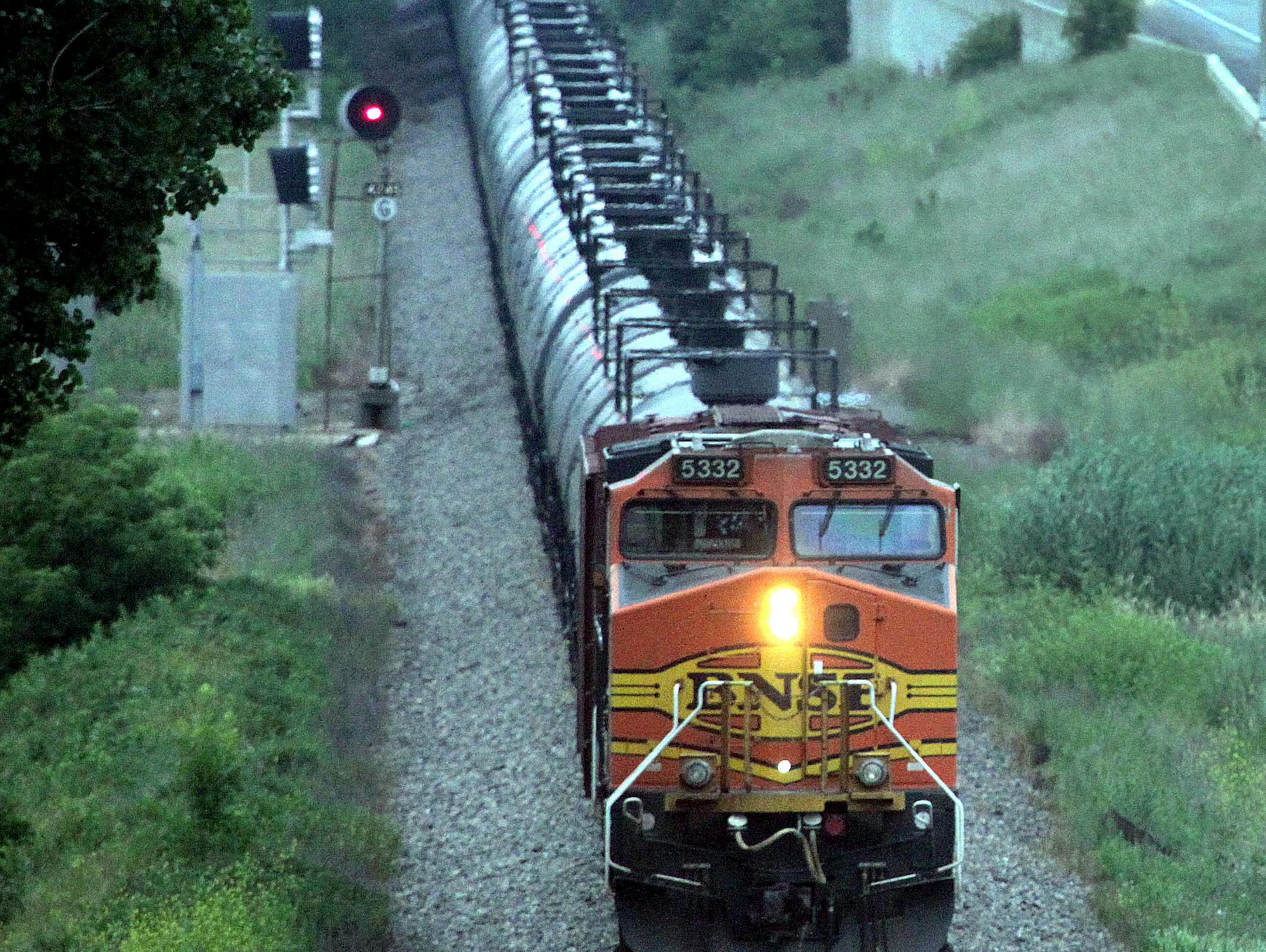
Oil trains supplied a record share of the crude oil delivered to East Coast refineries in February, the federal government reported Tuesday.
The U.S. Energy Information Administration (EIA) said 52 percent of crude oil to Eastern refiners arrived by rail, the most since it began collecting data in 2010. In December and January, oil trains delivered 43 percent of the East Coast's crude.
This happened as U.S. crude-by-rail shipments dropped slightly, indicating that oil trains are displacing imports on ships that historically have supplied refiners in New Jersey, Pennsylvania and eastern Canada.
"Those refineries are configured for a light, sweet crude, and a barrel like the Bakken's run well in them," said Justin Kringstad, director of the North Dakota Pipeline Authority, whose data shows that 55 percent of that state's crude oil reached market via railroads in February.
The crude-by-rail industry operates on the marginal pricing between imported East Coast crude, known as Brent, and the price set at Oklahoma called West Texas Intermediate (WTI). If the midcontinent price is a sizable discount to the Brent price, it can be worth the extra cost to ship crude oil in tank cars.
The federal data showed that nearly all of the oil train shipments to the East came from the Midwest. Much of the crude came from the Bakken shale region of North Dakota and eastern Montana.
Although the agency doesn't break out the shipments by state, Minnesota is a major crossroads for Bakken oil. The two major North Dakota crude-by-rail haulers, BNSF Railway and Canadian Pacific Railway, have major routes across Minnesota and through the Twin Cities.
Kringstad said pipelines from the Midwest don't go to East Coast refineries. "Historically, it has always been waterborne, foreign oil," he said. The uptick in February may be related to the wider margin between the Brent and WTI prices, he added.


