

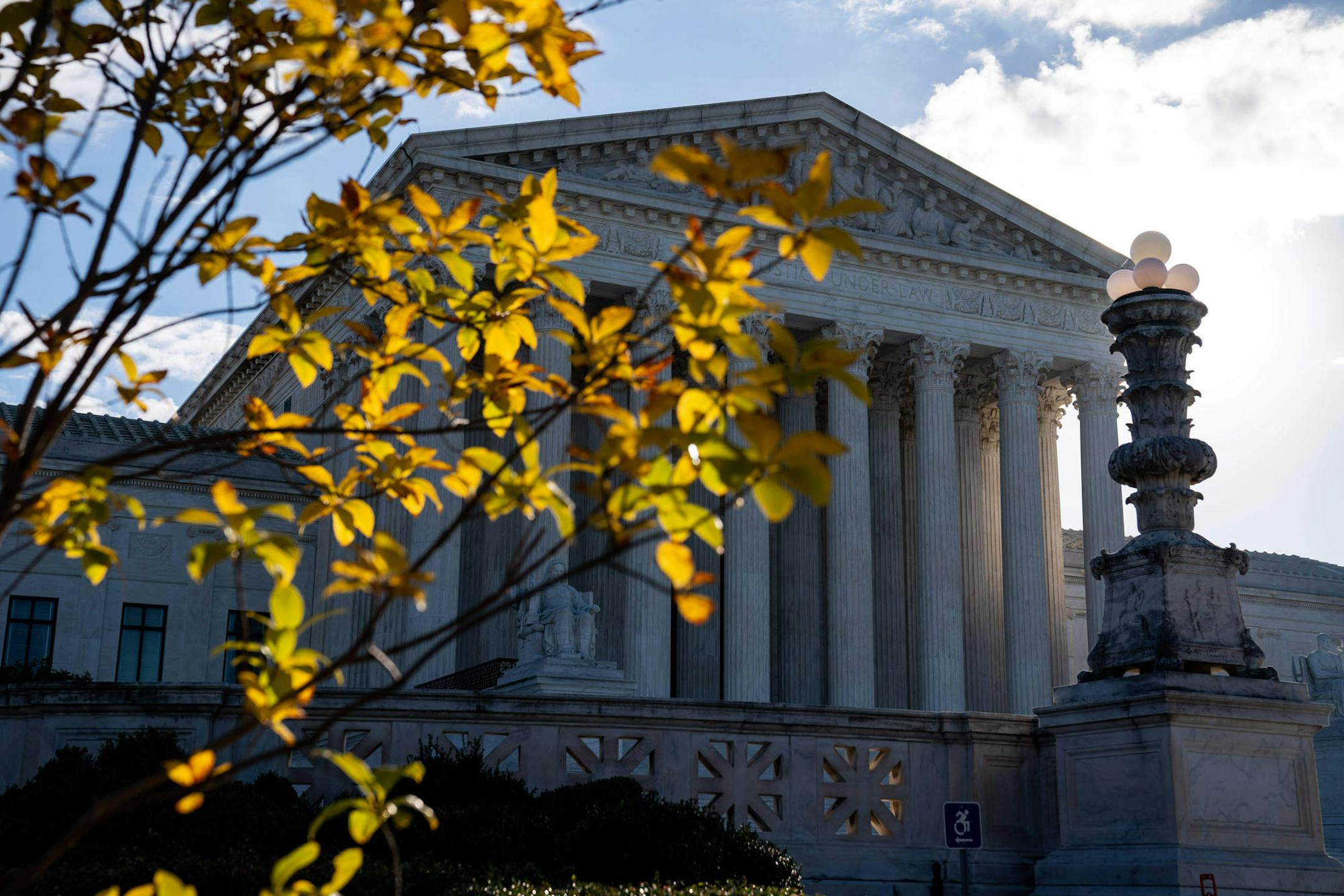
The Supreme Court's 5-4 decision striking down New York state restrictions on the number of people who can attend religious services during the coronavirus pandemic is being taken as a signal of the emergence of a newly aggressive conservative majority.
It's easy to see why. The majority in the religion case included the court's newest member, Justice Amy Coney Barrett, alongside the most conservative of her colleagues: Clarence Thomas, Samuel Alito, Neil Gorsuch and Brett Kavanaugh.
The dissenters included Chief Justice John Roberts, also conservative but more moderate in his voting patterns — the swing vote in divided decisions for the last year.
But in fact this decision doesn't signal much at all. It's close to a yawner, mostly confirming the existence of a majority that will be highly protective of the rights of religious believers.
The core of the case was a claim of discrimination against churches and synagogues in New York Gov. Andrew Cuomo's order that in pandemic "red zones," only 10 people could attend religious services. In less dangerous "orange zones," the cap was 25.
The majority's unsigned opinion did not say that these restrictions would be unacceptable if they had been imposed on all gathering places. The problem was that they singled out houses of worship "for especially harsh treatment."
The court emphasized that "essential" businesses could allow as many people as they wished, even in red zones. Those essential businesses included grocery stores, banks, acupuncture facilities, campgrounds, garages and transportation facilities. In orange zones even nonessential businesses had a lot more flexibility than houses of worship.
In a separate concurring opinion, Gorsuch put the point vividly: "While the pandemic poses many grave challenges, there is no world in which the Constitution tolerates ... executive edicts that reopen liquor stores and bike shops but shutter churches, synagogues and mosques."


