

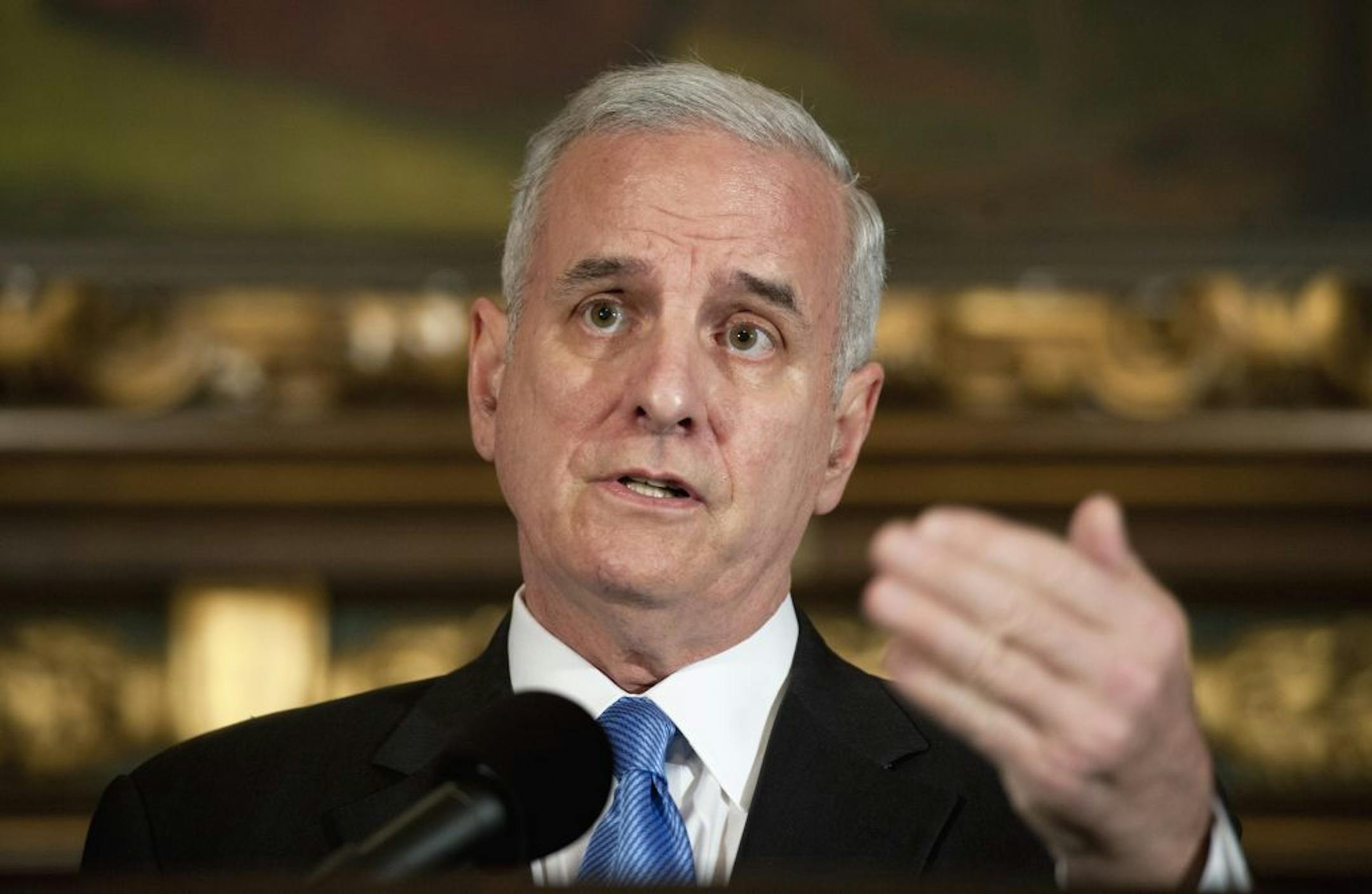
Gov. Mark Dayton told legislative leaders Tuesday that he will seek federal approval to move forward on a Minnesota-made health insurance exchange, but he sought to assure Republican opponents that he will defer important policy decisions until after the November election.
Dayton also said he was shifting responsibility for leading the "next phase" of the exchange to a new state agency. The actions are a sign of continued movement to set up a state-run exchange, a key component of President Obama's health care law. The exchanges are scheduled to launch nationwide in 2014 and aim to be competitive marketplaces for individuals and small businesses to comparison shop for health insurance.
"While the Affordable Care Act continues to be debated in the political arena, the law is clear: either we design and implement a state-based exchange, or we will be assigned to a one-size-fits-all federal exchange," Dayton said in a letter to the legislators.
More than 1.2 million Minnesotans are expected to be eligible for the exchange, which supporters say will make buying health insurance as user-friendly as shopping for an airline ticket on a travel website.
The state has received $28.5 million in federal grants to hire staff and lay the foundation. It has applied for another $42.5 million to build the technical infrastructure.
States have until Nov. 16 to submit paperwork to the federal government to prove they will have a functioning exchange by the Oct. 1, 2013, open enrollment period.
While a Minnesota-designed exchange has the support of the Minnesota Chamber of Commerce and some key Republican leaders, it does not enjoy full bipartisan support. Lawmakers were unable to get an exchange bill out of committee during the previous two legislative sessions, and Dayton has signaled he will use his authority to move forward without legislators, if need be.
Dayton seemed to soften that stance in the letter Tuesday, emphasizing in bold type that he would "not commit Minnesota to any final policy decisions in the application," including how the exchange will be financed and whether it will be governed by the state, a nonprofit agency or a combination.


