
Brown: How giant trolls are helping rouse greater Minnesota’s economy

This whimsical idea made a tangible economic impact in Detroit Lakes and the surrounding area.

Columnist Icon
The Minnesota Star Tribune
August 12, 2025 at 11:00AM
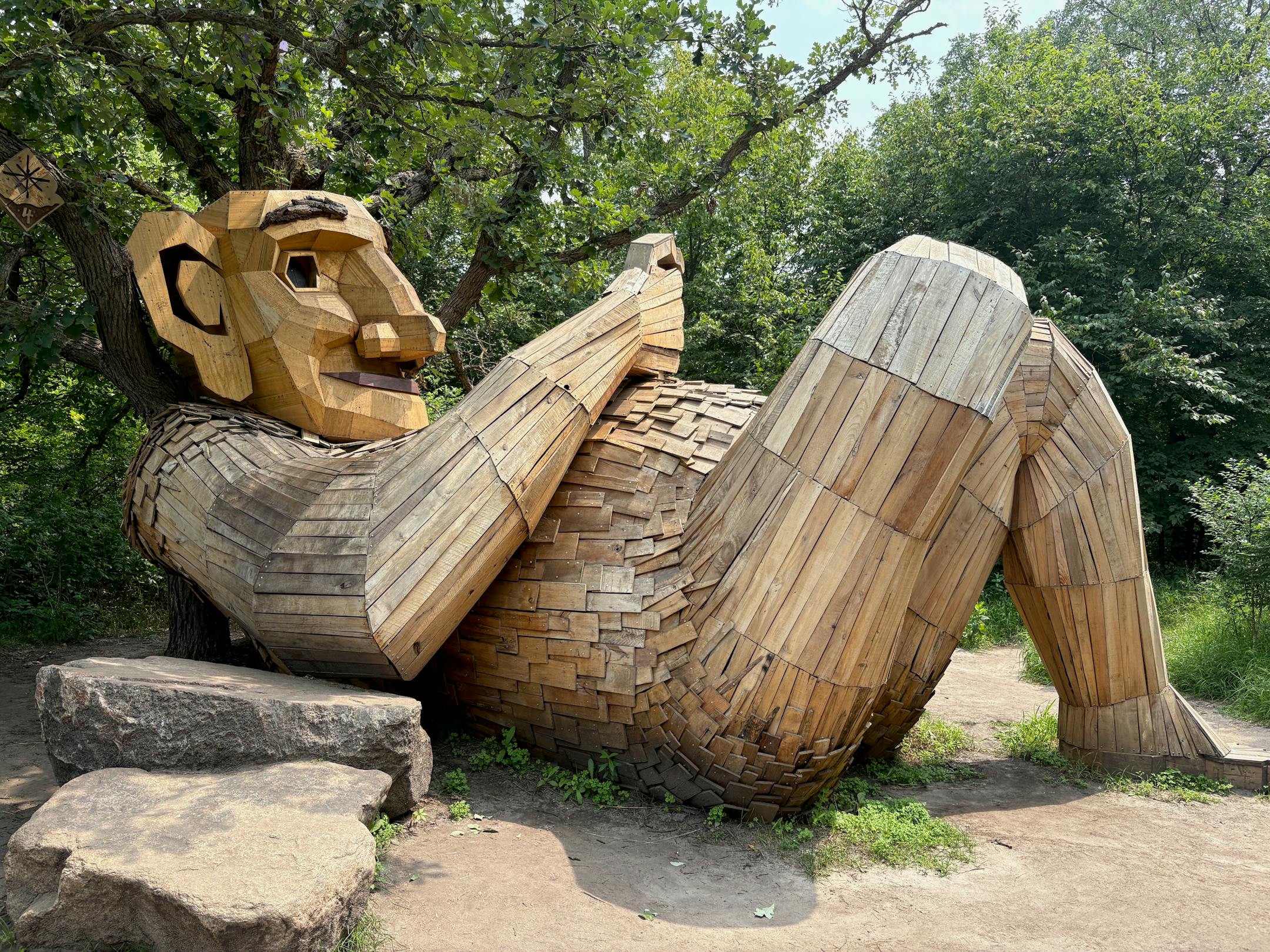
The troll known as Jacob Everear, created by Danish artist Thomas Dambo, in Frazee, Minn.
The troll known as Jacob Everear, created by Danish artist Thomas Dambo, in Frazee, Minn. (Aaron Brown/The Minnesota Star Tribune)

Opinion editor’s note: Strib Voices publishes a mix of commentary online and in print each day. To contribute, click here.

•••

Exhausted from miles of hiking, my wife and I blasted our car’s air conditioning as we carefully inspected a treasure map. We had already visited five friendly trolls that day and now sought to decipher their secret code to find a giant evil rabbit, ideally before dinner.

People don’t have enough adventures these days. Nothing we do on our phones qualifies as an adventure, nor do most of our daily activities. We might call finding a parking spot or getting the kids to practice on time an “adventure,” but it’s more like a running a gauntlet, a sometimes-painful ritual, yes, but not an adventure.

When my wife and I spent a recent weekend in Detroit Lakes to celebrate our anniversary, we had an adventure — a real one, complete with sweat, toil and joy. We also saw a brilliant strategy to not only build regional tourism but to spur local economic growth in greater Minnesota.

Last year, the Danish artist Thomas Dambo and 300 volunteers installed a series of massive troll sculptures in Detroit Lakes and the surrounding area. Dambo installs these sculptures all over the world. The Detroit Lake trolls, made of locally sourced natural and recycled materials, tell a story titled “Alexa’s Elixir” spanning from Fargo to Frazee.

Alexa, located in Detroit Lakes City Park, represents the start of the troll odyssey. She forms a concoction that helps people live better, free of the stress and materialism of modern life. You visit the four other trolls and three portals, some as far away as Fargo and Perham, to defeat the “Golden Rabbit,” the baddie who convinced humans that they had to buy things to be happy.

Don’t worry. If story time isn’t for you, you can look for trolls any way you like. We broke the code using letters from the five trolls in Detroit Lakes and Frazee. Each stop on the journey puts you in touch with nature and yourself, depositing you and your family in a fun town with lots to do.
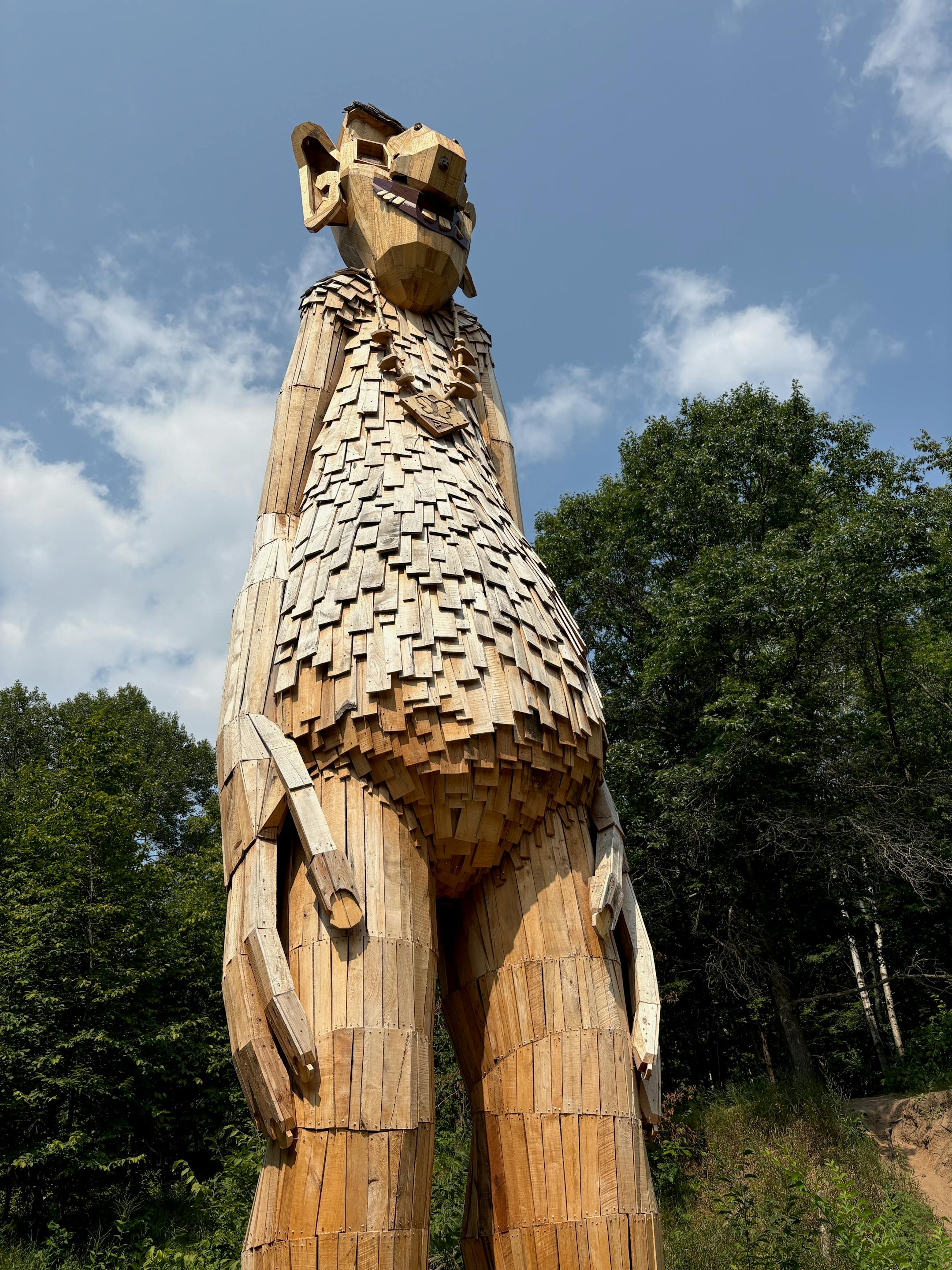
Long Leif, one of the other trolls, is located in Detroit Lakes, Minn. He's over 42 feet tall.
Long Leif, one of the other trolls, is located in Detroit Lakes, Minn. He's over 42 feet tall. (Aaron Brown/The Minnesota Star Tribune)

This year, Time magazine named Detroit Lakes one of the 25 “best places on Earth” largely because of these trolls. We chose the area for our summer trip because it was something cool within a few hours’ drive but were surprised to see people from all over the world there to see the trolls. In fact, our hotel was full of fellow troll-hunters. We formed camaraderie with people traveling from troll to troll, sharing tips and encouragement along the way.

Amy Stearns is the executive director of Project 412, a place-making nonprofit that led the troll installation and several other projects around Detroit Lakes. Named for the 412 local lakes that sustain Detroit Lakes culture and tourism, Stearns said the organization seeks to prove that “audacious things” can happen in rural Minnesota.

“Sometimes, people think things like this can only happen in an urban setting,” said Stearns. “In greater Minnesota, there are opportunities galore if you look for them and work for them.”

Trolls cost money. Private donations funded the ones in Detroit Lakes, but the costs were eased by the large number of volunteers and in-kind support from Detroit Lakes, Becker County and other local governments. Costs are certainly being recouped in the tourism dollars currently pouring into the region.

But trolls alone do not make a successful rural economy. What really impressed me about Detroit Lakes was the way that the trolls were built into public amenities that already existed, while inspiring new ideas and growth in other areas.

For instance, while looking for the troll named Barefoot Frida, we bumbled into a series of public art trails. The city is building a new park there called Ortenstone Gardens, where visitors can currently walk trails featuring stunning sculptures by Olga Ziemska and displays of charming animal art by Charley Harper.

The trolls help launch Ortenstone Gardens but also draw people into existing public spaces like Dunton Locks County Park, Detroit Mountain Recreation Area and the Wannigan Regional Park in Frazee.

Project 412 is using the success of the trolls to promote more than just tourism. They’re welcoming new residents with weekly live music shows while sponsoring programs for new entrepreneurs to start businesses in Detroit Lakes.

“We want to make this the best place for everyone to live here,” said Stearns. “That, by default, rises above any partisan issues. People want good schools, job with meaning, fun with family and friends, a good meal and to go out on the lake in the evening. It’s pretty basic, no matter where people live in the world.”

For small towns and rural places across the state, hope can sometimes be an elusive commodity. Natural resource and agricultural economies face new challenges, coupled with decades of automation and rural job losses. Big influxes of money have come and gone, leaving mixed results. In many ways, Detroit Lakes shows that a shift in attitude, along with strong local support, can spark change.

For rural Minnesota, the answer isn’t trolls. It’s people, and the ideas they generate from within.

Adventure awaits.

about the writer

about the writer

Aaron Brown

Editorial Columnist

Aaron Brown is a columnist for the Minnesota Star Tribune Editorial Board. He’s based on the Iron Range but focuses on the affairs of the entire state.

See Moreicon

More from Columnists

See More
card image
Mark Vancleave/The Minnesota Star Tribune

As Faribault joins the list of cities without a birth center, it may be time for the Legislature to get involved.