
Large mobile home park on edge of Twin Cities at center of affordability dispute

A legal dispute raises allegations of a misinformation campaign and a conflict over the majority of the affordable housing in Corcoran.

The Minnesota Star Tribune
December 1, 2025 at 12:00PM
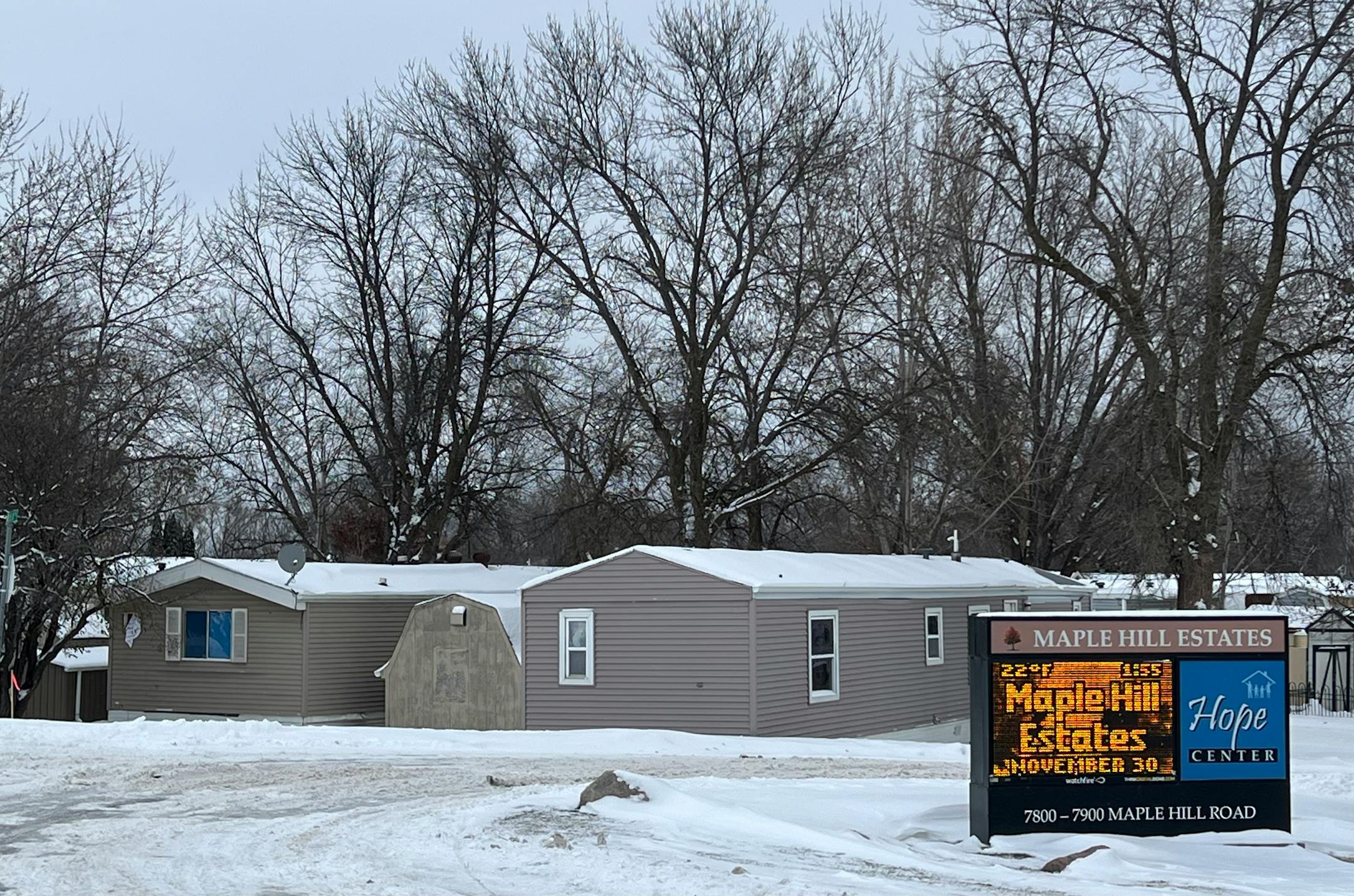
Maple Hill Estates in Corcoran is stuck in a legal dispute over affordability restrictions. (Sarah Ritter)

Maple Hill Estates, one of the largest manufactured home parks in the Twin Cities area, has been a fixture of Corcoran for decades. A local family owned and lived within the park, kept rents low and contributed to building a community center.

But now the park, which makes up a majority of the affordable housing stock in the town northwest of the Twin Cities, is stuck in limbo.

An out-of-state company purchased the community and raised lot rents, spurring a legal dispute over whether the park should still be held to an agreement that capped costs for tenants.

The conflict is another example of how one of Minnesota’s oldest forms of low-income housing has been transforming, with mobile home parks closing or being bought up by large companies and institutional investors. Tenants in some communities have organized to fight rent increases and new fees, saying they’re being pushed to their limits, and proposed a Manufactured Home Park Resident Bill of Rights, with rent caps and other safeguards, during the last legislative session.

In Corcoran, the Metropolitan Council this past summer told park owners that they were in breach of a grant agreement restricting rent increases in the community, after the new owners raised the rate. The family company that used to own the park said it offered to repay the grant — a remedy spelled out in the contract — but claims the Met Council and state have refused the money and instead demanded reduced rent for tenants.

The new owners say they were never informed of the grant agreement and cannot be bound to the contract. The park owners are now suing over the stalemate, accusing the Met Council of spreading misinformation to tenants and trying to unlawfully enforce the affordability covenants.

Meanwhile, tenants have sent the owners a dozen demand letters, and one resident has so far sued over the rent hike.

“This community has always been low-income,” said Chrissy Jensen, whose family lives at the Corcoran park, and who said she’s been experiencing hardship due to the ownership transition. But, “for many years we were the backbone of this town.”

New owner Graham Belchers said rental revenue has been reinvested in the mobile home park, including to clean it, purchase new homes and bring the park up to code.

“Ultimately, our goals align closely with those of the residents,” Belchers said in a statement to the Minnesota Star Tribune. “To maintain a clean, safe, stable, and affordable community that people are proud to call home, and that the broader community can be proud of as well.”

The Met Council, Minnesota Housing and Finance Agency and city of Corcoran, all defendants in the lawsuit, declined to comment, citing the litigation.

A standout community sold

Barry Hay and his brother Byron Hay in 2000 acquired Maple Hill Estates, which was previously owned by their parents.

Their family company had provided land and utilities for the nonprofit Mobile Hope to establish a community center, offering after-school programs, mentoring and meal distribution programs.

“Maple Hill Estates is a wonderful community, filled with great people doing their best with limited resources to raise their families,” said Mobile Hope Executive Director Brian Dejewski, a former City Council member who used to live in the park.

Over nearly 25 years, the Hays’ company never increased rent by more than $20 a year, according to the company’s lawsuit. The manufactured home park, with 190 lots, reportedly made up 78% of the city’s affordable housing stock in 2017.

That year, the Hays’ company secured a $237,000 grant to cover half of the cost of connecting the park to the regional sewer system. The agreement included affordability covenants through 2039, requiring that rent remain at or below 30% of the area median income, and prohibited rent increases exceeding 5% per year.

The Met Council at the time emphasized preserving important affordable housing as more mobile home parks closed.

Last year, the Hays’ company explored selling the park due to family health concerns.

In February 2025, Maple Hill, a Delaware limited liability company, purchased the property for $17 million, and hired California-based GBH Property, which manages mobile home communities in several states.

The new owner, Belchers with Maple Hill, said he didn’t know about the grant agreement until July, when the Met Council told the previous owners that they were in violation of the contract. Both the old and new owners said they did not receive an official copy of the agreement and that it was never officially recorded. As a result, Belchers said it didn’t show up on the certificate of title.

“Under Minnesota law, a purchaser without knowledge of a restriction takes the property free and clear of that restriction, and we are therefore not bound by those conditions,” Belchers said, adding that the company would have offered a lower price or declined to buy the park if it knew about the deal.

The company raised rents from $480 per month to $680, a more than 40% jump.

Both the former and current owners argue the grant clearly states the funds can be repaid if the terms of the agreement are not met.

The lawsuit points to an email from a city staffer stating, the owners “have an option of paying the grant back.” But officials would prefer they “be held to the rent increase stipulation versus paying back the grant.”

Tenants speak out

Maple Hill’s new owners this fall received a dozen demand letters from tenants stating that the park’s rent increases violate the grant agreement.

In turn, the former owners of the park accuse the Met Council of sharing false information with tenants about the grant, with “the deliberate purpose of sowing confusion and misunderstanding” and “with the goal of inflicting pressure” to settle, the lawsuit reads.

Meanwhile, one resident has filed a rent escrow lawsuit to fight the rate hike. She did not respond to messages from the Star Tribune.

The new owners, Belchers said, responded to the residents and have “received virtually no follow-up questions or concerns.”

Belchers said that after the rent increase, Maple Hill remains below market rents compared to many other mobile home communities across the Twin Cities area. He said the company has spent $500,000 making improvements at the park, including removing abandoned homes, cleaning up debris, fixing landscaping and hiring new staff.

He said the company has purchased new homes and wants to fill 27 vacant sites, “increasing local affordable housing capacity by more than 100 residents.”

Some residents navigating the shift in ownership have turned to the city for assistance, concerned about rising rent, vehicles being towed and the enforcement of rules regarding pets and storage.

Corcoran Mayor Tom McKee said the city has been working to connect residents with resources.

Maple Hill “has been an important part of our community, and some really awesome residents who care about Corcoran live there,” McKee said. “Hopefully all of the drama that’s going on will get resolved, so everyone can get back to a little bit more of a stress-free life.”

about the writer

about the writer

Sarah Ritter

Reporter

Sarah Ritter covers the north metro for the Minnesota Star Tribune.

See Moreicon

More from Twin Cities Suburbs

See More
card image
Dakota County Sheriff's Office

The shooting near Farmington is under investigation, but officials say there is no danger to the public.

card image