

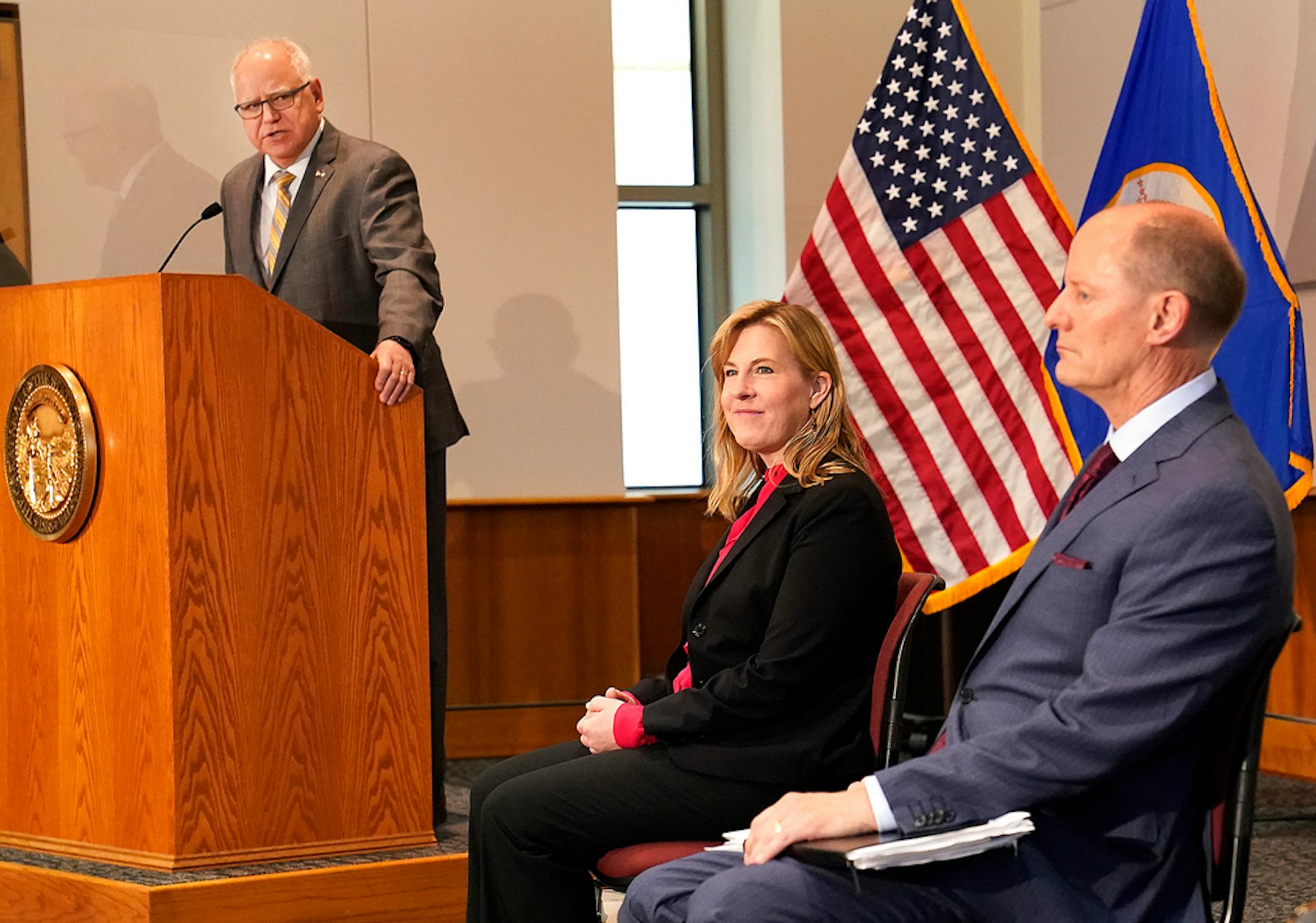
Legislative leaders appear cautiously optimistic that they can resolve their differences and produce a two-year budget for Minnesota before the fiscal deadline of June 30. Underneath that optimism lurks a bit of healthy fear.
Should they fail, they know the consequences could be dire. Minnesota has been through government shutdowns before, but softened by courts that were willing to ensure uninterrupted funding of "essential" services in the interim. This time that may not be an option. In a 2017 Minnesota Supreme Court opinion, Chief Justice Lori Gildea wrote that "Section 1 of the Minnesota Constitution does not permit judicially ordered funding for the Legislative branch in the absence of an appropriation."
Senate Majority Leader Paul Gazelka told an editorial writer that "there is a real urgency here. There would be a lot of things not funded this time. But we're going to beat the June 30 deadline. We have to."
Oddly enough for a budget year, the disputes between the DFL House and GOP Senate have little to do with money or its lack. Leaders agreed on a broad framework at the end of the regular session that featured big wins for the two sides: $1 billion of tax relief and increased funding for E-12 education, including summer school.
House Speaker Melissa Hortman told an editorial writer that "the dam broke when it became clear that we could do both. … Those were the two largest puzzle pieces. Everything else fits around that." That level of compromise was achievable by a gusher of federal funds related to the pandemic — about $18 billion, roughly equal to a third of the state's general operating budget.
That leaves policy differences, and there are some serious ones. On education, Gazelka has championed private school vouchers, saying 30 states use them in some form. Hortman and Democrats have resisted, contending that the vast majority of schoolchildren in Minnesota attend public schools, which already suffer from a chronic shortage of funds.
Senate Republicans refuse to adopt what they persist in labeling a "California standard" for clean car emissions, even though at least 14 states have the same standard, some for years. The emissions change would, among other things, make more electric vehicles available for sale in Minnesota.
Republicans also want Walz to relinquish his emergency powers. Some 45 states remain under a pandemic emergency, in part because federal aid is tied to it. "It's not just Minnesota," Gazelka said. "This is a nationwide struggle between governors and legislatures across the country. There is bipartisan frustration with executive branches hanging on to power."


