A group of prominent business and political leaders including Cargill Chairman Greg Page said Thursday that agriculture and other major sectors of the economy could face widespread disruptions from climate change in coming decades unless much more is done to reduce the risks.
Their report, "Risky Business," presents a number of scenarios that could reduce yields of corn and other crops drastically in the nation's midsection, strain utility systems as hotter summers demand more energy for cooling and flood coastal areas as storms surge and sea levels rise.
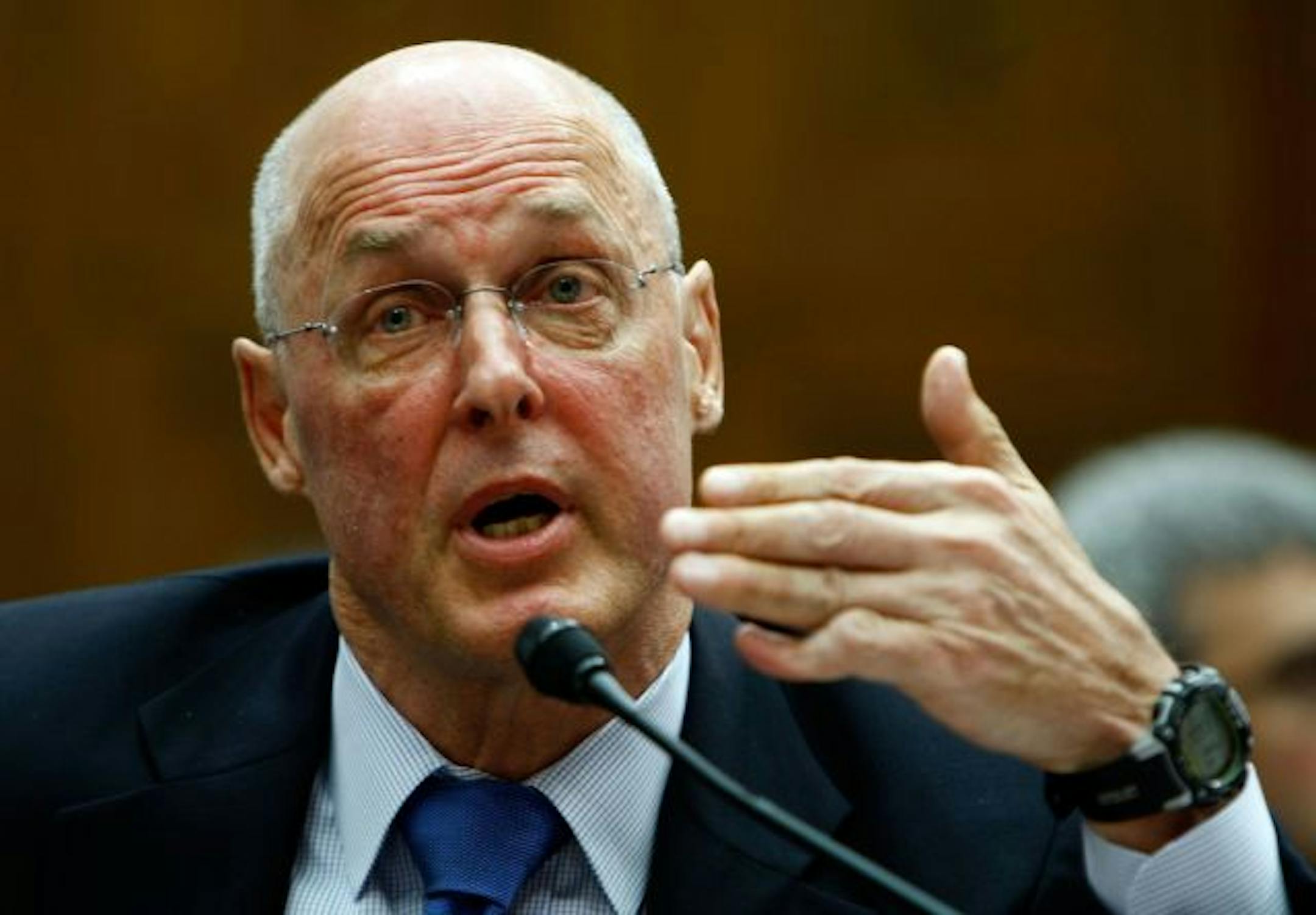
"Our economy is vulnerable to an overwhelming number of risks from climate change," said former Treasury Secretary Henry Paulson, who initiated the study with former New York Mayor Michael Bloomberg and former hedge fund executive Thomas Steyer.
The report does not prescribe specific fixes such as carbon taxes or targeted reductions of carbon dioxide and other greenhouse gases. It lays out the economic risks that range from moderate to severe in different sectors and in different regions of the country if no changes are made, or if different levels of emission reductions occur.
The report concludes that two of the primary impacts of climate change — extreme heat and sea level rise — will disproportionately affect certain U.S. regions. And it suggests that the most severe risks can be avoided by investments and immediate action to reduce the pollution that causes global warming.
Under some scenarios presented in the study, warmer temperatures and longer growing seasons could actually increase crop yields in the Upper Great Plains, including Minnesota, the Dakotas and Canada, during the next 10 or 15 years as the Corn Belt shifts to the north. But the broader picture forecasts average crop yield losses of 15 percent during the next five to 25 years in places like Missouri and Illinois, and up to 73 percent reductions by the end of the century.
Page, one of 10 members of a committee that served as advisers for the report, said in an interview that while climate change is not an emergency, it's an important issue that needs attention now. The chairman of Minnetonka-based Cargill noted that there is uncertainty about how quickly and extensively the climate may change.
"But that isn't an excuse to throw up your hands in helplessness and say there's just so much uncertainty we don't need to do anything," he said. "We need to think about and talk about what are all the adaptations ahead."