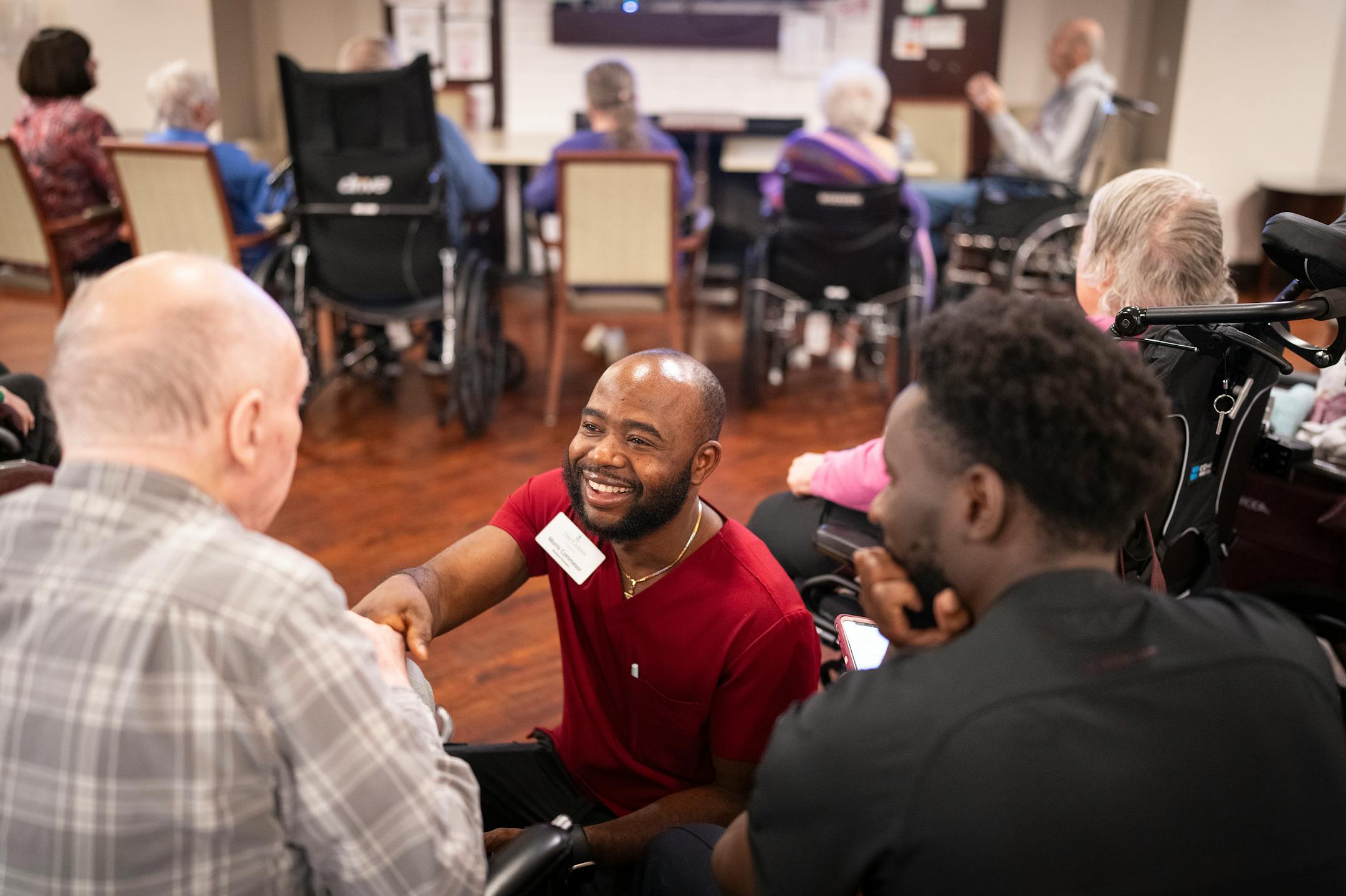
First comes the yelling. Then come smiles and hugs.
For 13 years, Morris Commesor has been a certified nursing assistant (CNA) at assisted-living facility the Glenn in Minnetonka, and the job can be just as emotionally demanding as it is physical. He works in memory care, helping senior residents living with dementia — a cognitive disease that worsens thinking, remembering and reasoning — do everything from dressing in the morning to tucking into bed at night.
Their condition means they’re not always so happy to accept his assistance.
“It’s a tough job, but I can’t look at it as challenging” he said. “You have to actually come before with a positive mindset.”
Like how Commesor worked with a certain 90-year-old resident who demanded his departure whenever he came to her room in the morning. He’d come back 15 minutes later and successfully convince her to forgo wearing the casual T-shirt and sweatpants for a nicer dress.
“Every day is special,” he’d tell her. And when her visiting children would compliment her outfit, she explained, “It’s him. He helped me. He’s a nice guy.”
Commesor has also worked part time since 2019 at SilverCreek on Main, a senior living community in Maple Grove. That’s a reflection of the demand for workers in his field.
The nursing home industry lost 14.1% of its total workforce during the COVID-19 pandemic, and it still hasn’t recovered. There’s a high turnover rate among CNAs and a national shortage of them, with workers citing low pay and burnout as reasons. But the job is only growing more important, as the baby boomer generation reaches retirement age.