
Cardinal beaks slice and dice

Plus, pocket-sized owls hooting, few family reunions in the bird world and a visit by robins’ handsome cousin.

Special to the Minnesota Star Tribune
December 31, 2025 at 1:00PM
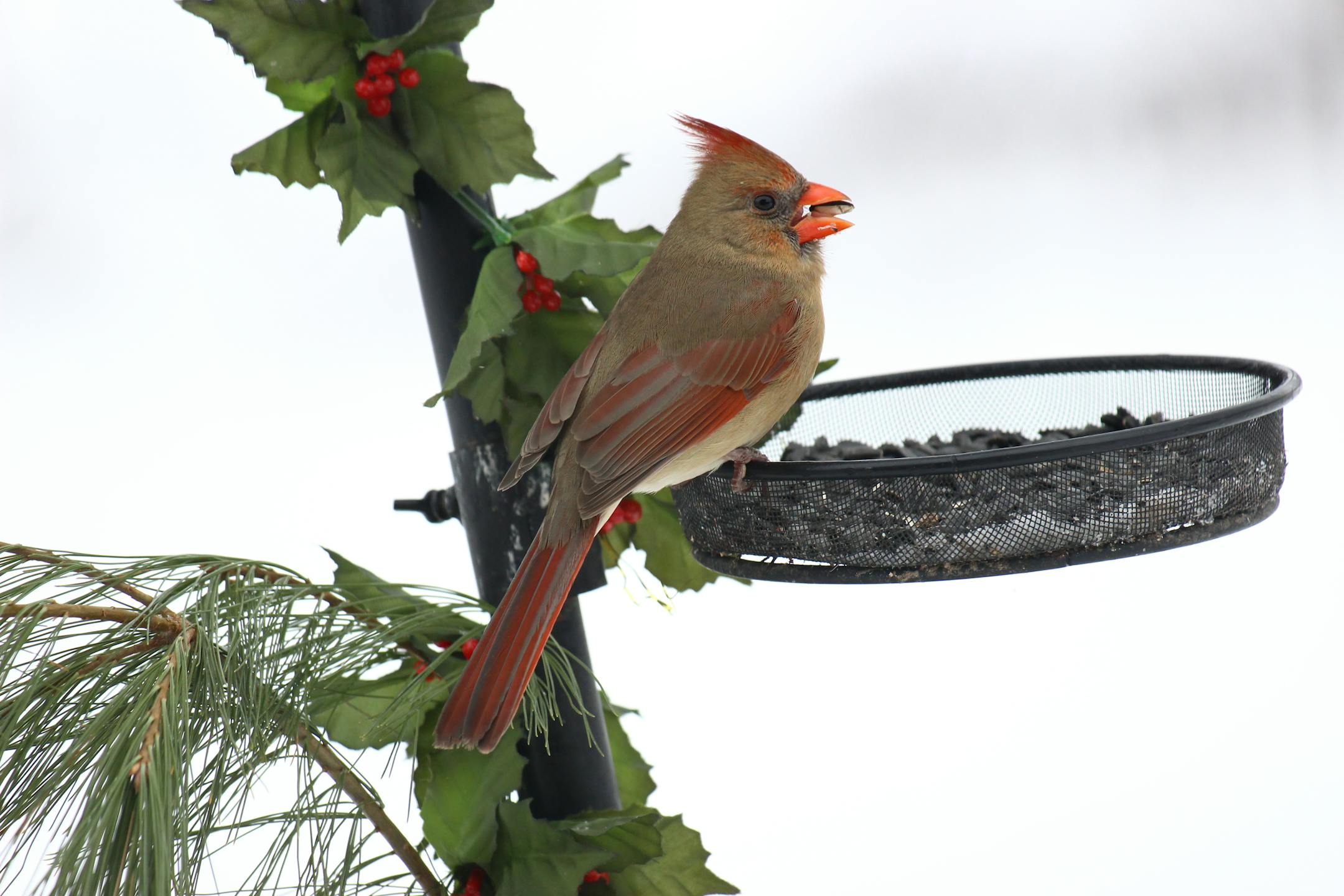
A female cardinal slashes open a shell. (Rita Tepley/Provided)

Q. I was watching the cardinals at my sunflower seed feeder and can’t figure out how they open the outer shells. I see them take a whole seed, and the ground is littered with the shells, but I can’t crack the intervening steps.

A. It is tough to spot how cardinals get the meat out of the seed shell. These big-beaked birds use their beaks and tongues, first positioning a seed in a groove in their upper beak, then, as their beak closes, they use the sharp edge on the lower beak to slice the shell open, a paper-cutter kind of action. Their tongue lifts out the good stuff and flicks the empty shell aside. This all happens in the flash of an eye, so it’s no wonder you haven’t caught the action.
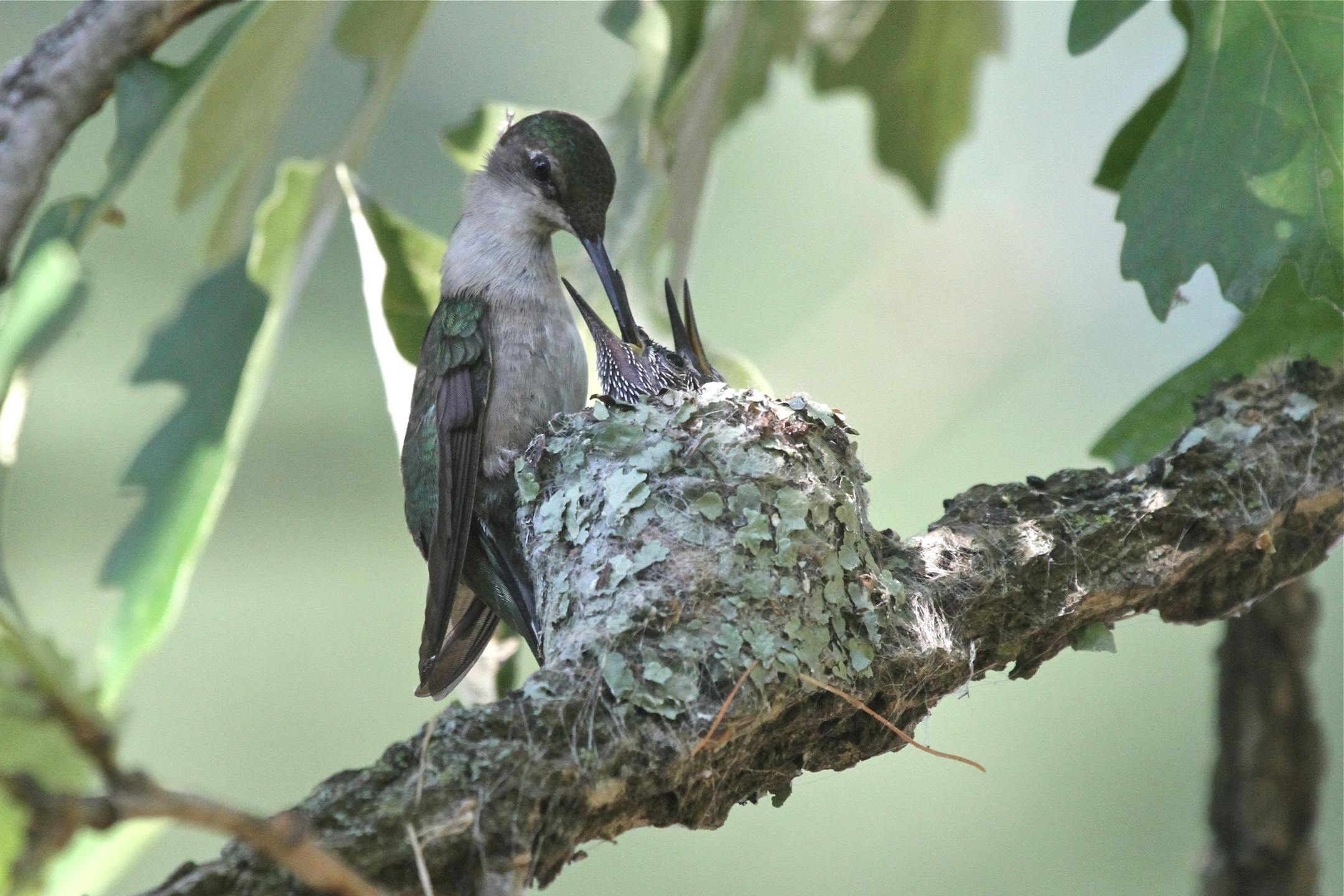
Most birds forget their families after leaving the nest. (Don Severson/Provided)

Family ties?

Q. We hear that some birds mate for life, but I wonder whether they recognize their family members for life? After birds leave their nest, do they spend time with siblings or parents?

A. There don’t seem to be many studies on this aspect of birds’ lives. The Cornell Lab of Ornithology states that most birds don’t recognize family members after their first year of life. This helps avoid in-breeding and promotes independence and self-reliance, necessary for wild creatures who live in a danger-filled world. Exceptions to this are birds like crows and jays, as well as cranes. Where most young birds disperse and have no ties to their parents soon after leaving the nest, crow offspring may stay at home for years, helping their parents raise later nests of offspring. In contrast, black-capped chickadees are known to scatter in the fall, with each young bird joining a different feeding flock for the winter. However, Canada geese remember their parents and may join them to migrate together. I hope there are other studies in the works to tell us more about this fascinating aspect of bird behavior.

Stop peanutting?

Q. We put out peanuts in the shell all summer and fall for the blue jays and now that it’s winter, they’re still coming in for them. I’m wondering if we should stop for the season.

A. If you’re willing to do it, I see no reason to stop offering peanuts for blue jays in the winter. Jays regard peanuts as a major treat and visit regularly to snatch them to hide around the neighborhood for later eating. I put out about 30 peanuts (in the shell) every morning, year-round, and enjoy watching those big, blue birds zip in to carry them off. It’s a treat for them and a treat for me to observe them.
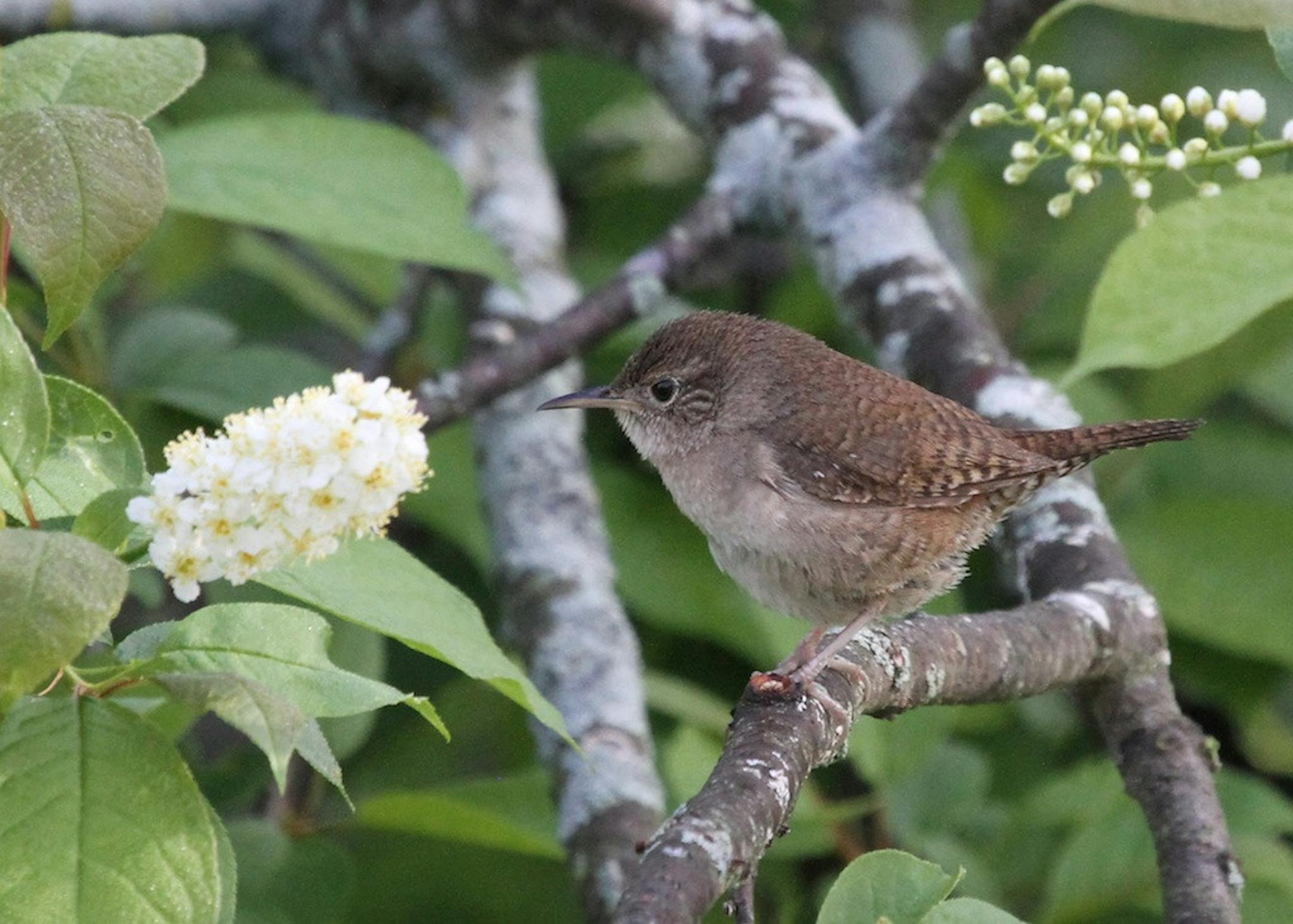
House wrens have a big fan base. (Don Severson/Provided)

Where do wrens go?

Q. My favorite bird is the house wren, and I miss them after they migrate in the fall. Where do they go to spend the winter?

A. House wrens spend the summer nesting in human-made nest boxes, stone wall crevices, holes in trees, and just about anywhere else they find an opening, even, in one reported case, in a motorcycle helmet. That’s one reason they’re many people’s favorite bird, along with the male’s repeated song and the devotion parent birds show for their nestlings. House wrens are found all across the United States in summer, then migrate to the southern states and Mexico to spend the winter.
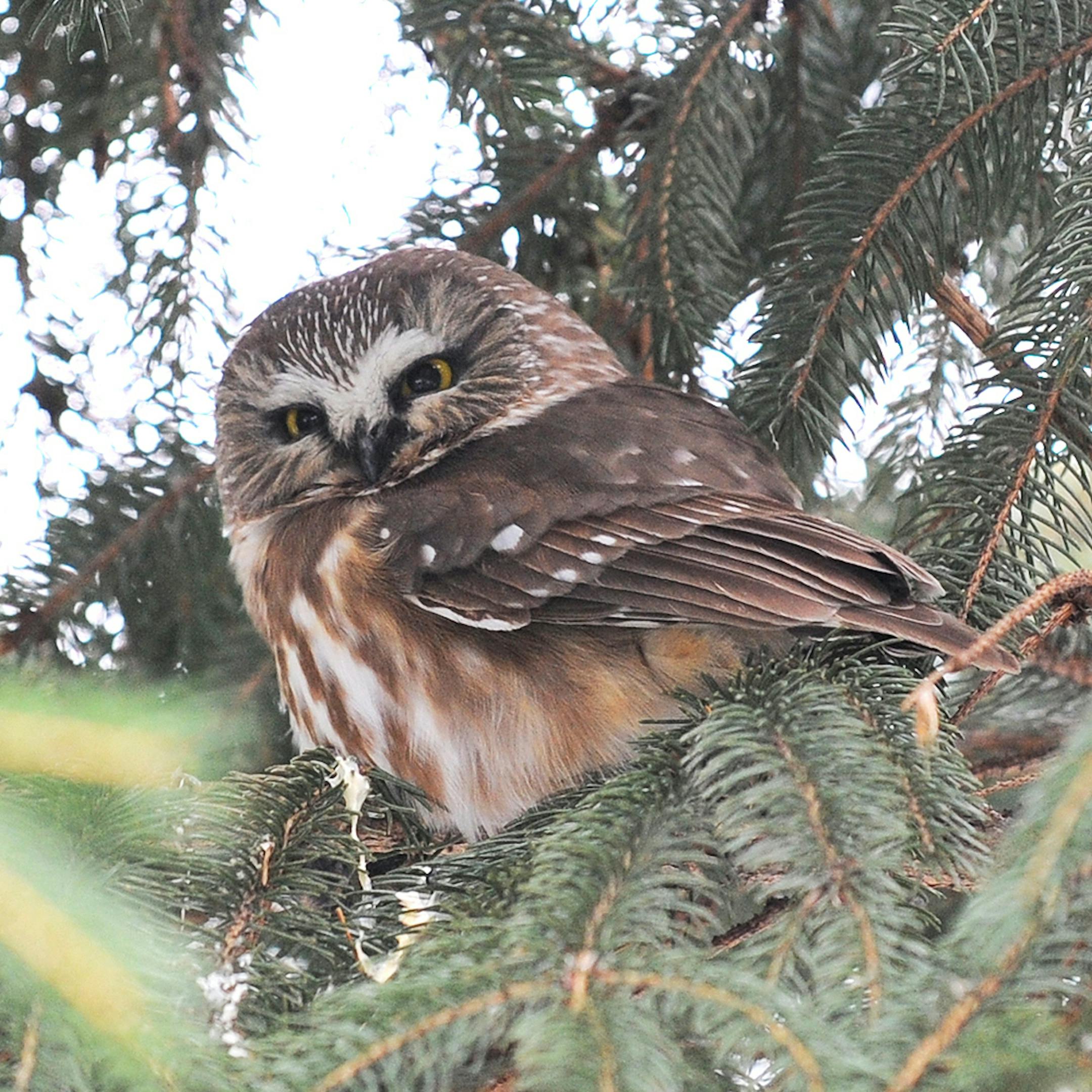
A saw-whet owl. (Jim Williams/Provided)

Little owl, big sound

Q. This year I’ve been hearing a repetitive and prolonged sound just after dark and again later in the evening. I wasn’t sure if it was mechanical or biological in nature. Merlin [the Cornell Lab bird identification app] identified it as the song of a northern saw-whet owl. Merlin called the owl rare in winter in our area but says its numbers can vary greatly. Is this a year when they are plentiful?

A. How wonderful for you to hear one of these pocket-sized (8-inch) owls, regarded by many as the cutest owl in our state. I turned to Jen Vieth for her expertise, as the director of Carpenter Nature Center, with sites in Afton and Wisconsin along the St. Croix River. Carpenter has been studying migrating saw-whet owls since 2014. She agrees that this owl’s numbers fluctuate from year to year and that this year has been a “decent migration year for the owls, but not a peak year.” When their nests in the north are productive, there is a higher number of saw-whets migrating through our area. Vieth notes that it’s not easy to say what this particular owl was up to with its constant singing. It could be a late migrant or it might be spending the winter here with plans to begin nesting in the spring. “I get reports each year from fall into spring, of singing saw-whet owls,” Vieth said. The center is starting a two-year study of the nesting behavior of local saw-whet owls to learn more. It’s fun to think of a few of these small, highly nocturnal northern owls inhabiting our woodlands in winter. How did this owl get its name, you ask? The story is that whomever named the species felt it sounds like a saw being sharpened (or ‘whetted’). Hear saw-whet owls’ distinctive ‘too-too-too’ song here: www.allaboutbirds.org/guide/Northern_Saw-whet_Owl/sounds

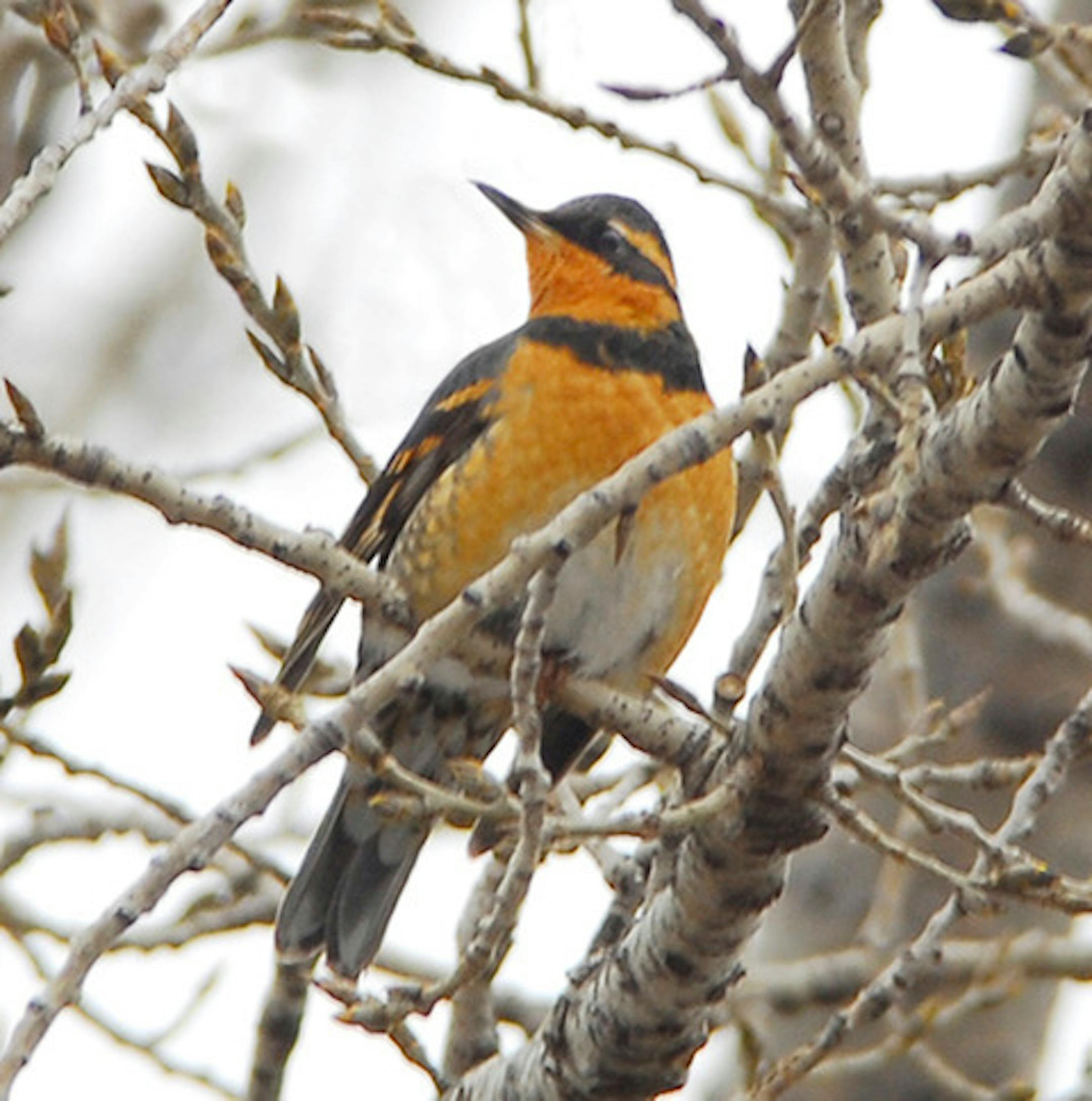
Varied thrushes are knockout birds. (Jim Williams/Provided)

Dressed-up ‘robin’

Q. In mid-December I had a new visitor to my crabapple tree. Initially it looked like a robin — right size, right dark coloring. But it had a black necktie, black eyeliner and a black cap, which I don’t associate with robins. An internet search says “varied thrush,” and it sure looked like this bird.

A. From your excellent description, it surely sounds like you had a visit from a varied thrush. A few of these West Coast thrushes visit our area every winter and they’re almost invariably spotted eating fruit in crabapple trees.

Note to readers: Two readers expressed their views on a recent item about three young men stopping a snake from strangling a struggling hawk. One wrote, “Because of our bias against snakes we often do not see them as the underdog. Both snakes and hawks serve important functions in our natural world.” And another reader noted that the piece sounded as if it involved an act of mercy, but wondered why “Folks feel hawks are more valuable, more worthy of living, than a snake. Both are animals trying to live, to feed their young.”

I agree with their points of view and regret that the piece may have made it sound as if the hawk had more of a right to live than the snake. Both have a place in the web of life and it’s not up to humans to determine which is more worthy.

St. Paul resident Val Cunningham, who volunteers with bird organizations and writes about nature for local, regional and national newspapers and magazines, can be reached at valwrites@comcast.net.

about the writer

about the writer

Val Cunningham

Special to the Minnesota Star Tribune

More from Outdoor Activities

See More
card image
Rita Tepley/Provided

Plus, pocket-sized owls hooting, few family reunions in the bird world and a visit by robins’ handsome cousin.

card image
card image