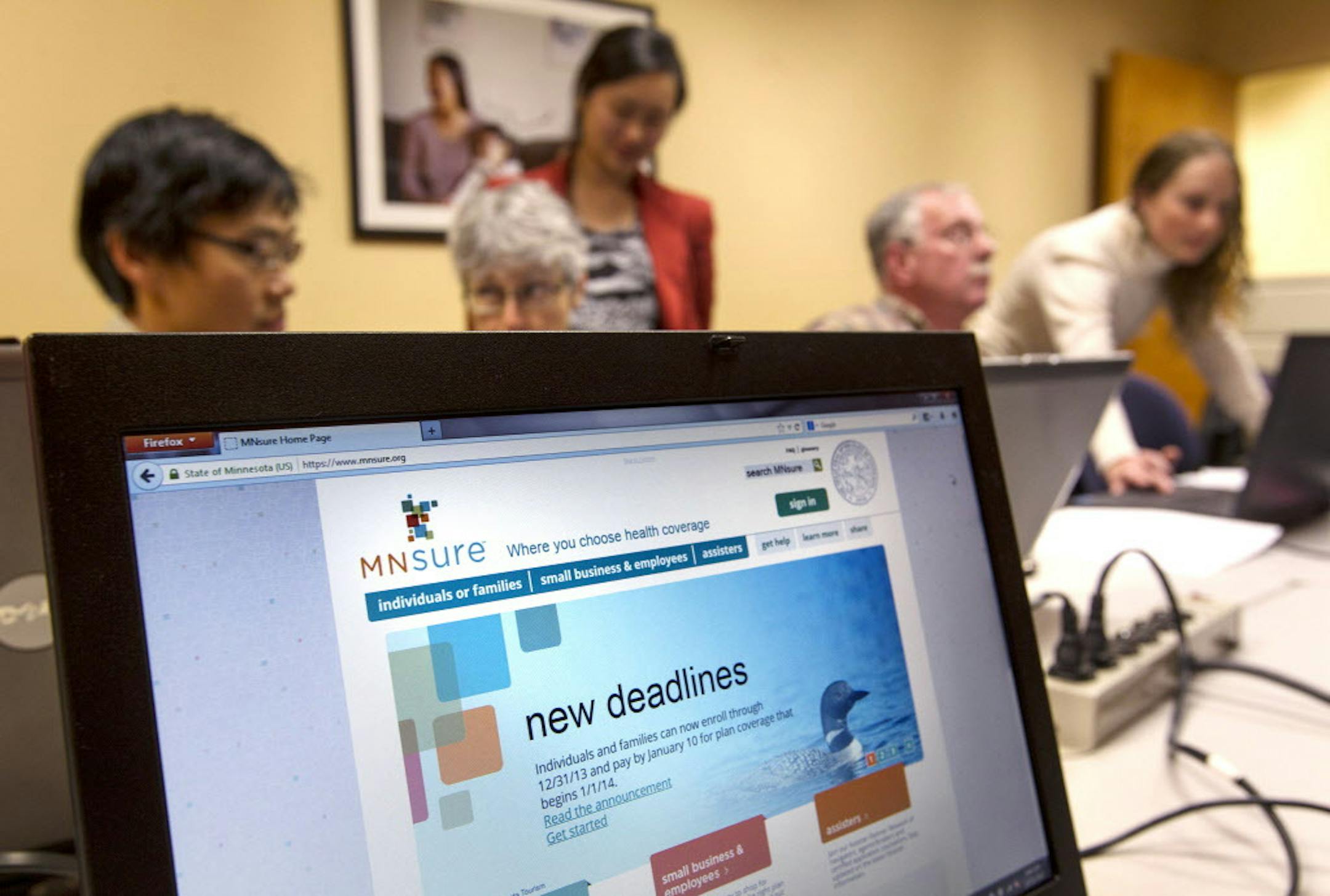
Minnesotans are almost palpably relieved that MNsure finally appears to be stabilized, past its rocky launch and two-hour holds on phone calls. More than 200,000 people have now signed up for health coverage through the state's online marketplace, along with 8 million others who signed up in the other 49 states for the first full implementation of the Affordable Care Act (ACA), or Obamacare.
Count me among those pulling for MNsure's success. I find the specter of working people unable to afford access to health care for themselves and their families tragic and disgraceful.
But the logistics hurdles in setting up MNsure pale before this one: What if the ACA and MNsure carry the seeds of their own demise?
I ask that because, in an important way, we've seen this movie before — in the 1990s.
I worked then for eBenX, a Minnesota-based firm that helped large employers set up defined-contribution health plans — or vouchers. Employees were free to use their voucher to buy their own health coverage on a private Internet exchange, instead of accepting an insurer selected by their employer.
There was a lot of excitement about these plans' potential to bring consumer-driven market pressure to bear in the system, thus holding back annual cost increases, which had been rising in double digits.
What happened next, circa 2000, is what makes me worry about the future of MNsure and its peers.
Typically, if annual family coverage premiums rose by, say, $1,000, to a total of $11,000, employers refused to continue absorbing 90 percent of the big increases. So if a 10 percent increase were passed on entirely to the worker, his or her share of the total premium typically doubled, to $2,000.