

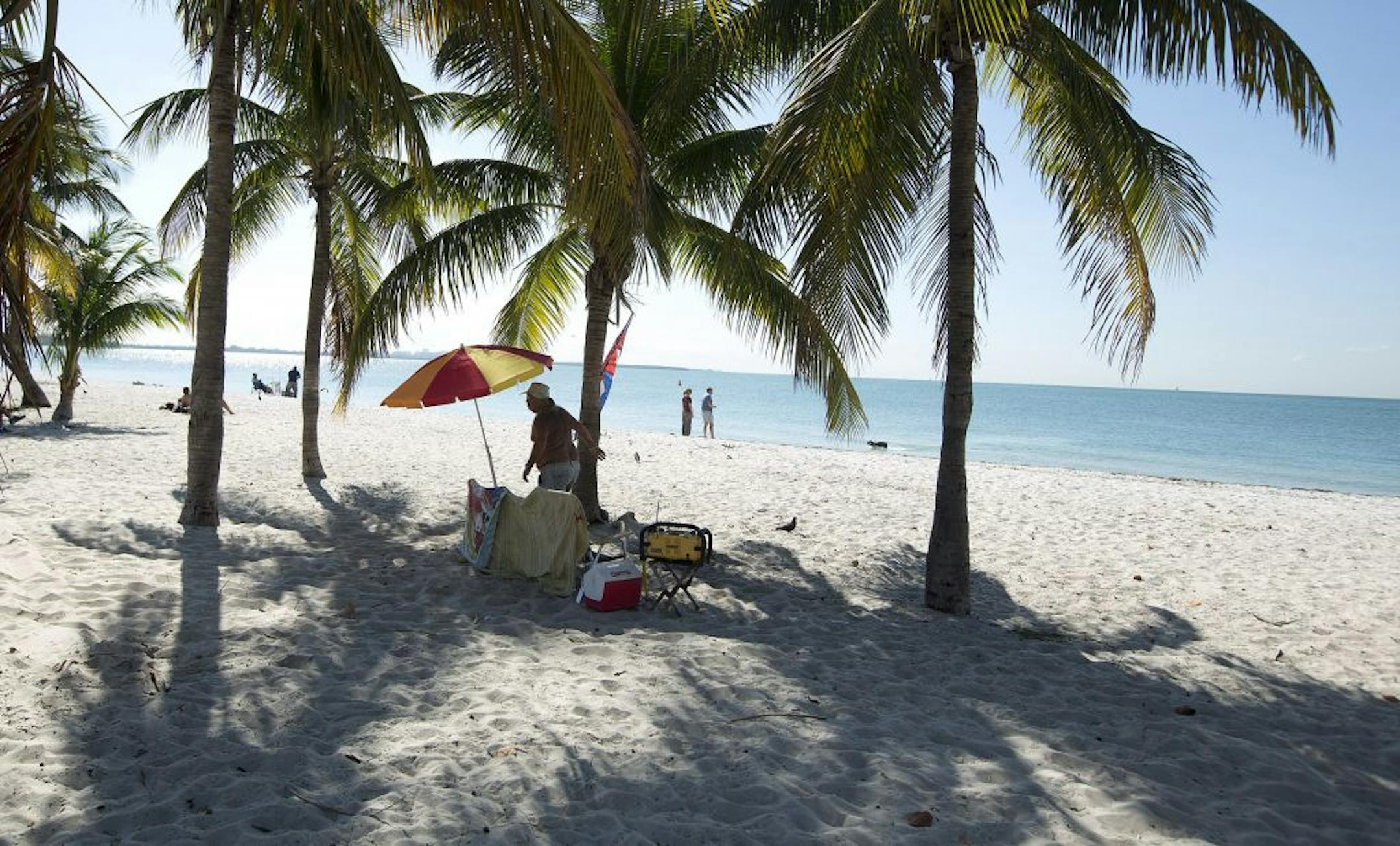
Every Friday in Naples during the winter, there's a Minnesota Breakfast that several hundred Minnesotans attend. Many are now Florida residents. Others are thinking about changing their residency upon retirement. Given the fact that high-income Minnesota taxpayers just got walloped in the latest federal tax bill and may soon get hit at the state level, Minnesota's snowbirds may soon need a larger room.
While middle-class income taxes weren't raised in the fiscal cliff showdown at the end of last year, the impact on high-income Minnesota taxpayers will be felt by all Minnesotans. The tax load on wealthy Minnesotans is making it almost impossible to persuade retired, high-income Minnesotans to keep their residence here rather than moving to Florida.
The problem: Under the new federal law, 80 percent of high-income itemized deductions, including charitable donations, are being eliminated. This is on top of raising the personal income tax rate to 39.6 percent from 35 percent. Higher-income taxpayers also face a new 3.8 percent tax on net investment income. That means a retiree living off interest income from bonds and certain other taxable investments will face a 44.6 percent tax income rate -- and that's only the federal part. Minnesota adds another 7.85 percent tax on income.
If a retiree stays in Minnesota and dies, the tax rate differential is even worse. The federal estate tax rate was raised to 40 percent from 35 percent on the amount over the $5 million exemption, but Minnesota adds its own tax starting at $1 million. Even the more-modest tax on capital gains and qualified dividends was raised to 23.8 percent from 15 percent.
That's a lot of new taxes.
How do our highest-income Minnesotans get out from under all this? One way is to establish themselves as Florida residents, where many already have winter homes. By doing so, they eliminate the Minnesota income tax of 7.85 percent, and replace it with a Florida income tax at zero -- that's right: no state income tax in Florida. The state capital gains tax and dividend tax is also zero in Florida. The estate tax in Minnesota on any estate over $1 million ranges from 6 percent to 16 percent. In Florida? You guessed it: zero.
High-income people pay particular attention to the taxes they pay, and the tax calculus of Florida residency is pretty straightforward. While one can make the argument that people should keep their tax residence here out of loyalty to the state where they may have made their money, the amount of savings available in the alternative makes that a tough sell.
Is state government helping to keep high-income retirees in Minnesota? It should, since the state is a big beneficiary of their income and estate tax revenue, sales taxes and charitable contributions, not to mention civic leadership.


