

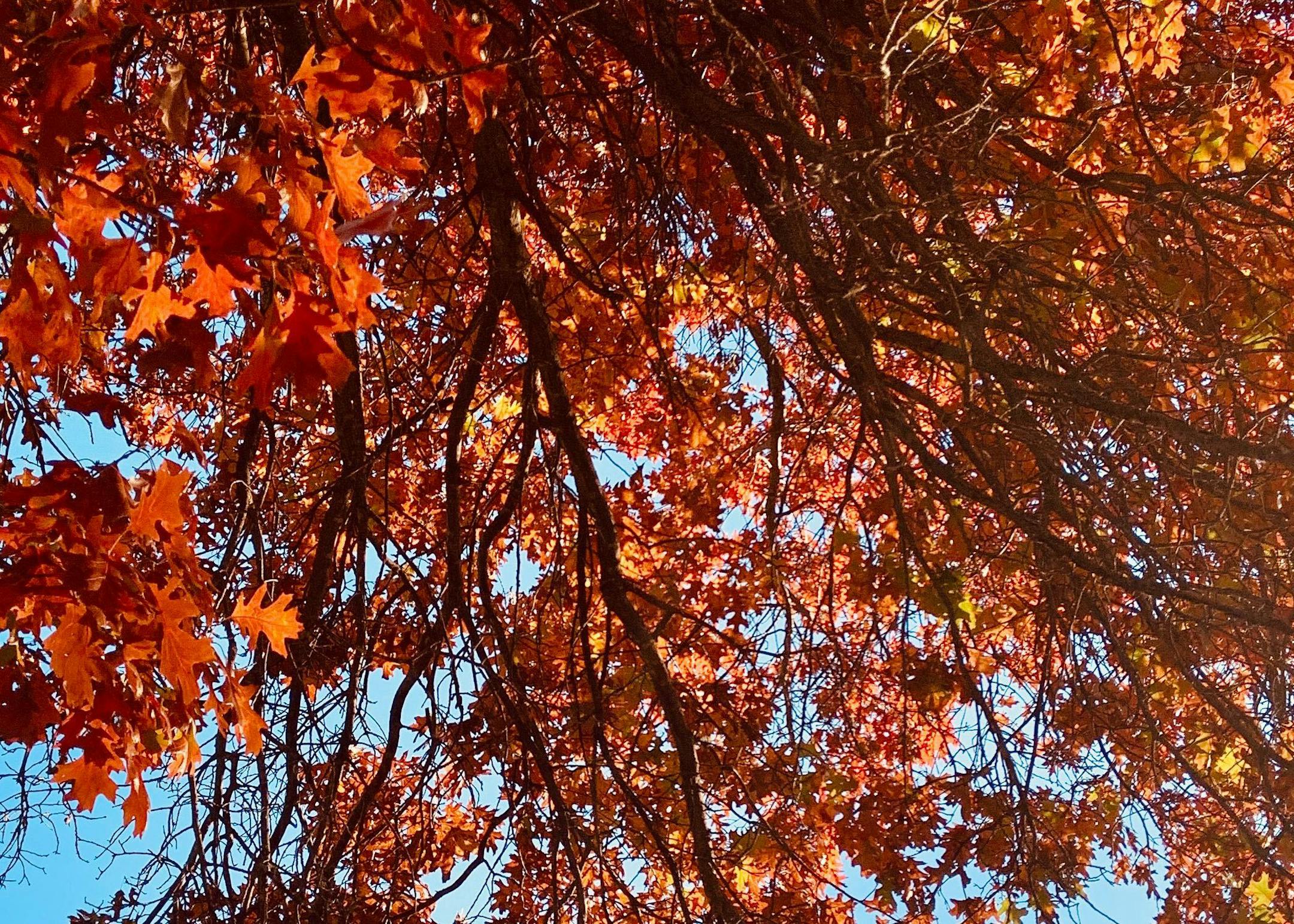
Maple trees tend to take center stage for fall accolades. It’s hard not to fawn over them when they’re among the first trees to change color, in shades bright enough to seem illuminated.
Think of fall, though, like watching a sunset. While many people know to gather for the day’s golden hour and look to the west, there’s often more to come after the sun dips below the horizon. The colors darken and deepen in new hues on the way to darkness.
Consider oaks — especially the northern red oak — Minnesota’s second act for leaf-peeping. After sumac and maples retire their fiery reds, oaks add scarlet, maroon and mahogany to the landscape.
Northern red oaks are among Minnesota’s six native oaks, including swamp oak, white oak, burr oak, northern pin oak and black oak.
It can take northern red oaks at least two decades to produce acorns, which can take two years to mature. They produce the most classic-looking acorns, with domed tops and smooth shallow cups that resemble upside-down berets.
Acorns produced by the state’s oaks provide a major source of nutrition for many of Minnesota’s animals. Everyone has seen squirrels and chipmunks feed on them. Rabbits, turkeys, whitetail deer, black bear, woodchucks, mallards, raccoons, grouse, foxes, and a variety of smaller birds will also eat acorns. Turkeys also may be spotted roosting in sturdy oak branches at night.

Birds and mammals build nests in oak branches, stash seeds into crevices of the bark, and hunt insects, spiders and larvae that might be hiding there.
Below ground, oak roots can graft with roots of similar species.


