
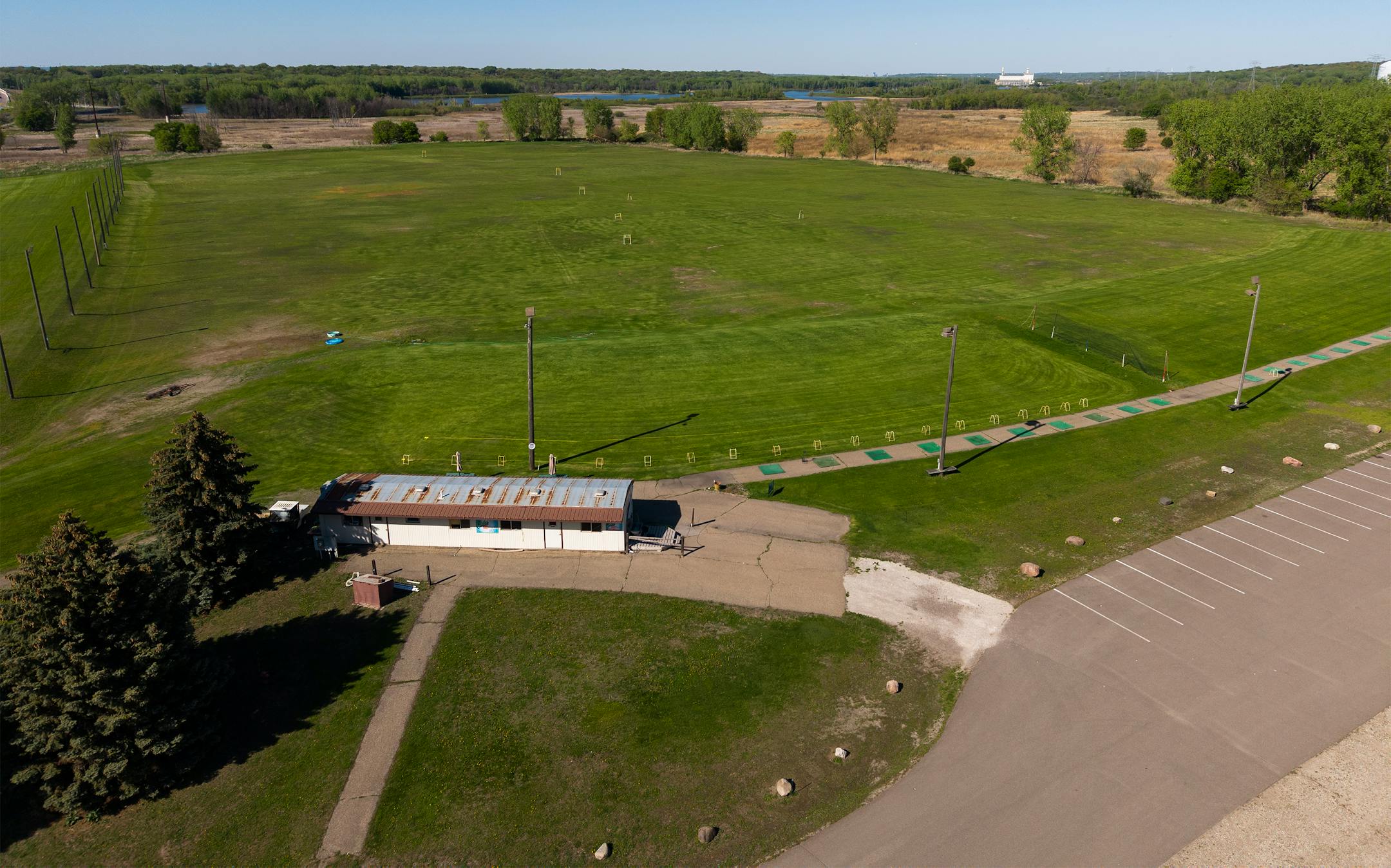
State sues landowner who wants to turn inactive Burnsville dumps into sports complex

The Minnesota Pollution Control Agency alleges Richard McGowan hasn’t adequately cleaned up the site.

The Minnesota Star Tribune
November 14, 2025 at 8:21PM
Michael McGowan, who wants to turn a pair of inactive Burnsville landfills into a sports complex, faces a new obstacle after the state sued him for allegedly failing to clean up the site. (Richard Tsong-Taatariii/The Minnesota Star Tribune)

A long-standing dispute between a statewide environmental agency and a landowner seeking to turn a pair of inactive Burnsville dumps into a Topgolf-style driving range is heating up.

The Minnesota Pollution Control Agency (MPCA) filed suit in late October against Michael B. McGowan and several of his companies, alleging the owner of the Freeway Landfill and Freeway Dump has failed to properly remediate the land — jeopardizing drinking water in Burnsville and Savage if he proceeds with the project without following MPCA guidance.

Sara G. McGrane, an attorney representing the defendants, said the complaint fails to mention the “numerous” attempts the McGowan family has made to reach a solution for remediating the site with the MPCA. McGowan has strenuously denied the agency’s concerns in a prior interview with the Minnesota Star Tribune, contending his plan for construction will line the site and prevent chemicals from reaching drinking water.

But the legal complaint, filed in Dakota County District Court, throws a wrench in his ambitions to bring an 100-bay driving range, pickleball courts and a conference center to a plot of land beside Interstate 35W. “Big Hits at the Gateway” can’t move ahead without approval from the MPCA.

The legal battle is another chapter in the McGowan family’s decades-long attempt to push back against the agency’s requests to clean up the land in a way it sees fit. At stake are two competing versions of science: one that sees the family’s ambitions as a grave danger to drinking water, and another that argues the agency has vastly overstated the project’s risks.

The Burnsville Planning Commission in late October expressed its support for an application for the project, and the City Council will weigh in Nov. 25. But as the legal and governmental processes unfold, some residents have started sounding alarms about the risk Big Hits could pose to an essential resource.

“This is our city water that we’re talking about here,” resident David Young said at a recent meeting. “What will future generations think about us if we pollute their water?”

Fight over science

Rep. Jessica Hanson, a DFLer who represents parts of Burnsville and Savage, said she’s siding with the environmental agency in what she called a “big fight” over “whose science is right.”

On one side is the environmental agency. State scientists predict that when a nearby quarry one day stops pumping water that sustains its mining activities, the groundwater table will rise and soak the dumps. That will unleash a slew of contaminants — “forever chemicals,” benzene and vinyl chloride, among others — into drinking water and the nearby Minnesota River.

On the other side is the McGowan family. In a previous interview, a scientist working with the landowners said contaminants at the dumps won’t pollute drinking water even if the water table rises, because flooding and saturation have largely flushed the waste of harmful substances.

A group of environmental and engineering consultants backing the project have noted that groundwater in the area naturally flows north, away from Burnsville’s drinking water supply — meaning even if the water table rises, “there would still be no credible threat to the city’s water.”

The environmental agency disagrees, and has long urged the McGowan family to enter into a landfill clean-up agreement that would allow the state to monitor the inactive dumps for environmental hazards in perpetuity. State scientists have also proposed two options — both of which would cost hundreds of millions of dollars — to remediate the site.

One solution calls for excavating the waste from the Freeway properties and hauling it to another landfill for final disposal. Another would supplant the Freeway Landfill with a modern landfill and move waste from the Freeway Dump to that site.

Yet the McGowan family has “refused to enter into a binding agreement,” an attorney for the environmental agency alleged in the complaint. The McGowan family points to alternative solutions — like lining the site and lowering the quarry lake level — that they claim would head off contamination and cost far less than the environmental agency’s ideas.

Kirk Koudelka, the MPCA’s assistant commissioner for land policy and strategic initiatives, said the agency opted to file suit because the landowners have refused to “do the work themselves, or let the agency be able to do the work.”

“That forces us in this situation,” he said, adding that the aim of the lawsuit is to protect drinking water in Savage and Burnsville — which he said is currently safe — for the long term.

The bitter disagreements are chronicled in the complaint, which asks a court to issue a declaratory judgment affirming that the Freeway Landfill and Freeway Dump are “priority qualified facilities.” That designation gives the environmental agency authority to clean up the sites, including by acquiring them through eminent domain.

McGrane, the McGowan’s attorney, said her clients disagree.

“We’re looking forward to having a court actually decide those issues,” she said, before adding: “Hopefully the court will agree with us that there is no present risk and any future risk if speculative things can be mitigated with very reasonable solutions.”

Residents speak out

A flurry of residents voiced their concerns about the project’s potential to mar drinking water at the recent Planning Commission meeting.

A former planning commissioner said excitement about the economic benefits of Big Hits shouldn’t override its potential environmental downsides. A neighbor said the City Council shouldn’t vote on the project until the contamination concerns are adequately addressed.

The Star Tribune asked Burnsville officials how the environmental agency’s lawsuit could affect the upcoming City Council vote. Planning Manager Mike Mrosla said in a statement that the project’s final approval hinges on the “applicant addressing existing environmental site conditions.” McGrane said the legal process won’t change the issue that will come before city officials later this month: whether or not to approve plans for the development.

A clutch of the project’s supporters promised officials at the Planning Commission meeting that they would clean up the site in a way they see fit.

“We want to… make the property more environmentally sound,” said Teresa McFarland, a communications strategist working with the McGowan family. “We will remediate the property.”

about the writer

about the writer

Eva Herscowitz

Reporter

Eva Herscowitz covers Dakota and Scott counties for the Star Tribune.

See Moreicon

More from Twin Cities Suburbs

See More
Hopkins police officers gathered before entering the hallways of Alice Smith Elementary School in Hopkins during an active shooter training exercise on 10/26/13. The weapons carried a form of paint ball ammo. Over forty people representing Hopkins Police, Hopkins Fire, Hennepin EMS, Hennepin Sheriff's dispatch and the Hopkins School District took part in the exercise. In light of the increased shootings at schools and workplaces across the country, Hopkins Police are increasing shooter training
Tom Wallace — DML - Star Tribune/The Minnesota Star Tribune

A woman was found with a gunshot wound Saturday afternoon.

card image