
Minnesota’s best-known spruce tree chopper has his day in court, and the verdict is mixed

Blake Buschman was convicted of misdemeanor theft, but cleared of a felony, after he took thousands of tree tops for holiday decor.

The Minnesota Star Tribune
August 28, 2025 at 6:08PM
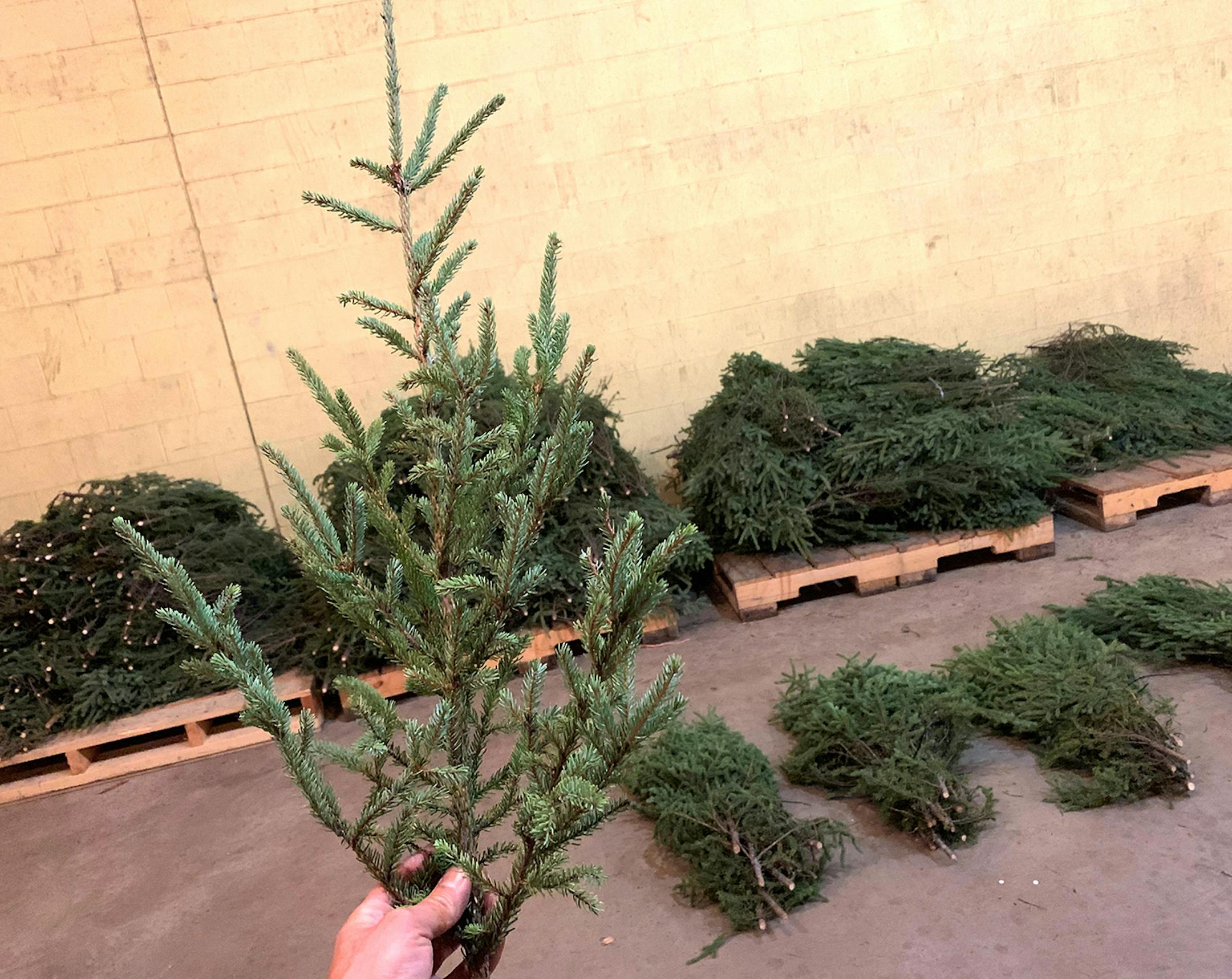
Photo Provided by DNR Enforcement. Conservation Officer Shane Zavodnik of Cook holds one of the 1,300 spruce tree tops the agency recently seized from alleged thieves who entered a public forest without a harvest permit to cut and sell the pine on the black market. The pirating of the tree tops is a perennial problem made worse this year by strong demand for holiday season decorative material.
Conservation officer Shane Zavodnik of Cook, Minn., holds one of the 1,300 spruce tree tops the agency seized in 2024 from alleged thieves who entered a public forest without a harvest permit to cut and sell the pine on the black market. (Provided by DNR Enforcement)

VIRGINIA, MINN. – Blake Buschman sat in the defendant’s chair, his sandy hair down to his shoulders, as his old adversary was sworn in by the judge. Conservation officer Anthony Bermel of the Minnesota Department of Natural Resources approached the witness stand in full uniform and faced Buschman.

The two had met dozens of times over the years deep in black spruce bogs and forests, down hidden private roads behind locked gates, but never before in court.

Bermel leaned into the microphone and began the testimony that he and prosecutors hoped would ultimately, finally, get Buschman to stop cutting the tops off of spruce trees.

After a two-day trial this week, Buschman, northern Minnesota’s most notorious spruce top cutter, was found guilty of theft, but not of a felony.

The jury of 12 found that Buschman had lopped off and stolen the top 2 to 5 feet of thousands of young spruce trees on private and public land to sell as holiday décor throughout the fall of 2024. But the jury also ruled that those tree tops were not worth more than $1,000, an important distinction because in Minnesota the severity of theft charges depends on the value of the contraband.

The split verdict reduced the theft charge to a misdemeanor. The jury also convicted Buschman of trespassing, a gross misdemeanor, and two misdemeanor counts of failing to carry consent while cutting decorative forestry materials. Buschman was acquitted of a littering charge.

Buschman will be sentenced Nov. 3 by District Judge Michelle Anderson.

Buschman, wearing red suspenders and a blue-and-white-striped shirt, held his hands behind his back as he listened to the verdict. After the jury left, he hung his head, thanked the judge and walked out down the echoing courthouse steps to begin a two-hour bicycle ride to his home in Babbitt.

He second-guessed his decision not to testify or call witnesses on his behalf.

“Now that they’ve got this win they’re going to come after me for all the other charges, too,” he said.

Buschman still faces 15 pending counts of misdemeanors related to cutting spruce in the fall of 2023.

Buschman, who’s 38, has been harvesting spruce tops for about a decade, a lucrative and growing, but little-known industry.

Anyone can legally cut spruce tops or balsam boughs so long as they carry written permission from the landowner or get a permit if the forest is owned or managed by the state or county.

Demand for the decorative greenery starts in September and typically ends around Thanksgiving, when department and garden stores are stocked up on all the winter and Christmas décor they will need for the season.

Black spruce, with their soft needles and pleasant aroma, are placed in planters and pots, adorned with ribbons and bows. They’re sold, stuffed into arrangements with birch bark and balsam, in garden stores, grocery stores, department stores and any other place that wants to cash in on a winter décor craze that shows up every 30 years or so.

For nearly as long as Buschman has been cutting spruce, he has run into the same conservation officer.

Bermel testified he has confronted Buschman next to piles and stacks of freshly harvested tree tops more than a dozen times over the past 10 years. He knows Buschman’s vehicles or trailers by sight, what kind of twine he uses to bundle the tops together, and his penchant for leaving empty bottles of juice and other rubbish at harvesting sites.

Bermel has cited Buschman with trespassing and cutting tree tops without permission every fall since 2019. Most of those charges were dismissed or reduced in plea deals.

Hoping to break the pattern, Bermel and county prosecutors charged Buschman last fall with felony theft. Now, for the first time, he would face trial.

Bermel said he spotted Buschman in October near a pile of hundreds of freshly cut spruce tops on a parcel of tax-forfeited land near Babbitt managed by St. Louis County. Later Bermel walked the area with a county forester and a nearby landowner, finding that about 5,000 spruce tops had been cut on the two properties.

A wholesaler in Floodwood, who buys fresh bundles of spruce from cutters and sells them to a distributor, testified that he paid Buschman a little over $4,000 for about 3,400 spruce tops that September and October. Eventually, those spruce tops are sold to the public for up to $60 each.

With a guilty verdict secured, prosecutor Amber Pederson asked Judge Anderson to prohibit Buschman from cutting, possessing or transporting spruce tops and decorative forest materials.

Jason Bauer, Buschman’s lawyer, objected, arguing that banning his client from legally cutting spruce tops would put him entirely out of work.

Anderson said she would allow Buschman to cut, as long he obeyed the law and obtained written permission from the landowner that would be filed with the court.

The cutting season typically starts in the first week of September, ideally after the first freeze so the needles stay green and fresh.

Before leaving the courthouse, Buschman told the Minnesota Star Tribune that he had already heard from a friend who won a permit to cut spruce on county land and needed help. Despite the guilty verdicts, he hung onto the fact that he could still do the work.

“They’re not going to stop me, though,” he said, and started his long bike ride home.

about the writer

about the writer

Greg Stanley

Reporter

Greg Stanley is an environmental reporter for the Minnesota Star Tribune. He has previously covered water issues, development and politics in Florida's Everglades and in northern Illinois.

See Moreicon

More from Environment

See More
Rising above the treeline (Top of this photo), on the shore of Birch Lake, the Twin Metals Copper Nickel Mine Plant site and Tailings Management site is part of the proposed plan. ] In theory, the copper-nickel mine Twin Metals wants to build in the headwaters of the Boundary Waters Canoe Area Wilderness is a zero-discharge mine — a closed loop that will endlessly recycle millions of gallons of water, including rainwater and the polluted process water it uses to extract ore and
Brian Peterson/The Minnesota Star Tribune

The copper-nickel mine is controversial for its proximity to the Boundary Waters Canoe Area Wilderness, and the Biden Administration had canceled its leases.

card image
card image