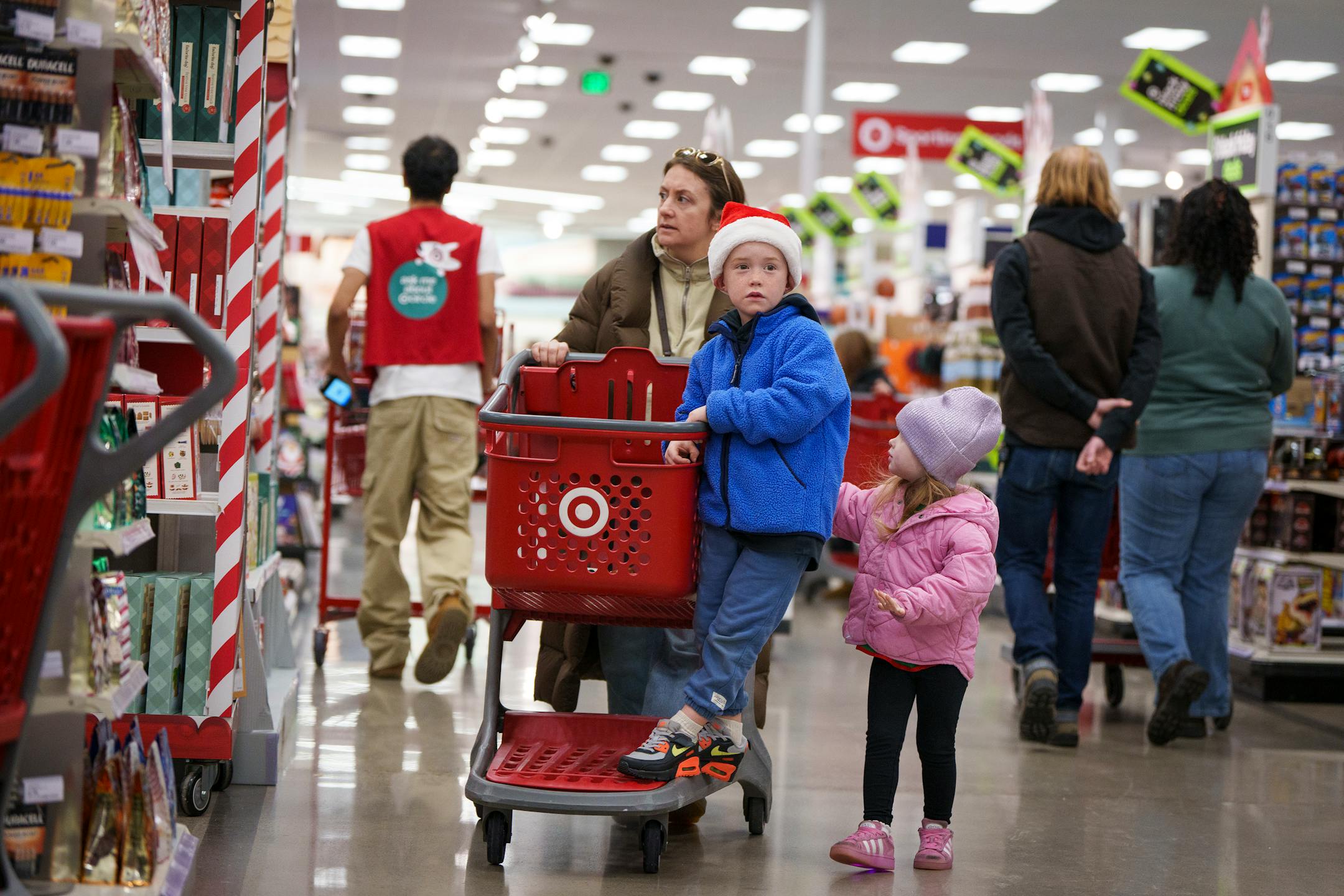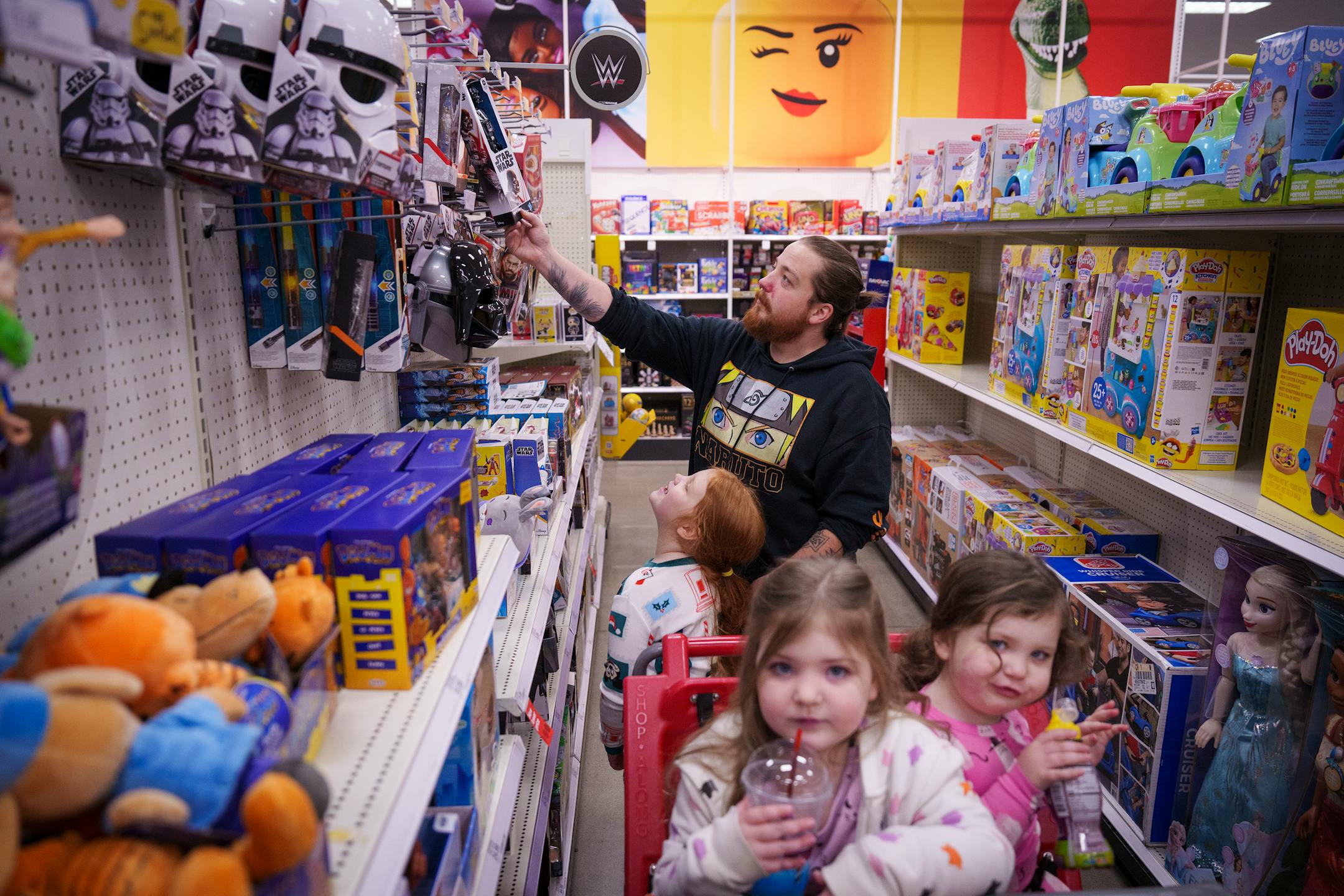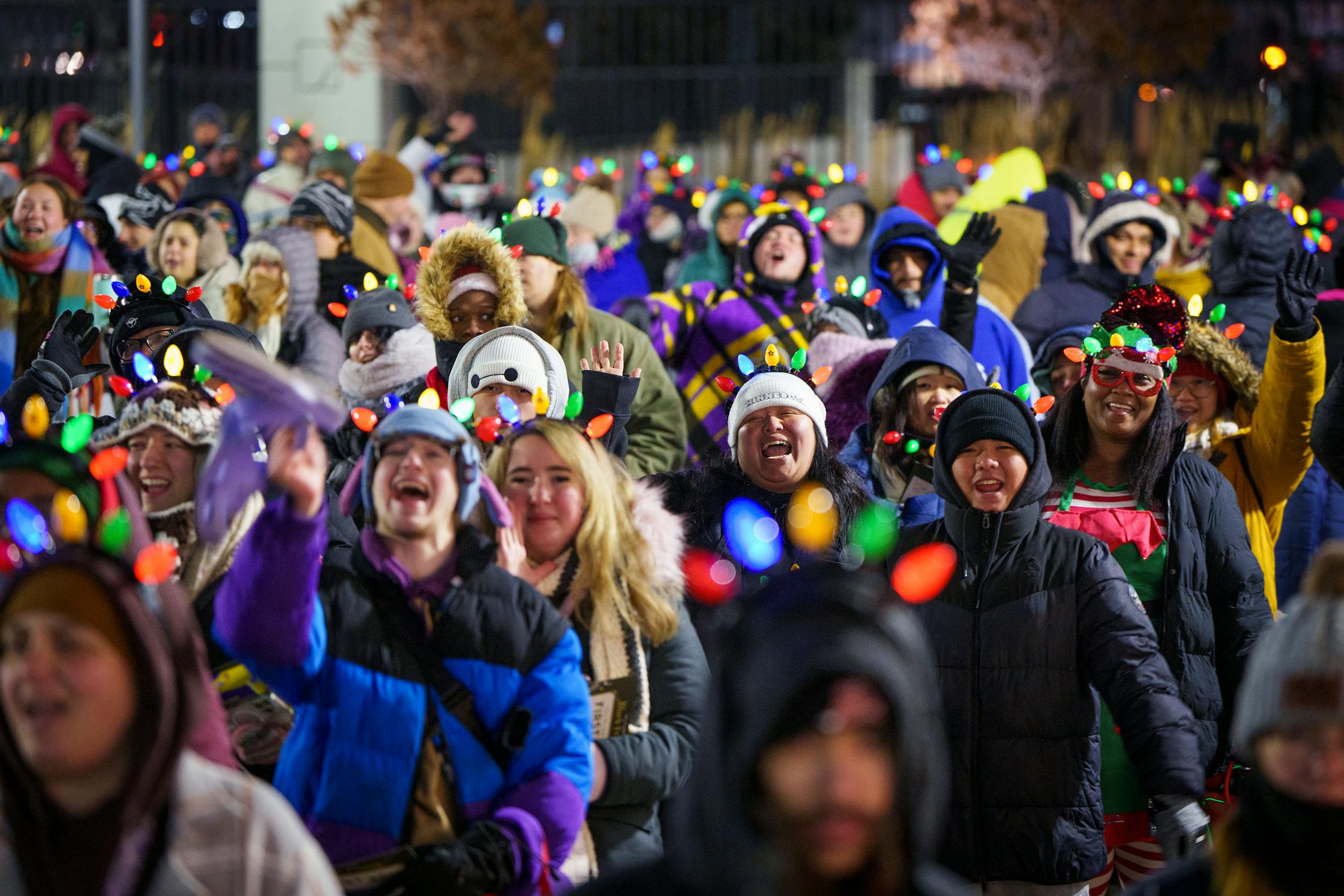
Minnesotans proved they were, well, Minnesotan, again this year, donning parkas and Christmas bulb headgear to brave temperatures in the teens as they lined up outside Mall of America, some for hours, for some hot deals and great people-watching on Black Friday.
The day has slowed down from the over-the-top days of the 1990s and early 2000s, with the frenzy more merry than harried. Digital sales — allowing consumers to stay at home, with feet propped on ottomans, coffee in hand — take the edge off finding the best deal for the hottest gift item.
But for brick-and-mortar retail businesses, especially in a year rocked by high tariffs and dips in consumer confidence, the day retains immense value and is still usually the most-shopped day of the year.
And in a year of financial uncertainty, many said the bargains were the bigger draw.
Becky Hoffart, 44, of Cottage Grove, stood in line on Friday morning with her 13-year-old son outside Pop Mart at MOA, waiting to buy an anime figure. She lost her job earlier this year, so the sales matter even more this year.
Plus, the day-after-Thanksgiving shopping scrum remains a yearly memorial to her late husband, with whom she’d create a fun shopping game each year to cross off needed holiday presents.
“It’s really just trying to figure out the balance of how to manage Christmas,” Hoffart said. “This is a great way to do it.”

The 2025 holiday shopping season comes after a year when global tariffs ushered in by the Trump administration, as well as a crackdown on immigrant labor and cutbacks on health care and food subsidies, has left a fractured road for many retail businesses and middle-income Americans.