

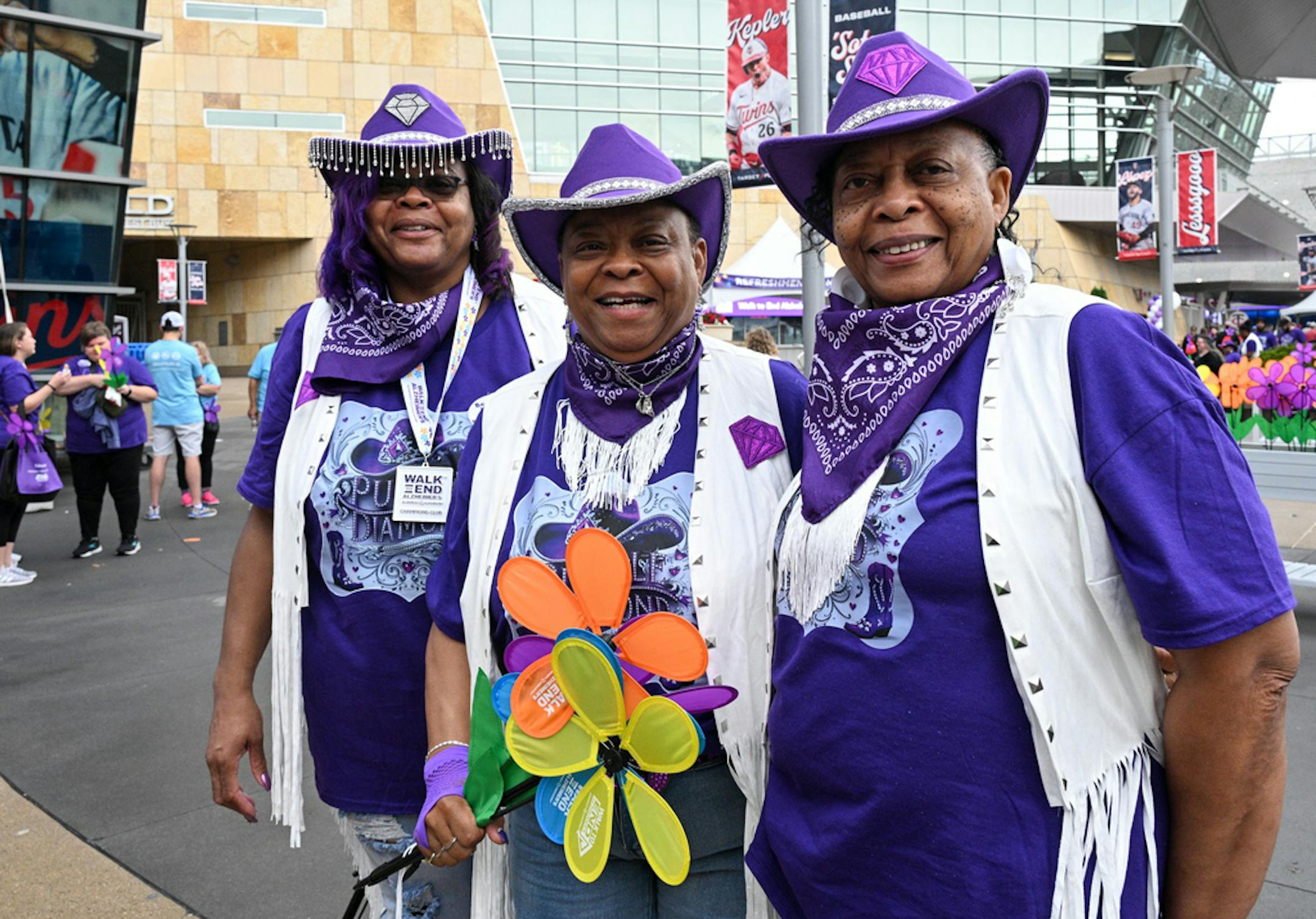
Every September you’ll find Tammy Willis of Brooklyn Park dressed in an elaborate outfit, like last year’s Western wear, leading a group of about 50 family members and friends at the Twin Cities Walk to End Alzheimer’s. This year will be no exception.
But newly retired Willis, 60, does more than simply participate on the day of the event. She volunteers with the walk planning committee and whatever else the Alzheimer’s Association Minnesota-North Dakota Chapter needs done. It’s way to honor her mother, who died of Alzheimer’s disease in 2015 at age 87.
“My family and I are committed to this,” Willis said. “My thing is to help people going through what I went through — to provide resources I didn’t have, to help them walk through this journey.”
Whether people volunteer for personal reasons, like Willis, or other motivations, they serve a vital civic role. Volunteering not only helps people in need, but it also enriches local communities in many intangible and real ways. Nationwide, volunteers contributed $167 billion in economic value for the year ended September 2023, according to AmeriCorps and the U.S. Census Bureau.
Volunteers tend to be older partly because they may be retired and have more time. Studies suggest older volunteers can live longer, healthier lives and be happier. And volunteering can ease the transition from work to retirement by providing purpose.
Volunteers for Lutheran Social Service of Minnesota (LSS), one of the state’s largest nonprofit social service organizations, often say their experience provides “a sense of purpose and helps them feel useful and engaged in the community,” said Carolyn Scherer, a program director. Its data supports that: 90% of its foster grandparent volunteers feel more socially connected and 100% of senior companion volunteers say their lives have changed for the better as a result of their service.
Defining volunteerism
Many people are familiar with formal volunteering through an organization, but people also can participate in informal volunteering, such as pet sitting or running errands for a neighbor. In either case, it’s something you provide unasked for free to benefit others.
If you’re unsure how to donate your time or expertise, consider two questions to get started: What are you interested in? And what skills can you share? Searches of national, statewide and local databases yield thousands of volunteer opportunities, ranging from tutoring and delivering meals to answering a help line and pro bono legal assistance.


