

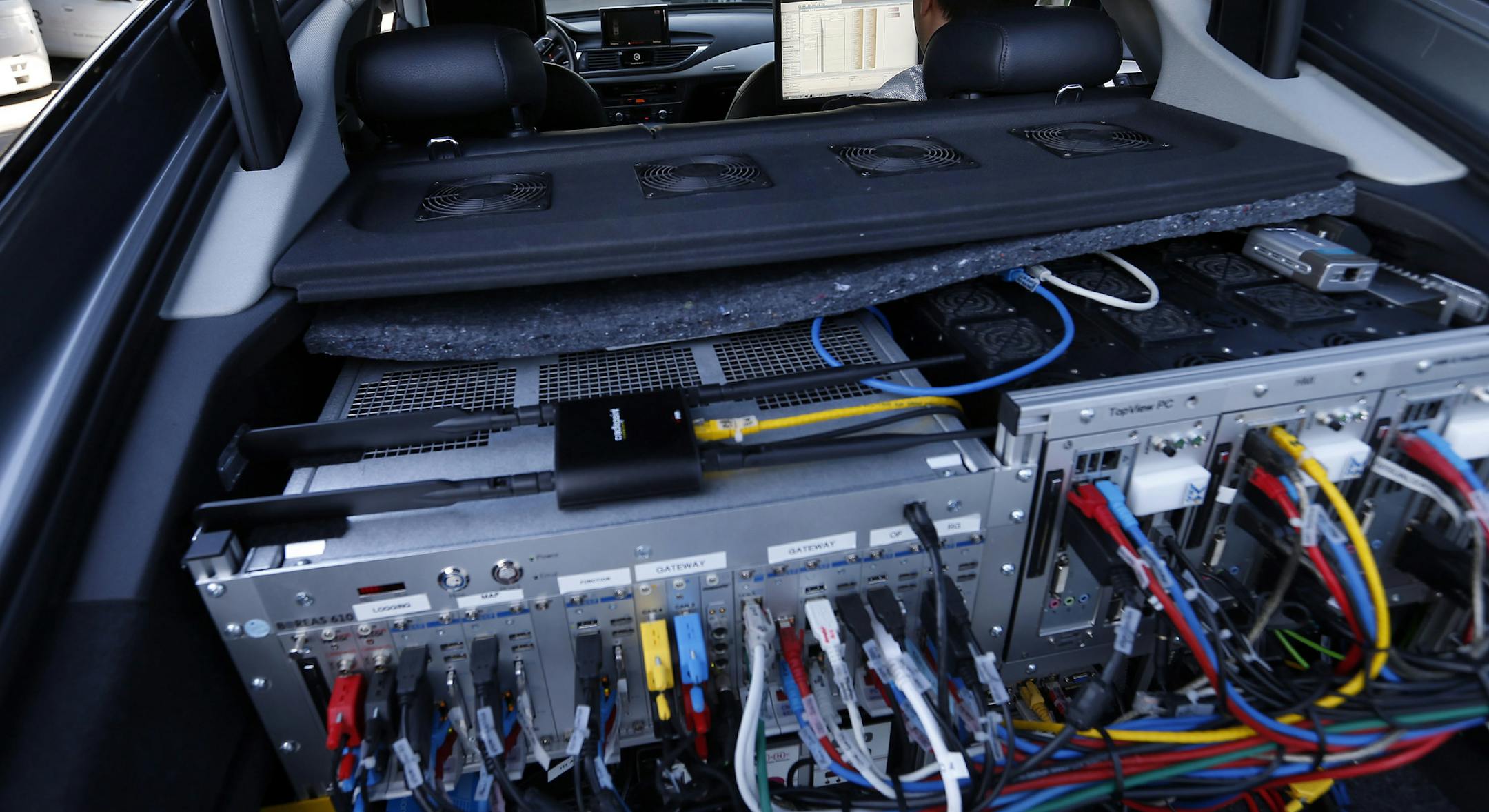
In the future, your car will anticipate your every need, from where you're heading to what you'd like to listen to along the way — and, of course, drive itself.
That's the vision automakers are test-driving in Silicon Valley, which has emerged as ground zero in the race to re-imagine the automobile. Car companies ranging from General Motors to Mercedes have set up shop in the nation's hotbed of technology and innovation for a dose of inspiration — and a little wheeling and dealing — as they hash out how their vehicles will connect to the Internet, interact with users and drive autonomously.
And with Apple and Google increasingly eyeing the road, they're shifting their efforts into overdrive.
Cars have remained comparatively low-tech as everything from phones to thermostats have undergone digital makeovers. But automakers can no longer deny that connected cars are the way of the future — and they're pursuing the talent they need to engineer the shift, said Eric Noble, president of the CarLab, a consulting firm in the Los Angeles area.
By focusing on Silicon Valley, automakers are "almost unanimously admitting they don't have the internal resources to address the issue," he said. "Those who do have the knowledge, insight and skills to address the issue are all in one village."
Capped off by Ford's expansion earlier this year, most major automakers now have a presence in Silicon Valley. And even the early entrants have redoubled their efforts in recent years, transforming their Silicon Valley offices from far-flung research outposts to core arms of the company, said Chris Gerdes, who directs the Center for Automotive Research at Stanford University. He credits Google — whose cars routinely whir around sans drivers — with giving the traditional automakers a sense of urgency.
"Companies are realizing that to get the most out of their Silicon Valley offices, they need more than just a few people," Gerdes said. "They need to have an office that is doing exciting work and can compete for the very best talent the valley has to offer."
The pace of innovation is so brisk that some car companies project their vehicles will be running autonomously in at least some situations within the next five years. But when it comes to autonomous driving, honing the technology is just the beginning — the real test will be how drivers react, said Maarten Sierhuis, director of Nissan Research Center Silicon Valley.


