Winona native disappeared in Yellowstone a year ago. ‘Army’ of searchers won’t give up.

Two groups will set out this month into the Wyoming wilderness for what’s almost certainly a recovery mission.

The Minnesota Star Tribune
August 9, 2025 at 10:58PM
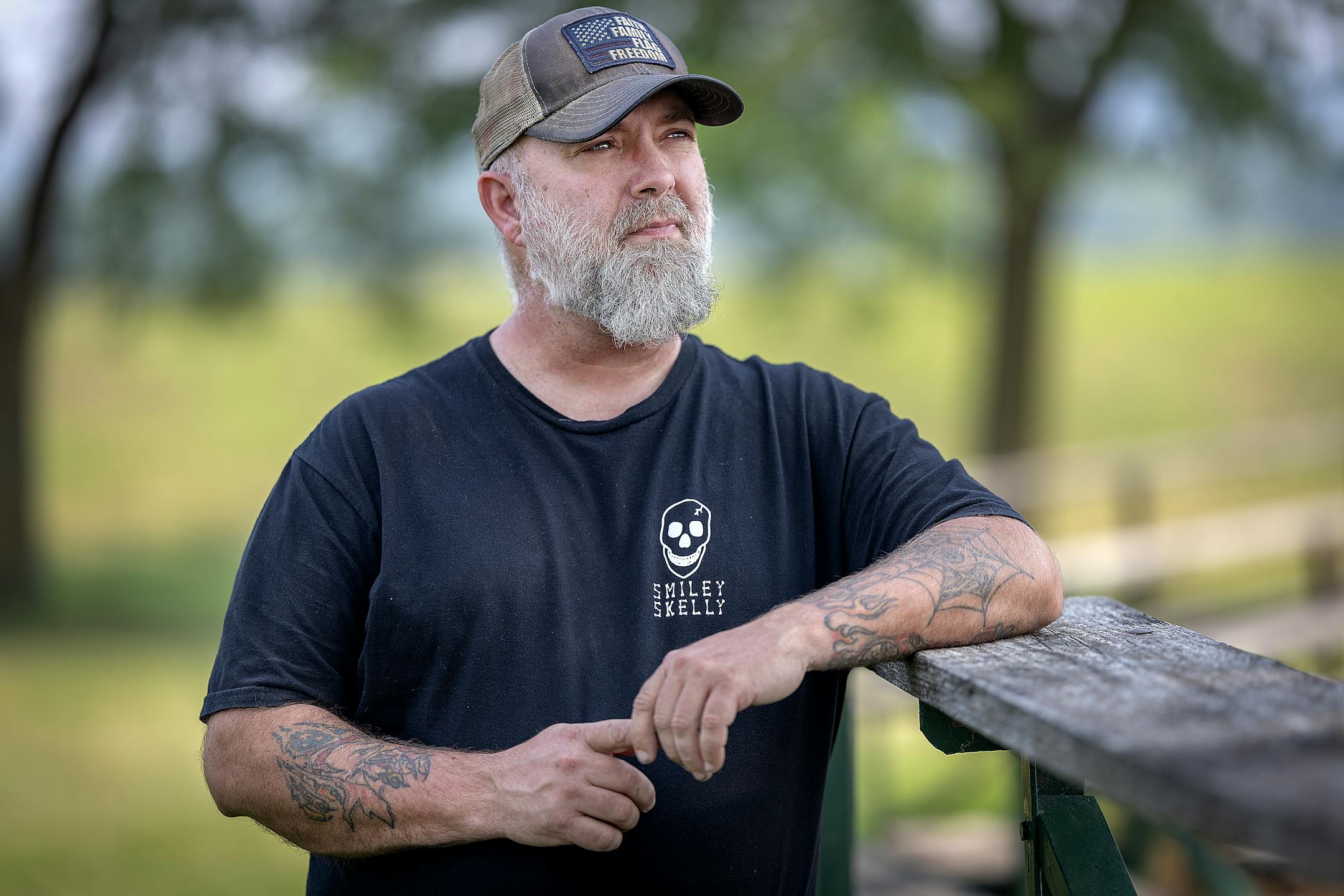
Brian King-Henke's 22-year-old son Austin King went missing after summiting Eagle Peak last September in Yellowstone National Park. Two private search groups will look for King in the coming days. (Elizabeth Flores/The Minnesota Star Tribune)

WINONA, MINN. – Weary but hopeful, Brian King-Henke will drive from Minnesota to Wyoming next week to make one more attempt to find his missing son.

Austin King was 22 when he disappeared late last summer, after summiting the highest peak in Yellowstone National Park.

The initial search-and-rescue operation in the remote backcountry found nothing but a few personal effects at his camp. King-Henke assembled his own private search last year but it was halted by heavy snow. He vowed to return with “an army.”

That army will move in with two separate, private searches this month. Both expose a difficult truth in cases of those lost in the wild: Private efforts are often the last, best chance to get answers when government-led searches diminish.

King-Henke said the support from strangers and money raised online has been a whirlwind.

“This is strange being in this, trying to pull in resources to try to find my son on a mountain,” King-Henke said.

Brian King-Henke holds up a cellphone picture of his son Austin King. The first search for King will begin Aug. 12. (Elizabeth Flores/The Minnesota Star Tribune)

Lost in the mountains

Whipped by sleet and rain, King was vulnerable after climbing Eagle Peak. He had arrived that summer for a concessions job at the park and decided on a strenuous backcountry hike.

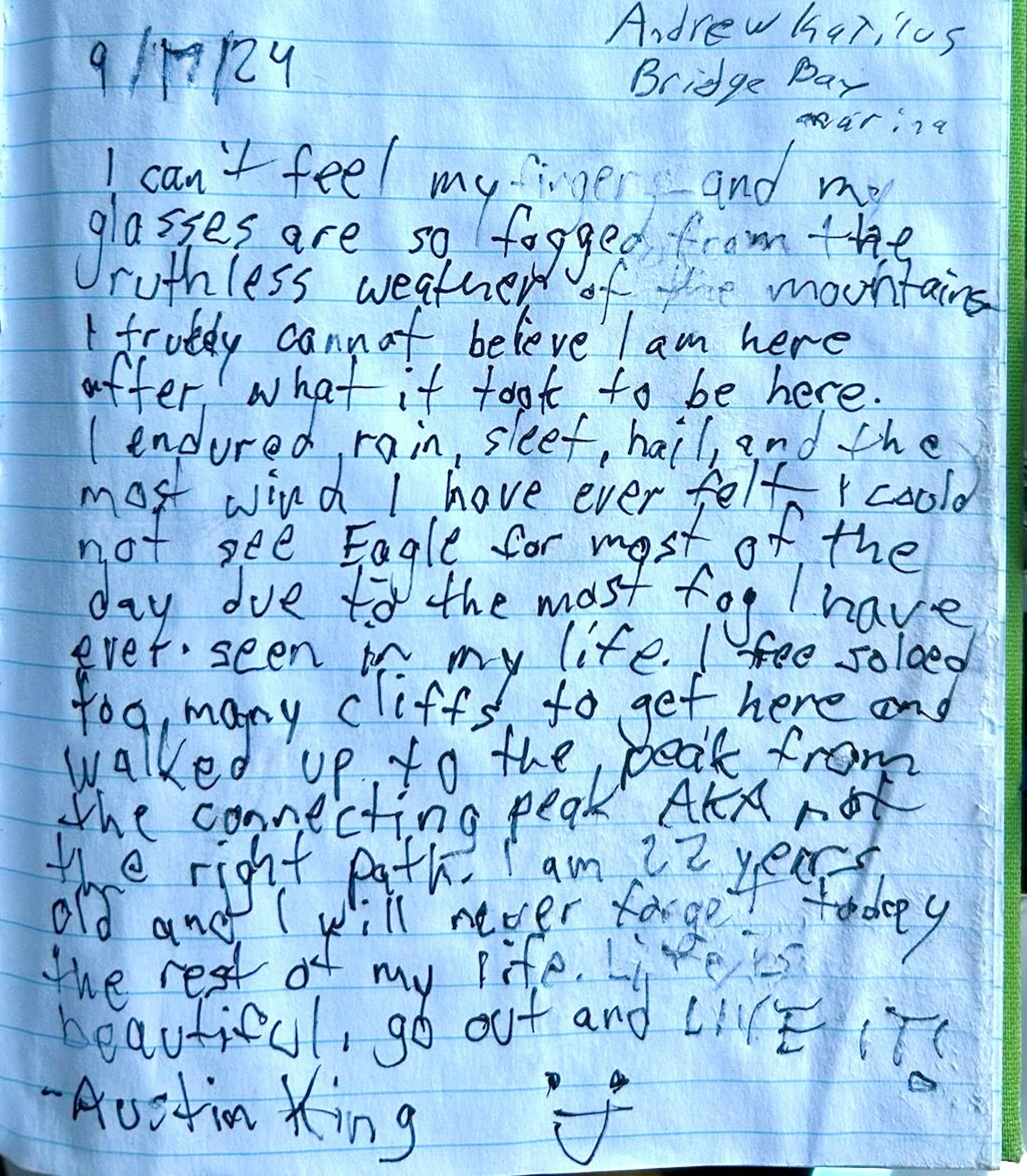
It was Sept. 17, 2024. He was at nearly 11,400 feet and alone. King took a moment to write something in the summit registry atop Eagle Peak.

“I can’t feel my fingers and my glasses are so fogged from the ruthless weather of the mountains. I truly cannot believe I am here after what it took to get here,” he scribbled. He also called family members. The hour was getting late.

King failed to show up three days later for a return shuttle. His disappearance triggered a search by authorities from Yellowstone and Grand Teton national parks, as well as nearby counties.

More than 100 people searched from the air and on the ground, spanning 11 days. Unable to find King, the operation scaled back to recovery mode. Offering condolences to his family, Yellowstone’s superintendent said staff would continue limited searches. The National Park Service (NPS) said there was “a lack of definitive clues” about King’s whereabouts.

Yellowstone staff has since assisted the new search groups about to head into the rocky, jagged terrain around Eagle Peak. Some of the private volunteers said it isn’t practical for authorities like those at the Park Service to maintain a heavy search presence.

“It’s just not feasible. The [parties] can put their initial effort into hopes of finding someone alive,” Colette Daigle-Berg, a veteran search dog handler, said of sustained professional searches. “But once that possibility starts to wane and it is more likely a recovery, then everyone goes back to their normal commitments.”

A Northern Michigan University professor who has researched and written about people who’ve vanished in the wild said “it also matters where a person goes missing.”

A lack of people, time and money to search is fundamentally more acute in smaller, remote areas, said Jon Billman, author of “The Cold Vanish: Seeking the Missing in North America’s Wildlands.”

“Much of the time, it is about resources,” he added.

Austin King's note in the Eagle Peak summit register. (Provided)

Filling the gap

A Minnesota group is central to the first orchestrated private effort to find King.

The Jon Francis Foundation, a Stillwater nonprofit, is sending Daigle-Berg and a group of three other canine teams trained in locating human remains.

The foundation emerged from a need clarified for David and Linda Francis when their son Jon, 24, went missing in 2006 during a climb in the Idaho mountains: Some families must go it alone.

Feeling let down by authorities, the Francis family assembled its own search. Their son’s remains were found more than a year later.

David Francis first reached out to King-Henke last autumn. “I thought, the foundation might be able to do a search here,” he said.

Yellowstone officials have shared with Francis and Daigle-Berg maps and drone data from last year’s search. They have also met separately with a second group led partly by Bill Dohse, who runs a search business in Cody, Wyo., called Find-911. Both private groups also have met to share information.

Yellowstone will allow the searchers to undertake otherwise prohibited activities, such as using drones and dogs in the backcountry, according to park spokesperson Linda Veress.

“It is not unusual for us to coordinate with private searches. ... The circumstances of each missing person case are different,” she said.

Park employees continue to look for King, too, when they are near Eagle Peak. They also plan their own search later this summer or fall, Veress added.

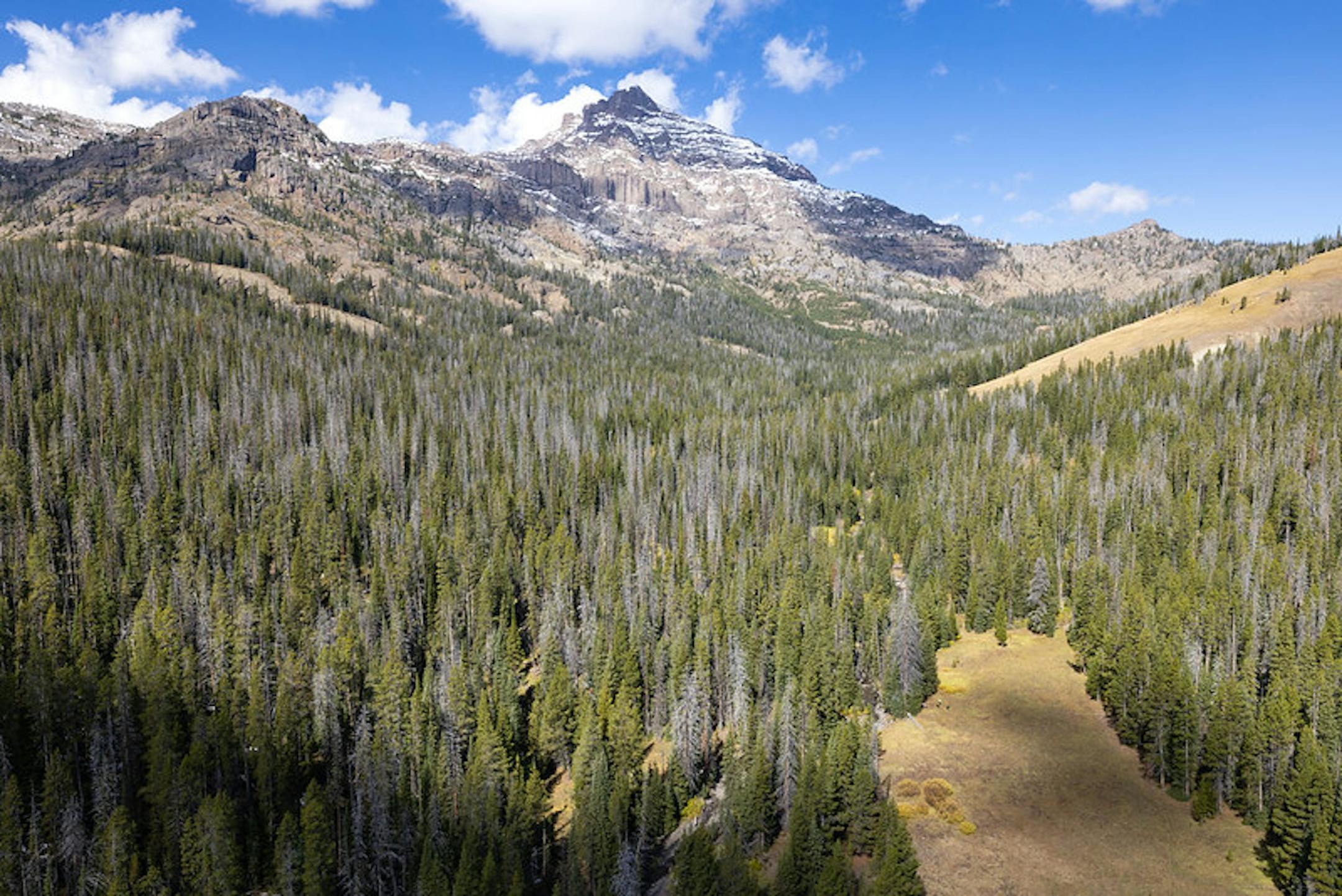
A view of campsite 6D8 and Eagle Peak during the search for Austin King last September. (Jacob W. Frank, National Park Service)

Onto rugged ground

The foundation’s search will cost $60,000, Francis said. It will use mules and horses Aug. 12 to haul gear and food into the high country, including a satellite system, data-collection devices, and seven days’ food.

Daigle-Berg and her crew will hike in. Together, they will traverse nearly 20 miles over two days to enter the park from the Shoshone National Forest. Once there, they will set up a base below Eagle Peak where King pitched his tent ahead of his ascent: remote campsite 6D8.

The threat of grizzlies is real. So, too, are the blowdown, rockfall and sudden weather extremes.

“This is my biggest challenge yet in terms of remoteness, hazardous terrain and scale,” Daigle-Berg said. “Eagle Peak is a big mountain. The handlers, dogs and flankers were specifically chosen for their mountaineering skills and fitness levels.”

Still, the window to find answers about King, whose father said had trained for his Eagle Peak attempt, is now. Most snow has melted from the peaks where King last made contact. Creeks are easier to cross. And good light in the expanse stretches what can get done in a day.

The dogs will work around hard-to-reach areas near talus slopes and shale hillsides to pick up cadaver odor.

“I think the likelihood is that he fell not too far after he talked to his family, that he fell someplace fairly close to the summit,” Daigle-Berg said, adding that King’s cellphone GPS data had limited value. “It is all a big guess, right?”

Another search to follow

A second group of about 20 people, led by Dohse and the Montana Safety Group, will head in Aug. 21. Their focus is territory in about a 2-mile radius of Eagle Peak. They will use drones and ground, rope and dog teams.

Dohse, who helped the private search last year, has an online fundraiser to defray the costs of using helicopters. King-Henke has raised about $23,000 since last year.

The foundation has led more than 40 recovery efforts since 2007; 10 have turned up remains of the missing.

Billman, the researcher and author, said people like the Francises, Daigle-Berg and Dohse have singular skills and abilities to help when private efforts seem the only route.

“All of us can imagine ourselves in a situation where a loved one is missing,” he said. “At the core, people are going to want to help, and this is a good example of that.”

King-Henke appreciates the support. He said Austin’s young life was filled with family camping trips. And, as he settled out West, he had dreams that extended beyond Yellowstone. He and one of his brothers wanted to pursue more national parks jobs.

“I said, go, experience it. Send me pictures. Text me once in a while,” he added. “He was loving [Yellowstone]. It was his world.”

King-Henke will begin another drive late next week to Cody. Austin’s mother, Pandy King of Winona, and other family members will travel there earlier, too. In an email to the Minnesota Star Tribune, she said they are “deeply thankful” to the foundation.

King-Henke knows they might return without answers.

“Doing this is for closure,” he said. “I couldn’t sit idly aside, not do anything and hope for the best.”

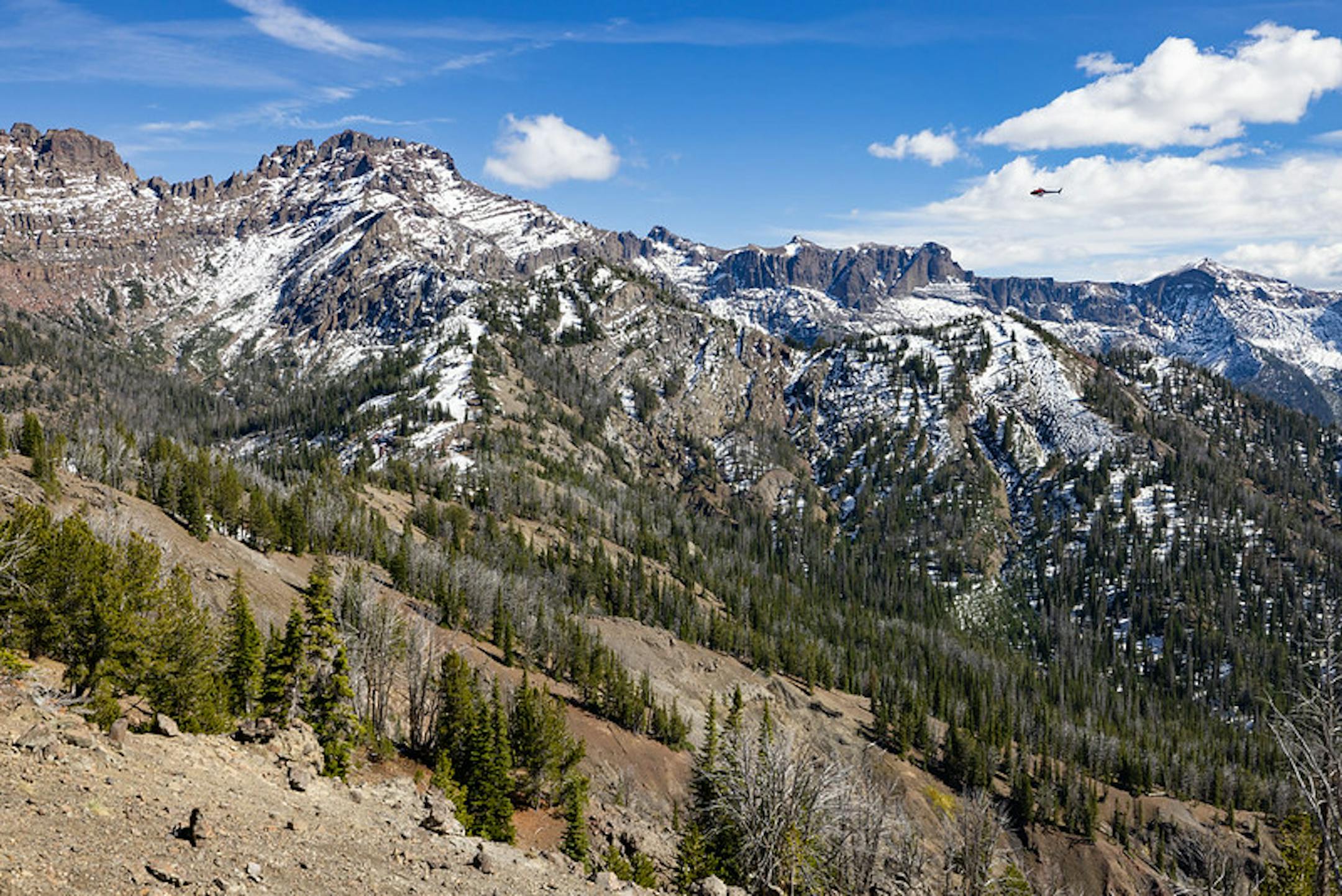
A helicopter team, upper right, searched for Austin King east of Eagle Peak in the Yellowstone National Park wilderness, in Wyoming. King went missing last September. (Jacob W. Frank, National Park Service)
about the writer

about the writer

Bob Timmons

Outdoors reporter

Bob Timmons covers news across Minnesota's outdoors, from natural resources to recreation to wildlife.

See Moreicon

More from Outdoors

See More
card image
Courtesy Rick Sandri

A citizens group is testing wells as North Star Manganese tries to develop a mine. More than half the sites tested high enough that the water cannot be used in infant formula.