Enbridge Energy is finalizing plans to build a 600-mile pipeline to transport North Dakota crude oil to Superior, Wis., and soon will begin contacting Minnesota property owners along two proposed paths across the state.
Although two proposed pathways across 11 northern counties are under review for the $2.5 billion Sandpiper Pipeline, an Enbridge official said Thursday that the company is leaning toward a route that runs through Clearbrook, Minn., sweeps around Park Rapids and then turns east.
The $2.5 billion project would employ as many as 3,000 workers in Minnesota and North Dakota during construction that could start in late 2014, said Christine Davis, a community relations consultant for Calgary-based Enbridge.
The Minnesota Public Utilities Commission on Thursday authorized the company to send notices to property owners along two possible routes for the pipeline. The notices, expected to be mailed next month, will explain how property owners can make themselves heard as the commission considers the need for the pipeline and the route.
The 225,000-barrel-per-day buried pipeline will carry away roughly 20 percent of the Bakken field's crude oil production when it's completed in early 2016. The pipeline section between Enbridge's oil terminals at Clearbrook and Superior would have 50 percent greater capacity than the North Dakota section, allowing more crude oil to flow eastward from the Clearbrook terminal.
"Right now there is a bottleneck out of North Dakota," Davis said in an interview.
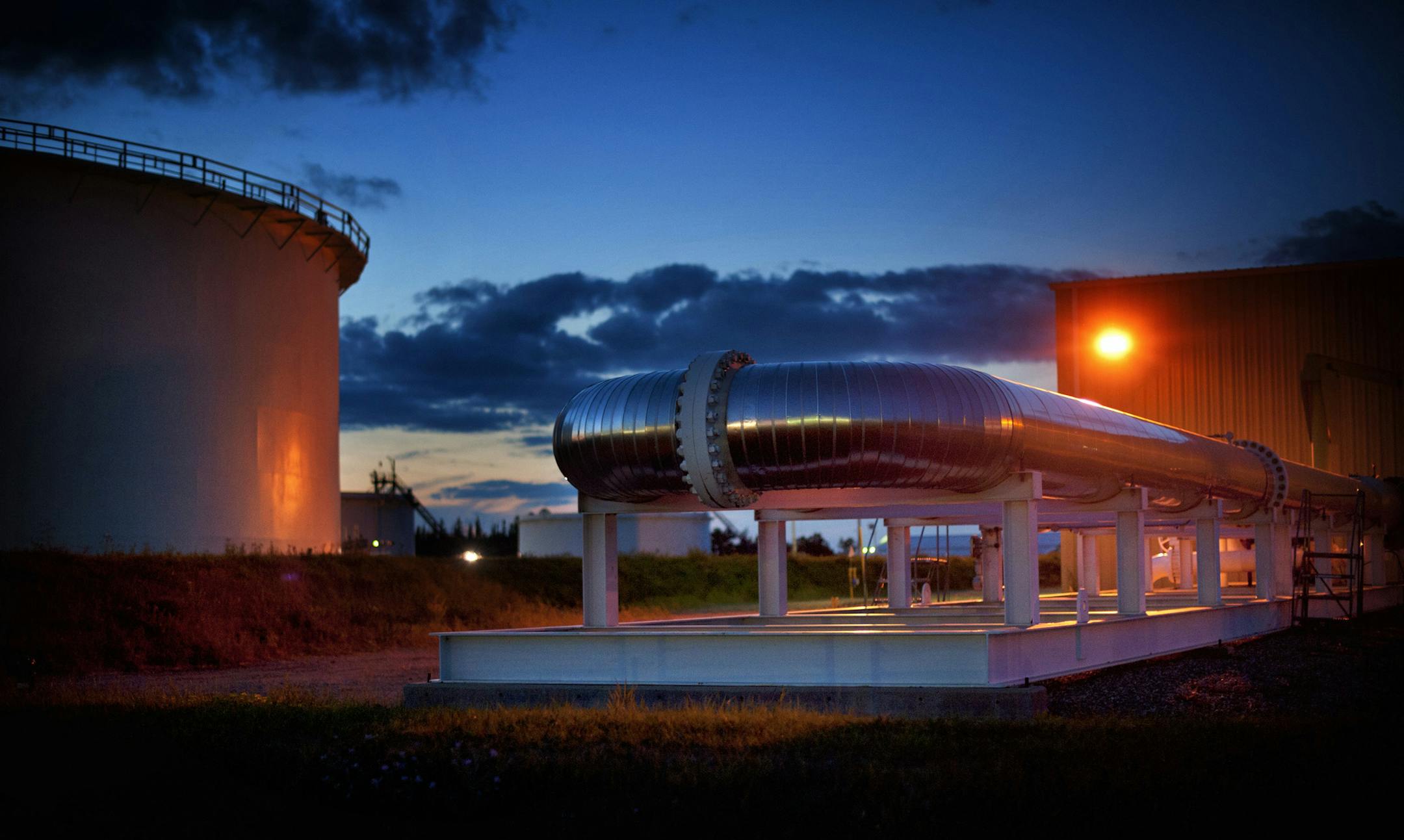
Enbridge officials said the company plans to build a separate oil terminal with tanks at Clearbrook for the Sandpiper-transported oil. The existing Clearbrook terminal, with seven incoming petroleum pipelines from Canada and North Dakota, is already a waypoint for about 14 percent of the nation's oil supply.
The route of the Sandpiper line has implications for many property owners in 11 northern Minnesota counties. If the PUC approves the project, Enbridge could seek easements through negotiation or condemnation for a path, typically 50 feet wide, to bury the line.