

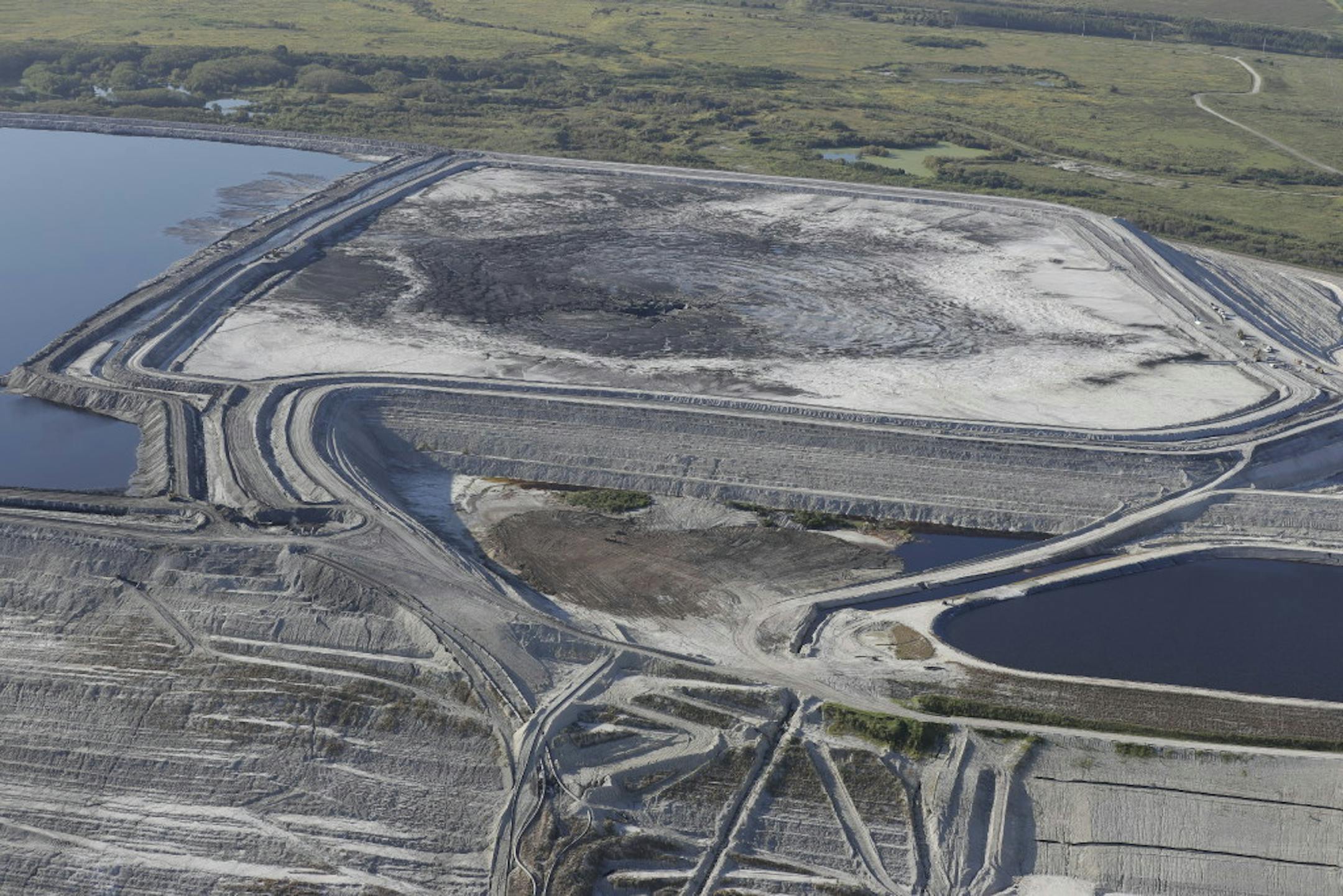
MULBERRY, Fla. – The first sign something had gone wrong at Mosaic's phosphate plant happened on Saturday, Aug. 27. Workers checked the water level in a 78-acre pond of polluted water sitting atop a 190-foot phosphogypsum stack and discovered it had dropped more than a foot.
They believed it was just the wind blowing the water around. But about 11 a.m. Sunday, they realized the level had dropped 3 feet.
How could a pool of acidic water on top of a massive gypsum stack suddenly start draining away? A sinkhole 45 feet wide and 220 feet deep had opened up. Down went 215 million gallons of contaminated water, gurgling into the aquifer that supplies the region's drinking water.
Geologists say the reason for the drop should have been obvious. But state records show that it took Mosaic officials more than a week to use the word "sinkhole."
As contaminated water poured into the aquifer, Mosaic Co., based in Plymouth, Minn., and state officials both avoided using the "s-word" until Sept. 9. The public didn't find out until Sept. 15 — 19 days after the crisis started.
Even the state's top environmental regulator said he didn't know it was a sinkhole. That's why he didn't tell Gov. Rick Scott about it until Sept. 16, the day after it hit the news.
"I knew at the time in late August that there was a water loss incident," Florida Department of Environmental Protection (DEP) Secretary Jon Steverson told reporters last week. "I was not aware of the sinkhole until a much later point in time."
• • •


