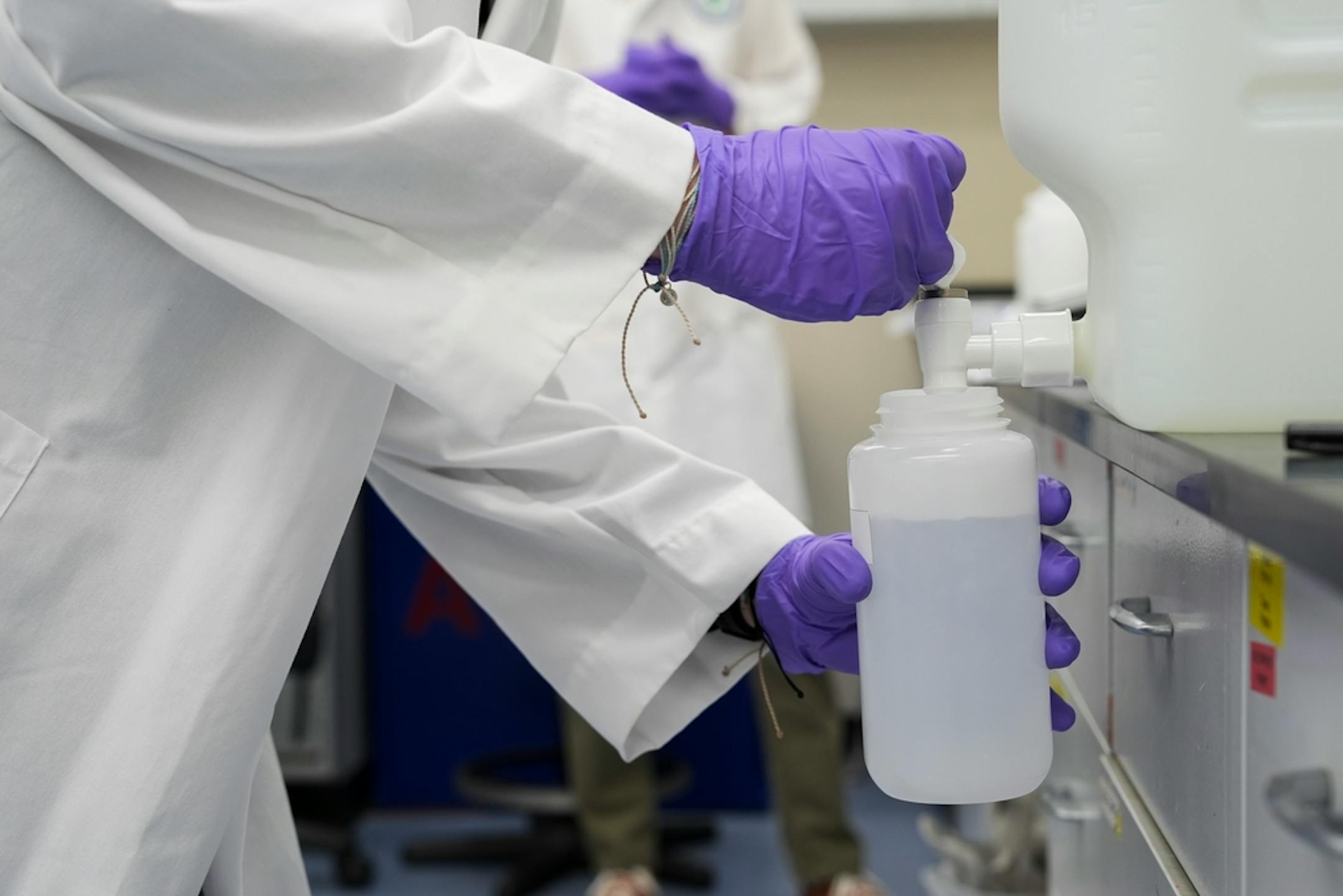
The toxic PFAS pollution found in private wells across Baytown Township came from one of two 3M dumping sites, state scientists recently confirmed, meaning that the cost of activated carbon filters for local homeowners will be covered by the $850 million 3M settlement fund created in 2018.
“It’s the best news,” said township supervisor Avis Peters, who shared the findings Monday at the board’s meeting.
The link to 3M’s dumping grounds came after state scientists found unhealthy levels of PFAS in about half of the private wells tested in Baytown Township. Most of the township’s 790 housing units are on private wells, said Peters. Further tests and analysis showed a link to the 3M Oakdale dump and the Washington County landfill, according to a MPCA spokesperson.
The link can be crucial for cities suddenly faced with the enormous expense of cleaning their water of PFAS, the per- and polyfluoroalkyl substances used by Oakdale-based 3M in a wide array of manufacturing processes and consumer products. The fund was created to settle a lawsuit brought by the state of Minnesota over 3M’s practices of dumping PFAS-laced waste in four sites throughout Washington County, and the subsequent pollution of underground aquifers that feed municipal and private wells.
To find a link, state scientists examined the types of PFAS present in Baytown Township wells, the ratios of those types, and evaluated the local hydrology to assess a potential path for the contamination’s spread, said MPCA spokesman Dan Ruiter. “This is especially complicated in the East Metro area due to the geology and surface water/ground water integration,” he said in an email.
The testing is site specific, so there’s no set time frame for how long it takes the MPCA to determine the source of a city’s PFAS pollution.
While scientists were able to determine the source of Baytown Township’s pollution, the nearby Washington County cities of Stillwater and Oak Park Heights don’t yet know how PFAS infiltrated their water supplies and have had to find alternate sources of funds to clean it up.
In Stillwater, where PFAS has been detected in three city wells, local officials unsuccessfully sought federal funding to help pay for temporary treatment of its two dirtiest wells. The city council in June approved a plan to spend $2.5 million to build a temporary filter on the city’s Well No. 10 near Benson Park. The city has applied for a state grant from the Public Facilities Authority that would cover half of the cost of the project, and provide a loan for the remainder. The system will use granular activated carbon filters to clean the water and should be operational by next year, said city administrator Joe Kohlmann.