

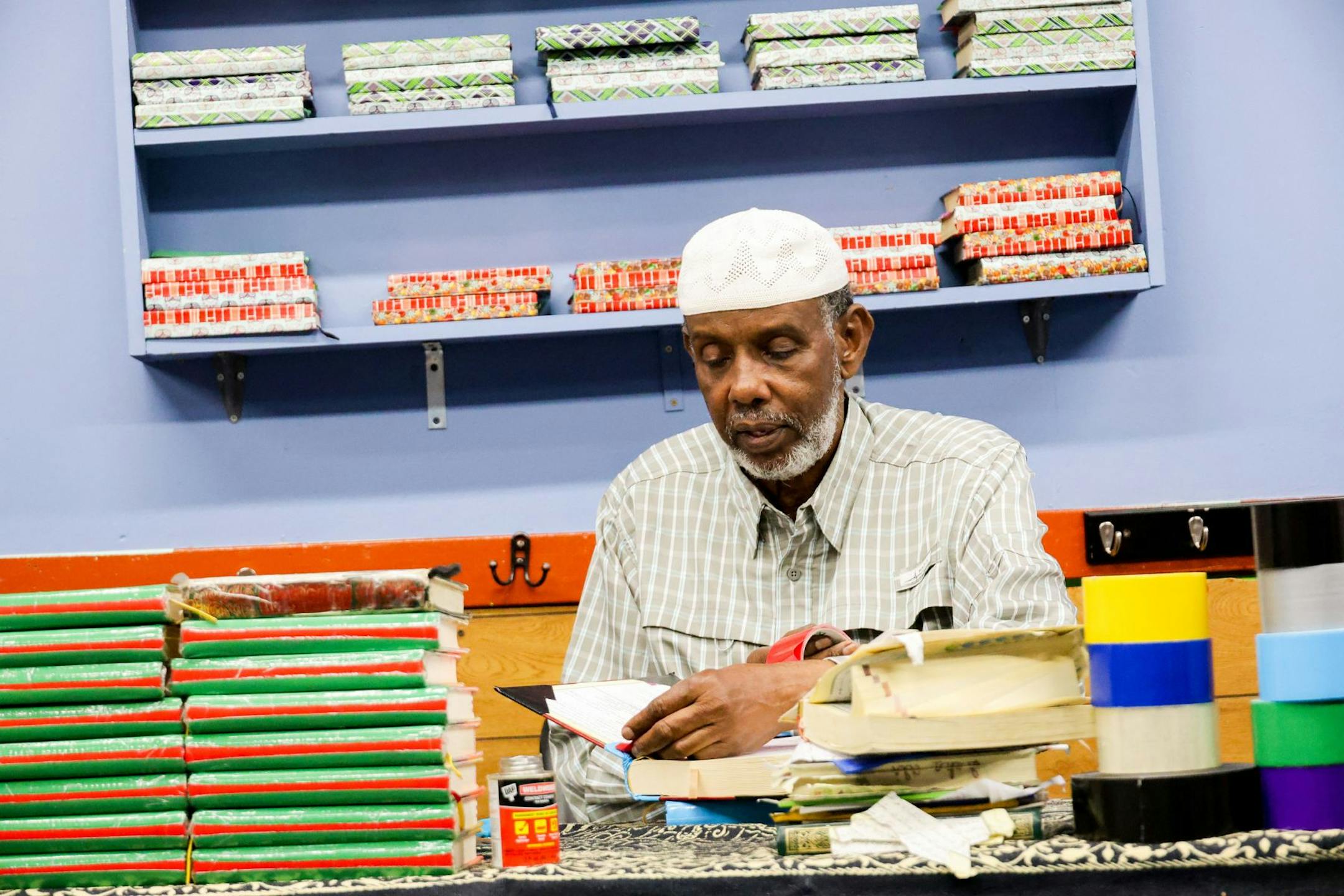
For the past 16 years, retired tailor Mukhtar Isse has been rebinding worn-out Qurans, using tape and glue to keep the sacred texts in the hands of local Muslims.
He’s one of three Somali men who volunteer as bookbinders at local mosques. But they haven’t been able to keep up with demand.
Minnesota imams say strict rules regarding the disposal of the Muslim holy book, along with the state’s environmental regulations, have led to a pileup of old and damaged Qurans at local mosques. With no designated facilities for appropriately disposing the sacred texts, the issue has become a pressing concern for the Muslim community.
Ahemd Burhan Mohamed of New Brighton, who in 2018 became the first American to win the Dubai International Holy Quran Award, said the number of students memorizing the Quran is rapidly increasing. Nearly 800 participated in the Imam Shatibi Quran Competition held in July at John F. Kennedy High School in Bloomington.
The Quran is a staple for every Islamic school student, making it the best-selling book in Islamic bookstores across Minnesota.
Haji-Ahmed Mohamed Firin, owner of Tawakal Bookstore in the 24 Mall in Minneapolis, said parents visit his store seeking guidance on how to dispose of worn-out Qurans.
“What else can I tell them?” he said. “I advise them to take it to the mosque.”
In the past, families would inherit Qurans due to the scarcity of paper, leading to careful preservation of the texts. However, today’s abundance of printed Qurans — and the number of young Muslims in Quranic classes — has made the disposal of old and worn-out copies more challenging.


