Aribert Munzner, whose ‘Genesis’ paintings celebrated life, dies at 95

The Minneapolis College of Art and Design professor was known for his generous and positive spirit.

The Minnesota Star Tribune
August 15, 2025 at 7:31PM
Aribert Munzner in his studio Wednesday afternoon. ] JEFF WHEELER • Jeff.Wheeler@startribune.com The roof of the Ivy Arts Building caught fire from embers blown across the street from the burning Hexagon Bar early Friday morning. Nearly a week later, artists with studios in the building, including 90 year-old Aribert Munzner, were salvaging what they could from their smoke and water damaged work. Friends helped Munzner Wednesday afternoon, June 3, 2020 in Minneapolis.
Aribert Munzner in his Minneapolis studio on June 3, 2020, a week after the roof of the Ivy Arts Building caught fire from embers blown across the street from the burning Hexagon Bar. (The Minnesota Star Tribune)

A glowing abstraction of color bloomed into a flower, but it was also an expanding universe and a mystical experience folded into one.

Aribert “Ari” Munzner’s artwork explored the relationship between science and metaphysics, often through the use of “galaxy-like” paintings, all named a variation of “Genesis.”

Munzner died at his home on Aug. 1 of natural causes. He was 95.

A professor at the Minneapolis College of Art and Design for more than 40 years, he was a mentor to many students. Munzner was a prolific and energetic artist whose work operated on three levels: technique, science and spirituality.

“He was really interested in the mystic fringe of all kinds of religions, Jewish Kabbalah and the Sufis from Islam, and a lot of the more esoteric Hindu yoga stuff and Qigong,” daughter Tamara Munzner said.

His gallerist of many years, Dolly Fiterman, noted in the book “Ari Munzner: Teacher, Colleague, Artist,” published by MCAD, that his paintings were of a musical nature and revealed energies, movements and transformations “from the primordial to the infinite.”

Creating works of art constantly was vital to Munzner’s essence.

“For him, being at his studio was his space of joy,” said Naomi Munzner, Munzner’s eldest daughter.
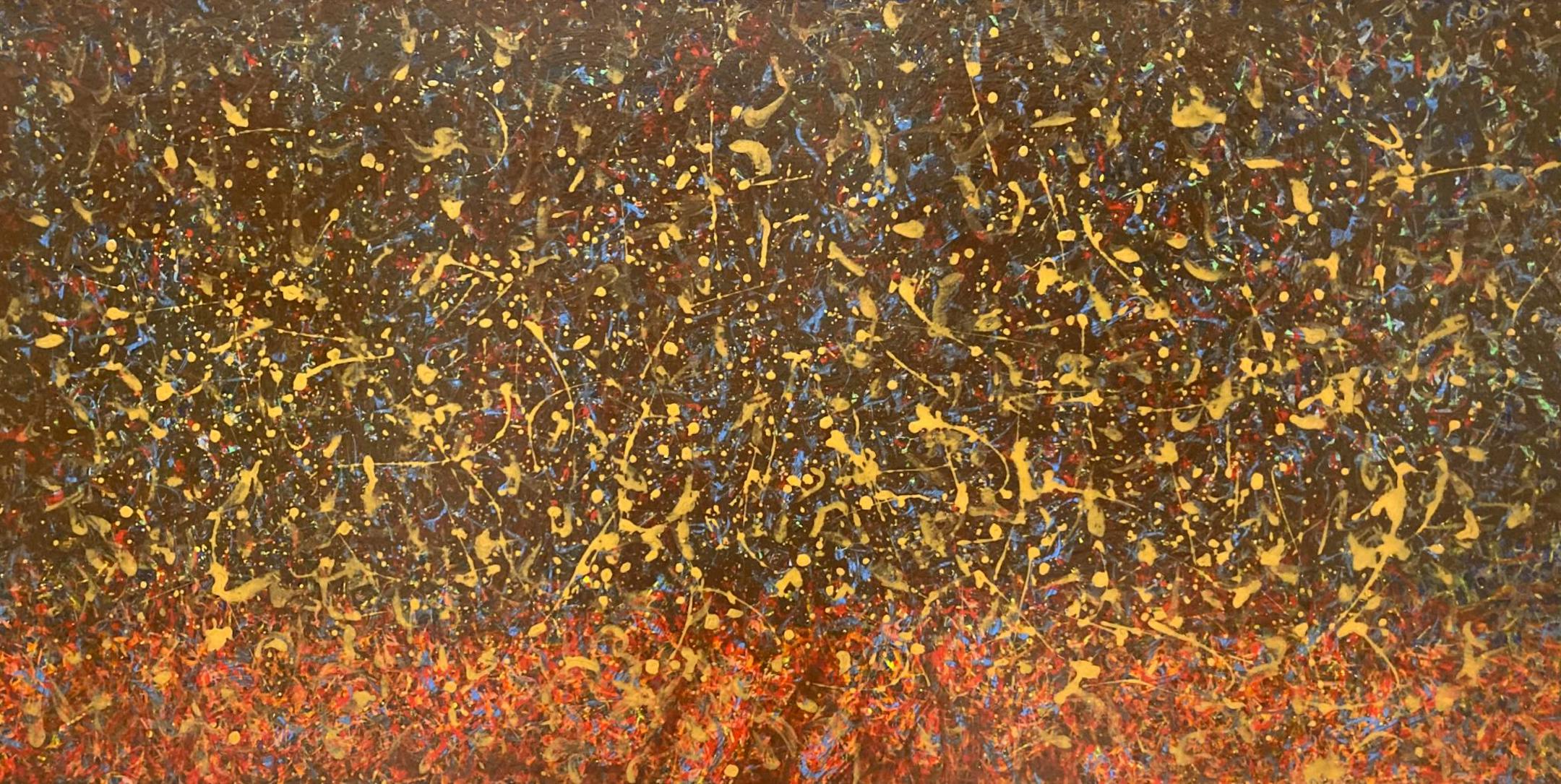
Aribert Munzner's painting "Genesis, Summer 2023, #1" was a commissioned 2-by-4 foot artwork for a living room. The "Genesis" series was his life's work. (Tamara Munzner)

Resilient nature

Munzner was only 7 when his Jewish family fled Nazi Germany in 1937 for Baghdad, where a family friend lived. In their new home, he learned Arabic from a Lebanese Jesuit priest. But when British forces invaded Iraq in 1941, the family moved again, this time to New York City.

He received his MFA in painting from Michigan’s Cranbrook Academy of Art in 1955. He arrived in the Twin Cities to teach at the Minneapolis College of Art and Design (formerly the Minneapolis School of Fine Arts), serving as professor from 1955-93. He chaired the college’s Division of Fine Arts from 1969-74 before becoming dean of faculty in 1982. Six years later, he received an honorary MFA. He mentored students until his retirement in 2005.

Artist and teacher Michal Sagar met Munzner at MCAD when she was asked to teach beginning painting. He suggested she teach students to paint space, or negative space.

“I realized that it’s Ari’s own artistic practice, which is about painting space and it’s about both the space without and within,” Sagar said.

Munzner had a photographic memory, and could always place a former student’s face with their art.

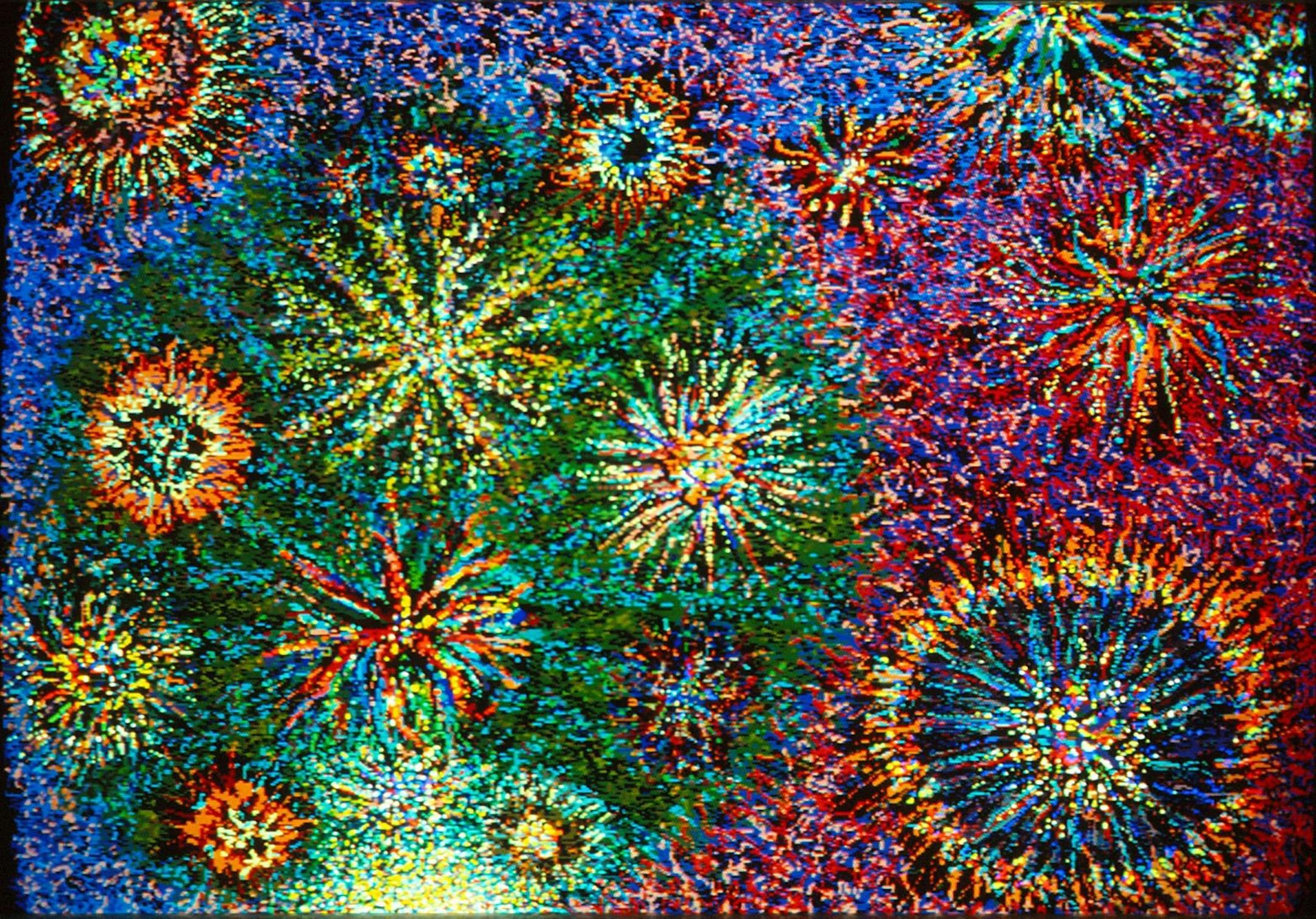
"Micro-Macro-1," April 17, 2022, is part of Aribert Munzner's "Micro/Macro" series which he began in the early 1980s while experimenting with an early computer paint system. (Tamara Munzner)

“If you were talking to Ari, whether you were in a restaurant or in a classroom or in a hallway, he was totally zoomed in on you,” former student and longtime friend Leah (Lynn) Golberstein said.

Munzner also encouraged and celebrated different ideas.

“When he talks to you, and you say something, maybe stupid, he takes it and reinterprets it and brings it back to you in like a cosmic form,” said artist and former student Hend Al-Mansour. “He makes you feel like your idea is the most brilliant idea.”

In late May 2020, during the uprising sparked by George Floyd’s killing, a fire on the roof of the Hexagon Bar spread to the Ivy Arts Building in south Minneapolis. Ari’s studio was on the first floor and 500 of his works were damaged. But he remained positive and upbeat.

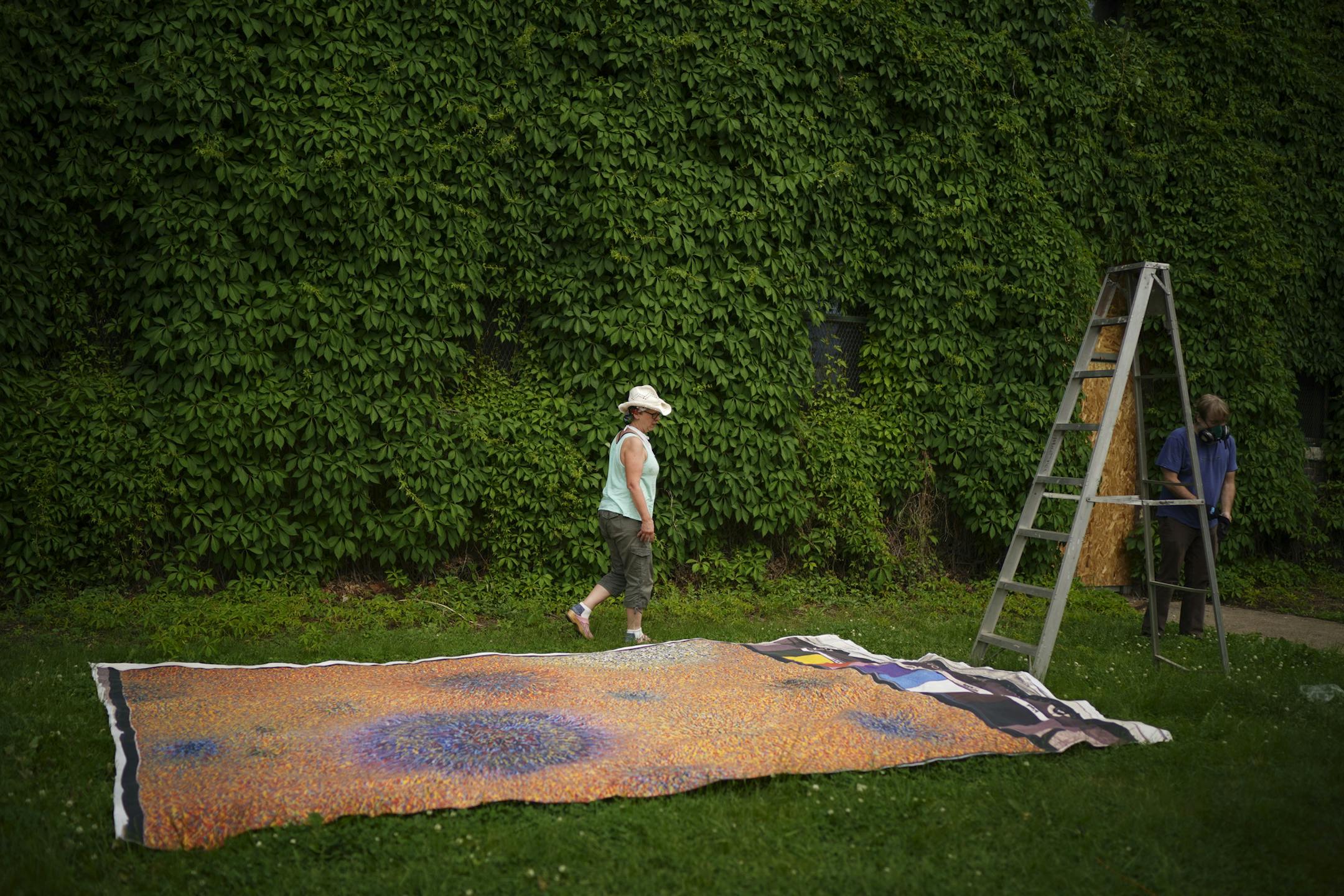
Kathleen Maloney walked past a giant artwork by Aribert Munzner "Genesis, Summer 1965 #9" printed on canvas placed on the lawn outside the Ivy Arts Building to dry.
Kathleen Maloney walks past a giant artwork by Aribert Munzner's "Genesis, Summer 1965 #9" printed on canvas and placed outside the Ivy Arts Building in South Minneapolis. (Star Tribune/The Minnesota Star Tribune)

“I’m starting again because that’s what I’ve been doing all my life,” he told the Star Tribune in 2020.

Then 90, with the help of family and community, Munzner started all over again in a new studio at the California Building in northeast Minneapolis.

He was influential at MCAD, asking faculty to consider past, present and future and “what he called historical realities, virtual realities, ambient realities,” said former colleague Ellen Meyer. “When I think about today’s realities, he could have said the same thing about virtual realities in 2025.”

Paris-born artist Pier Marton met Munzner 40 years ago. The two were close friends to the very end, and played music and spoke via Zoom for hours every Sunday. They shared an implied understanding of being Jewish, leaving Europe and ending up in America.

Marton recalled a story Munzner told him about arriving in America.

“In April of 1939, we arrived in New York and we saw the Statue of Liberty in the harbor. She came to the edge of the boat and took the umlaut out of my name. It used to be Münzner. I miss my umlaut. She just took the umlaut and burned it.’”

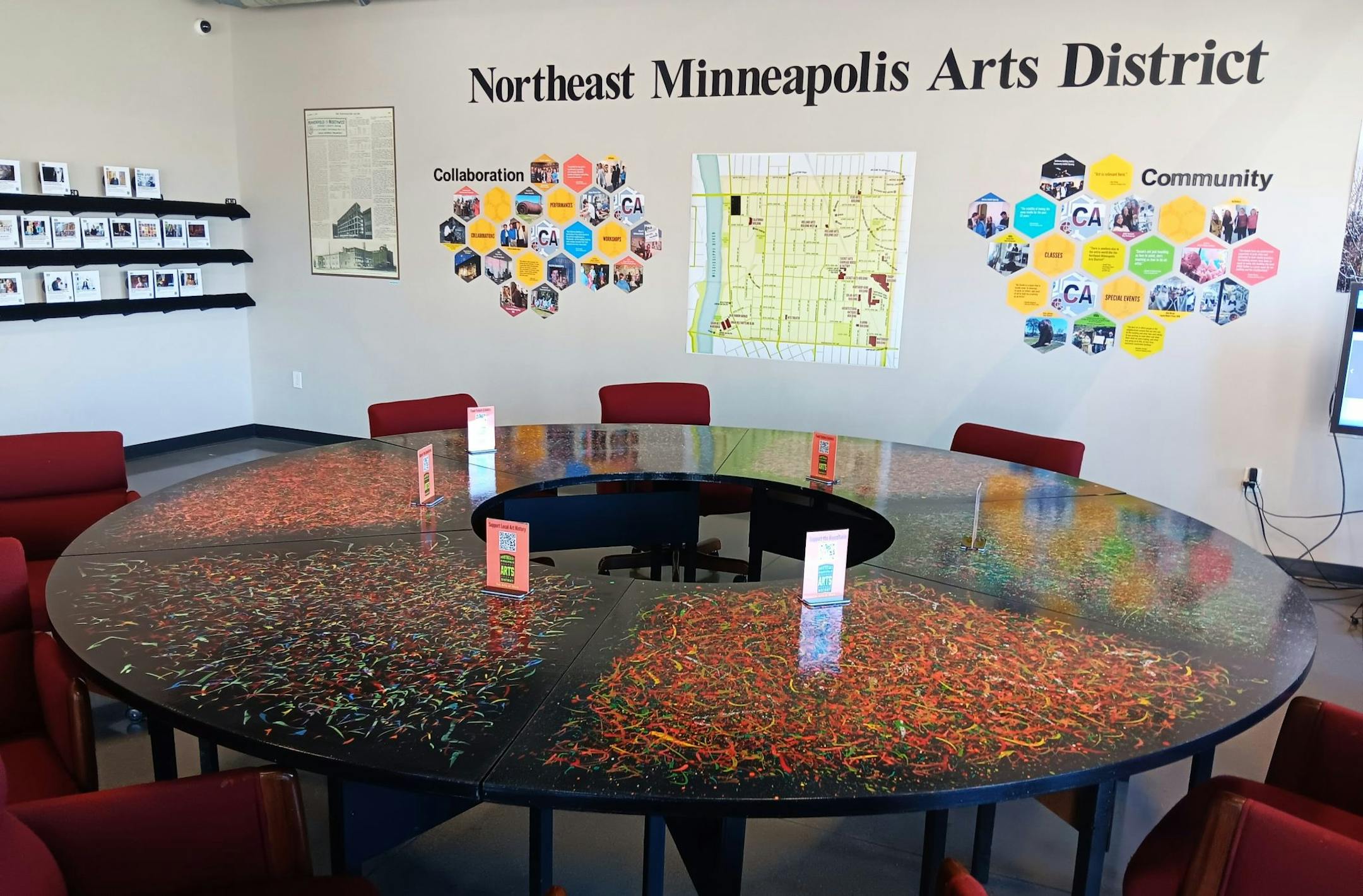
Munzner’s works are included in many permanent collections from Minneapolis’ Walker Art Center to the Tweed Museum in Duluth to China’s Zhejiang Academy of Art in Hangzhou. His last major project, a collaboration with artists Jim Gregory and Remo Campopiano, was a 12-seat round table at the Northeast Minneapolis Arts District Welcome Center.

This 12-seat table at the Northeast Minneapolis Arts District Welcome Center is meant to foster inclusive dialogue and collaboration. The table was built by Remo Campopiano and painted by Aribert Munzner and James Gregory. (Northeast Minneapolis Arts District)

Aribert is survived by his daughters Tamara Munzner of Vancouver, Canada, and Naomi Munzner of Minneapolis. He is preceded in death by his wife Joan, brother Peter and parents Ralph and Bertha Schliferowitsch.

A celebration of life will be held from 2-4 p.m. Saturday in Studio 118, California Building at 2205 California St. NE., Mpls.

about the writer

about the writer

Alicia Eler

Critic / Reporter

Alicia Eler is the Minnesota Star Tribune's visual art reporter and critic, and author of the book “The Selfie Generation. | Pronouns: she/they ”

See Moreicon