Arena Dances takes a big leap with its new repertory model

The company is bringing in guest choreographers from New York City and has increased its budget for dancers.

For the Minnesota Star Tribune
August 11, 2025 at 3:00PM
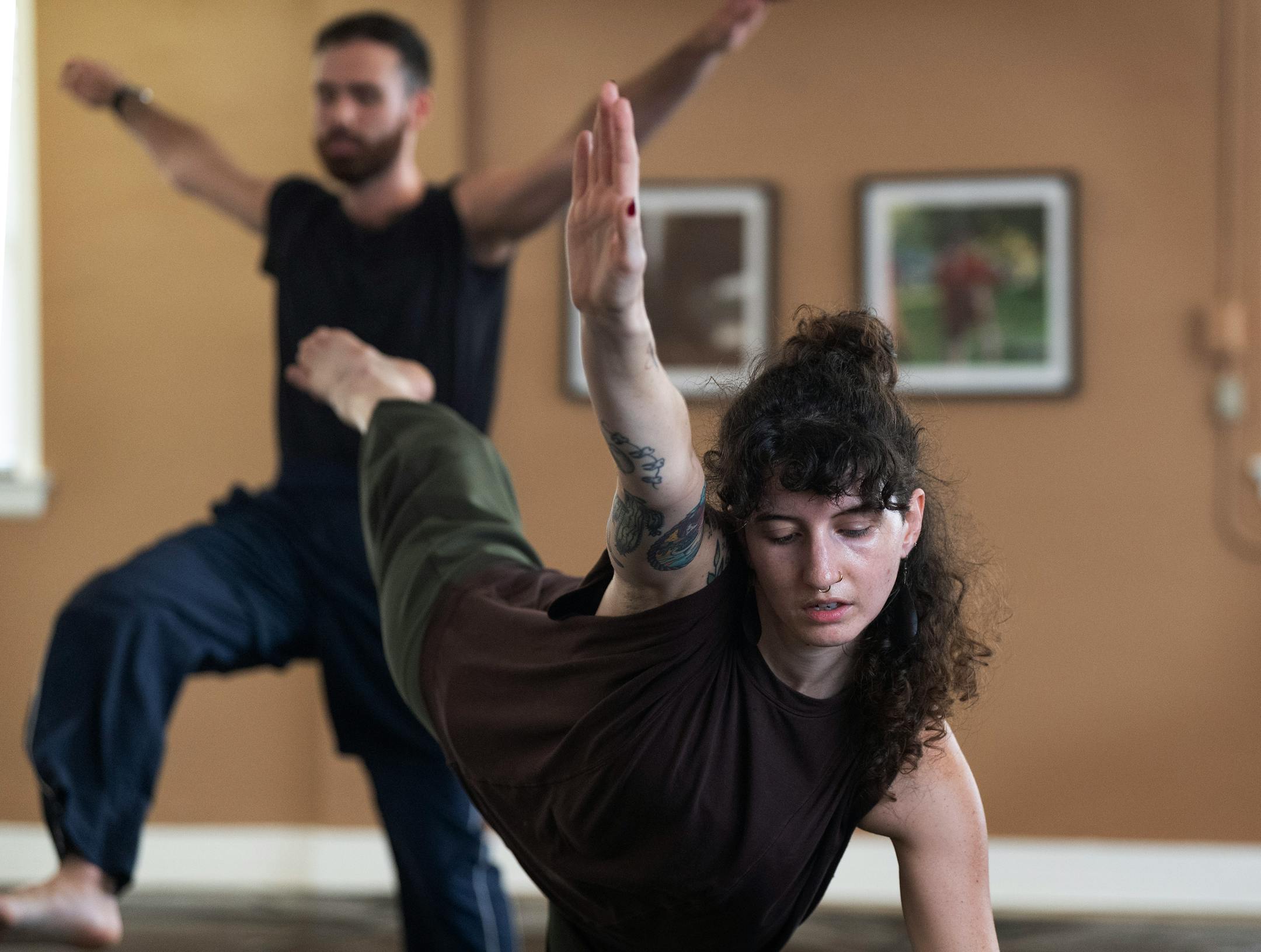
Sarah McCullough and Jake Nehrbass practice at Arena Dances studio in Minneapolis. They are both encouraged by the company's new vision for investing in dancers. (Jerry Holt/The Minnesota Star Tribune)

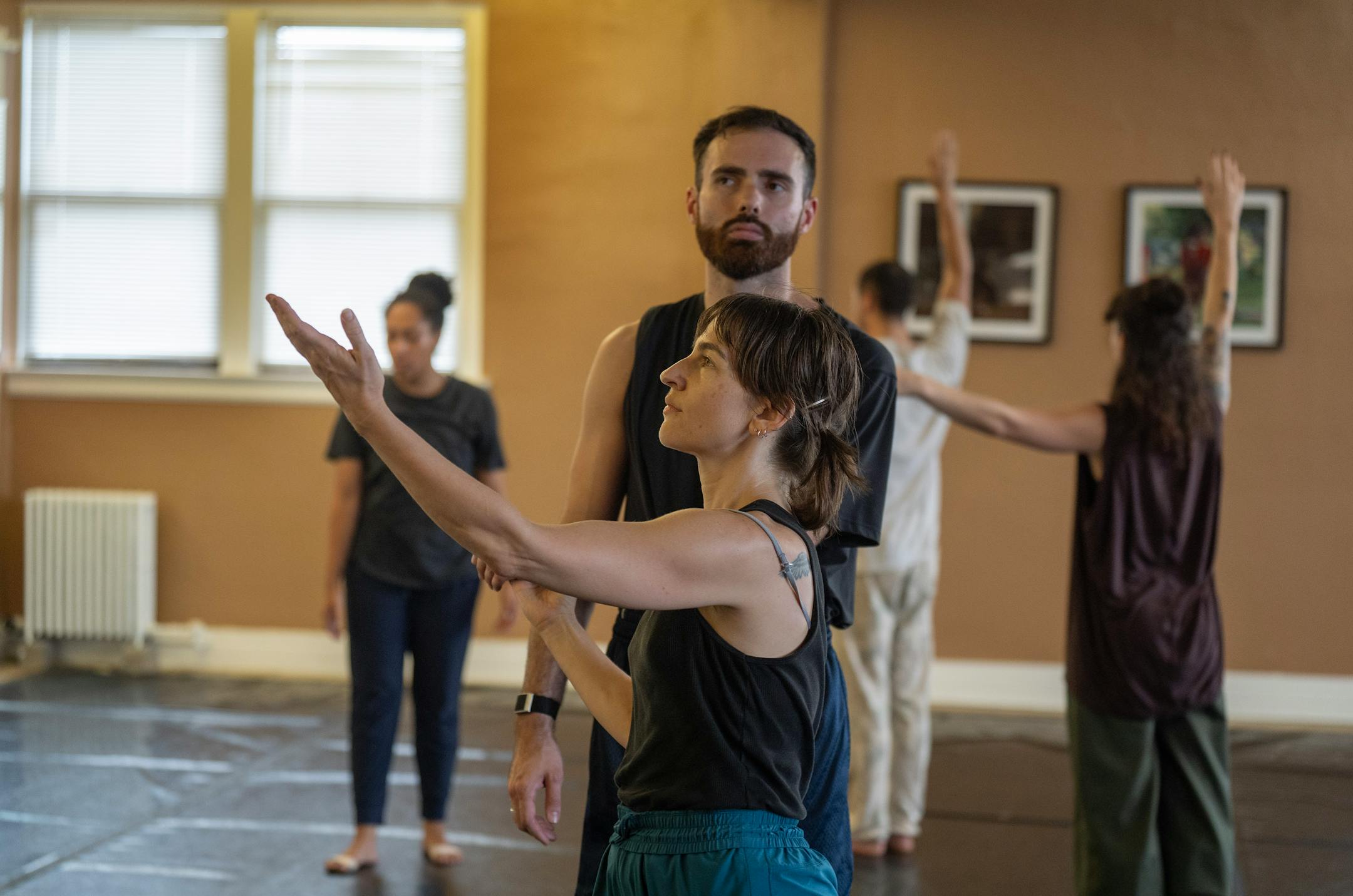
On a recent August day, five dancers from Arena Dances rehearsed a brand-new piece by New York–based choreographer Julia Antinozzi at their studio in Minneapolis’ LynLake neighborhood. But a key player — artistic director Mathew Janczewski — was missing in action.

That was because Arena’s new model is moving away from its focus on works by Janczewski, who founded the company 30 years ago.

He instead envisions a future for Arena that brings in guest choreographers — local and from cities like New York. The framework is similar to what other noteworthy companies like Zenon Dance Company have done in the past. For 36 years, Zenon was led by the artistic vision of its longtime director Linda Andrews, although she rarely choreographed for the group.

Arena’s repertory model is launching with world premieres by Antinozzi, whom Dance Magazine named one of “25 to Watch” this year, Minneapolis-based Elayna Waxse and New York City-based Israeli choreographer Assaf Salhov.

The works will be shown Sept. 19 and 20 at Luminary Arts Center in Minneapolis.
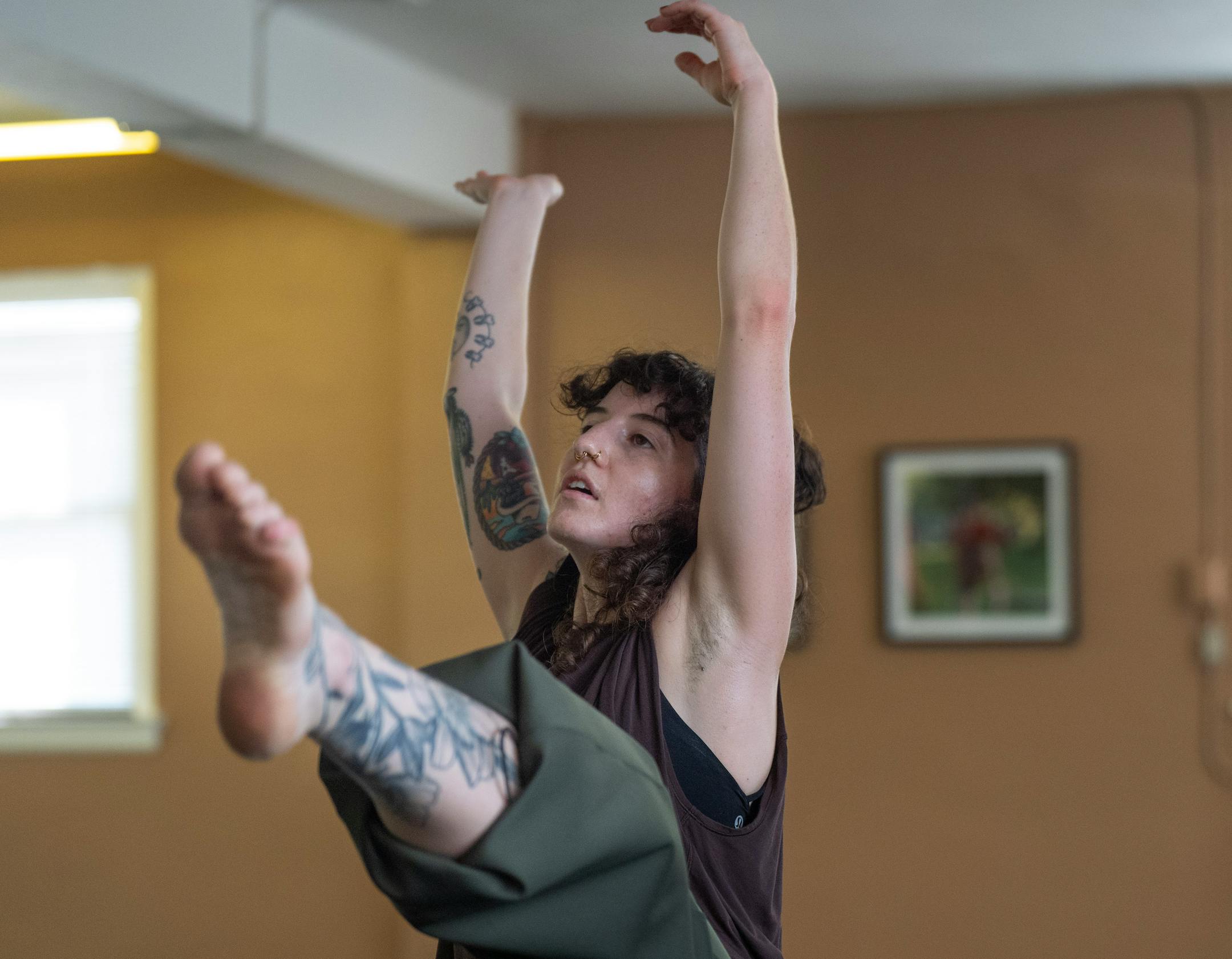
Sarah McCullough said working at Arena Dances' new repertory company feels like a "dream job." "I'm hopeful that getting to participate in a repertory model and having lots of different choreographers and visions can help create a sense of diversity of thought," she said. (Jerry Holt/The Minnesota Star Tribune)

Arena will continue to showcase Janczewski’s past works and he will continue to choreograph new dances for other companies — just not his own.

In a landscape of withering national funding for dance and the arts in general, Arena is taking a giant leap in its next chapter. The company has increased its budget for paying dancers and its rehearsal director, who now receives $700 a week for two 20-week stints in the fall and spring.

It’s roughly the same hourly rate for dancers who previously got $25 per hour. But now they are paid weekly including time for taking company class — whether they attend it or not. The dancers also make money from the company classes they teach, which are open to the public.

To pay for it all, Janczewski has been saving up, putting aside percentages of commissions and funds for the past five years. Last spring, an individual named Sher Demeter made a donation that put the nest egg over $100,000. This set Arena’s board of directors in motion to launch a campaign to raise $500,000 beginning in July.

So far, the company has raised $60,000 from individual donors and has received $20,000 from Minneapolis’ new Bridge Fund for Dance, as they await news from past funders like the Metro Regional Arts Council and the McKnight Foundation, as well as new sources of income.

“I’m definitely in a fundraising mode, because it needs to sustain at least three years to gather momentum,” Janczewski said. “I’m really working with individual donors and big donors out there that are buying into it, to share that it can really shift the ecosystem of the dance community here and hopefully raise the value of dance.”

It’s the kind of leap Janczewski took 30 years ago when he founded Arena, soon after being diagnosed HIV positive.

“I was like, ‘Oh, I’m dying. Let me live my dream’.”

A similar thing happened when Janczewski began undergoing treatment for leukemia in 2019.

That year, Zenon, a longstanding repertory dance company in the Twin Cities that had once been an inspiration to Janczewski as a young choreographer, transitioned to a school-only model, ending its performance company.

At the back of his mind, Janczewski thought that he could possibly expand Arena to a similar repertory model that would bring in guest choreographers and offer a stable income for dancers, who often juggle four or five dance gigs in addition to other non-dance work.

“I was trying to find something that could be a little more consistent for a specific group of dancers that I feel are part of the cream of the crop in the Twin Cities,” he said.

Rehearsal director Laura Selle Virtucio, aka “dance mom,” knows from experience what it’s like to be a part of a repertory company. She was a company member with Zenon earlier in her career.

“It was really great, honestly, to be in one place all day,” she said. “Granted, it wasn’t necessarily the only job I could have, but I did enjoy being on salary for what it was and sort of what it offered.”

The experience also meant meeting artists outside of Minnesota, like Uruguayan-born Luciana Achugar who’s based in New York. “I appreciated that exposure to New York artists that I wouldn’t otherwise have had a chance to work with,” she said.

Non Edwards, who has been with Arena since 2016, said that working with the three guest choreographers for the fall show has been inspiring.

“It’s exciting to have this different aesthetics to play with,” she said.

For dancer Sarah McCullough, the stability has felt almost unreal. “It’s kind of a little corny to say this, but it’s like literally a dream that I never thought was going to be possible for me unless I moved somewhere else,” she said.

Non Edwards, front, and Jake Nehrbass rehearse a piece by New York–based choreographer Julia Antinozzi at the Arena Dances studio. (Jerry Holt/The Minnesota Star Tribune)

Jake Nehrbass sees the company’s investment in its dancers as a statement in itself and sees his role as a dancer to in part communicate why that investment is important.

“Why do dancers have value? Why do we educate ourselves and practice our art? That’s part of what we’re trying to show,” he said. “The perceived idea that you’re a struggling artist, you’re a starving artist, you have to have a bunch of jobs and put dance after that even though it’s your primary focus — that’s what we’re trying to change.”

For dancer Alex Arce, the audience’s perspective will be key. “At the end of the day, the audiences will get to judge for themselves when they see the show,” he said.

about the writer

about the writer

Sheila Regan

See Moreicon

More from Stage & Arts

See More
card image
Raging Art On at Gamut