
TikTok and YouTube are making dance more accessible, but instructors worry it’s moving too fast

Students find social platforms convenient and inspiring. Some instructors are concerned about injuries.

For the Minnesota Star Tribune
August 6, 2025 at 3:41PM
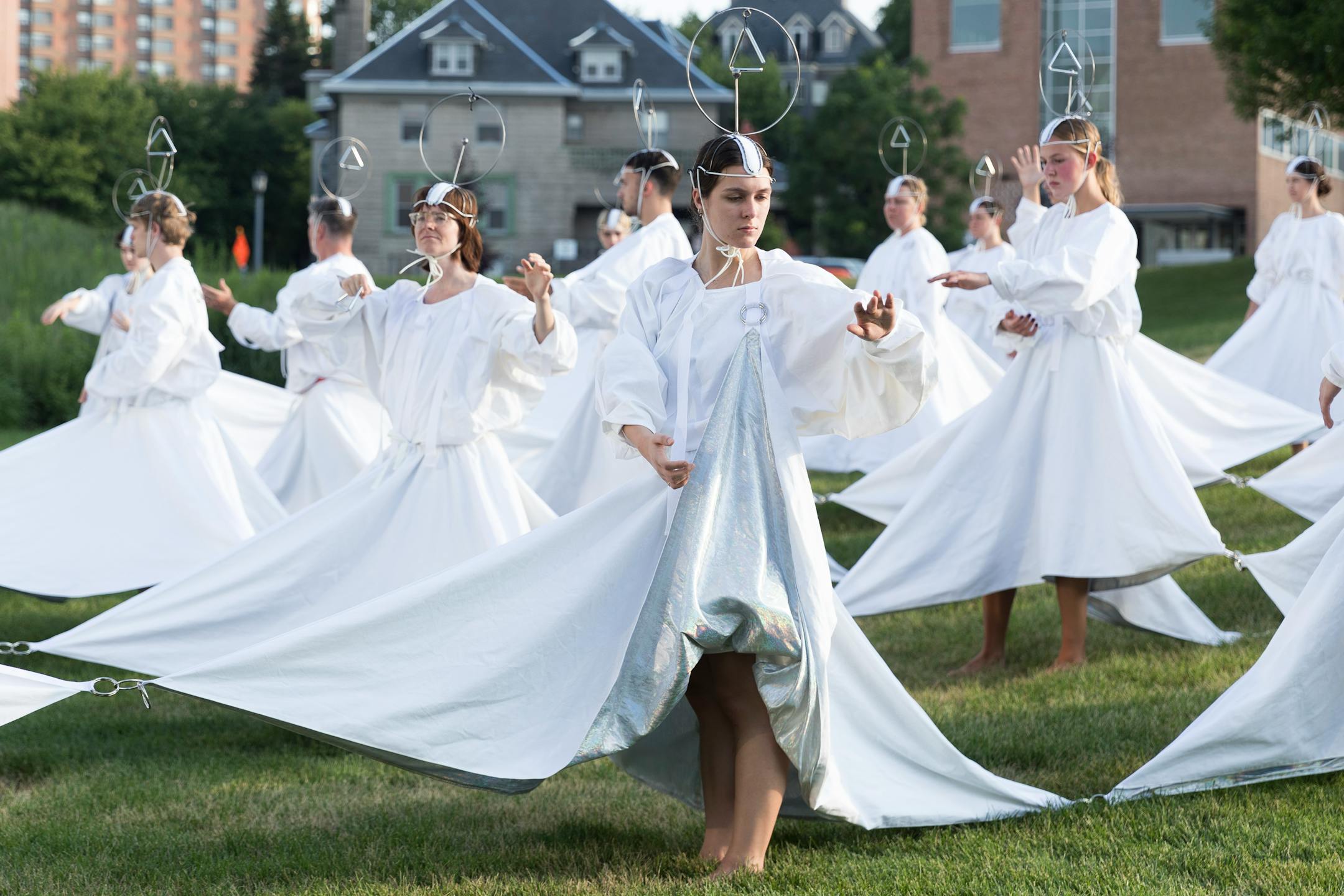
Dancers from Black Label Movement and the University of Minnesota perform during a rehearsal in July at Walker Art Center’s Wurtele Upper Garden in Minneapolis for an outdoor activation of a poetic sculptural installation mimicking the drifting gestures of clouds. The performance was a cross-disciplinary collaboration between Black Label and the U. (Rebecca Villagracia/The Minnesota Star Tribune)

Ballet legend George Balanchine used to say that taking a dance class was like brushing your teeth. It was something you had to do every day. Today’s dancers have taken those words to heart, especially with easy access to platforms such as TikTok, YouTube and Instagram.

Social media has given access to many different forms of dance styles, and it’s had an impact on the years-long process of training. While students find inspiration, instructors worry they might hurt themselves by moving too fast.

icon0:17
Vy Nguyen says the dance styles she finds on social media platforms help to supplement her in-person training.

Vy Nguyen, a recent graduate of the University of Minnesota who dances with Ananya Dance Theatre, looks online to supplement her in-person training.

“The luxury that we have with social media is that you can slow down the video, pause and restart, and zoom in. You can do all these cool technological things to help you better understand the movement,” she said.

Ezra Mehta, a longtime student of TU Dance who is heading to SUNY Purchase in the fall, uses social media to feed his improvisational practice. He recently found inspiration in Instagram videos by Nederlands Dans Theater dancer Nathan Allen.

“The way he moves is so unpredictable,” Mehta said. “It felt very raw to me.”

That energy pushed Mehta to pursue a deeper connection to music, mirroring Allen’s movement.

Sometimes the influence of online dance can pose dangers, especially when students attempt techniques without the necessary foundations. Abdo Rodriguez, executive director of TU Dance, has found students attempting to do turns without the proper alignment, a mistake that could cause injury. He has also observed students rushing to emulate advanced influencers before they’re ready.

When they ask him if they can advance to another jump, his response is: “Well, we’re still jumping this way, because you have four more years of school to go.”

Laurel Keen, TU’s artistic associate, has noticed an impatience with the slow, incremental process of learning technique. “The patience for training has dwindled,” she said.

Instructors at TU are finding ways to work with social media. “There’s a teaching moment there,” said artistic director Toni Pierce-Sands. “I ask them, “‘Oh, that’s pretty cool. So what do you call it?’ I take the language and put it into what we’re doing.”

Her challenge is guiding dancers toward discernment. “There’s a razor-thin line between comparison versus inspiration,” she said.

Carl Flink, director of the University of Minnesota’s dance program and founder of Black Label Movement, said social media has created a kind of atomization of dance.

“Rather than developing a system of ideas and technical understandings, you’re doing what you see and just replicating that,” he said.

The U’s dance instructors bring a broad range of knowledge, Flink said, from the specific cultural spaces they come from and from cross-disciplinary collaborations. Last month, his students participated in an outdoor activation of Argentine artist Eduardo Navarro’s poetic sculptural installation, “Cloud Museum, at the Walker Art Center.

Flink called the piece “a beautiful nexus” of performance and provocation to think differently about movement-based art.

icon0:51
Angelina Pizzaro is all about combining a dance's physical rigor with researching the moves.

Angelina Pizzaro, a junior in the U’s dance program who performed in “Cloud Museum,” said the project reflected the kind of hybrid approach that drew her to Minnesota.

“It’s a lot less of that technical ‘bust out three turns’ type of thing, and more of a people-connecting research project,” she said.

She added the U has supported her in combining physical rigor with deeper inquiry. “They’re really seeing my career goals and trying to give me all those resources that I need to create what I’m trying to do.”

Ananya Chatterjea, artistic director of Ananya Dance Theatre and a professor at the U, sees that connection between rigor and deeper questions as essential to the future of dance. “Sometimes when you emphasize rigor in and of itself, it divorces itself from the human,” she said.

Another need is for a new pedagogical vision for the way colleges teach dance, said Macalester College Prof. Cláudia Tatinge Nascimento. In part, that’s because professionals from her generation learned dance in a different way than young people today.

“There needs to be a reassessment of what this generation wants,” she said. “You need to understand their needs and cultivate their curiosity.”

Kealoha Ferreira, who dances with ADT, instinctually has found social media to be a place of discovery. “It’s such a funny and weird thing how we can get so influenced and curious,” she said. Through Instagram she found a former gymnastics coach who specializes in exercises linking the body and mind. “Is this a tool that I can utilize for myself, and maybe for some of the people that I hold space for?” Ferreira said.

Choreographer and educator Leslie Parker sees social media as a useful entry point, but voices caution, adding dancers need to go through rigorous training and understanding in order to continue dancing for several decades. “It takes a degree of knowing and studying yourself and your development, and where you see yourself headed down the line,” she said.

As dance continues to evolve across digital platforms, shifting cultural norms and changing institutional structures, it’s clear dance training no longer fits a single mold. Dancers are forging new paths and asking what training can be — and who gets to define it.

about the writer

about the writer

Sheila Regan

See Moreicon

More from Stage & Arts

See More
card image
Raging Art On at Gamut