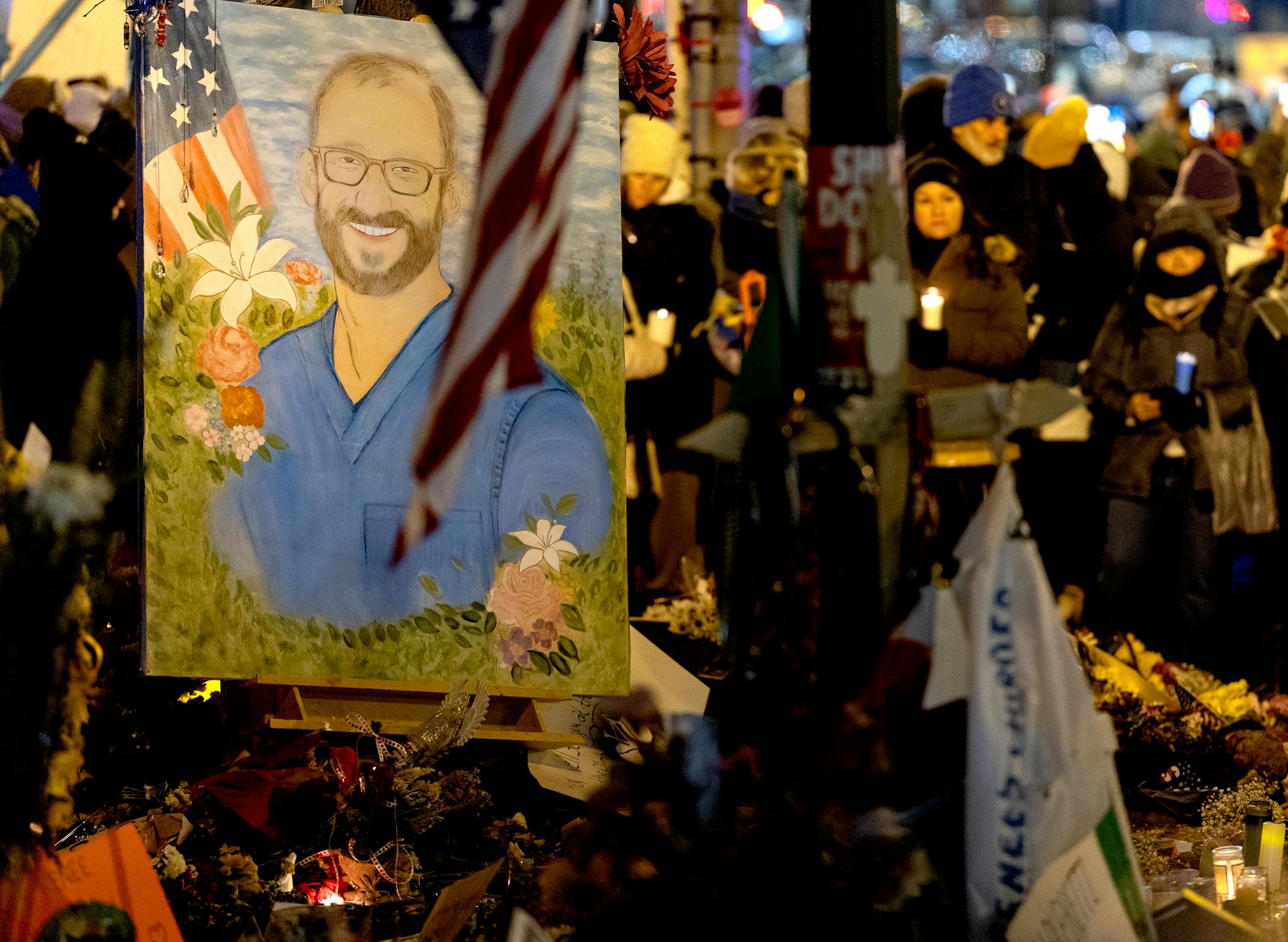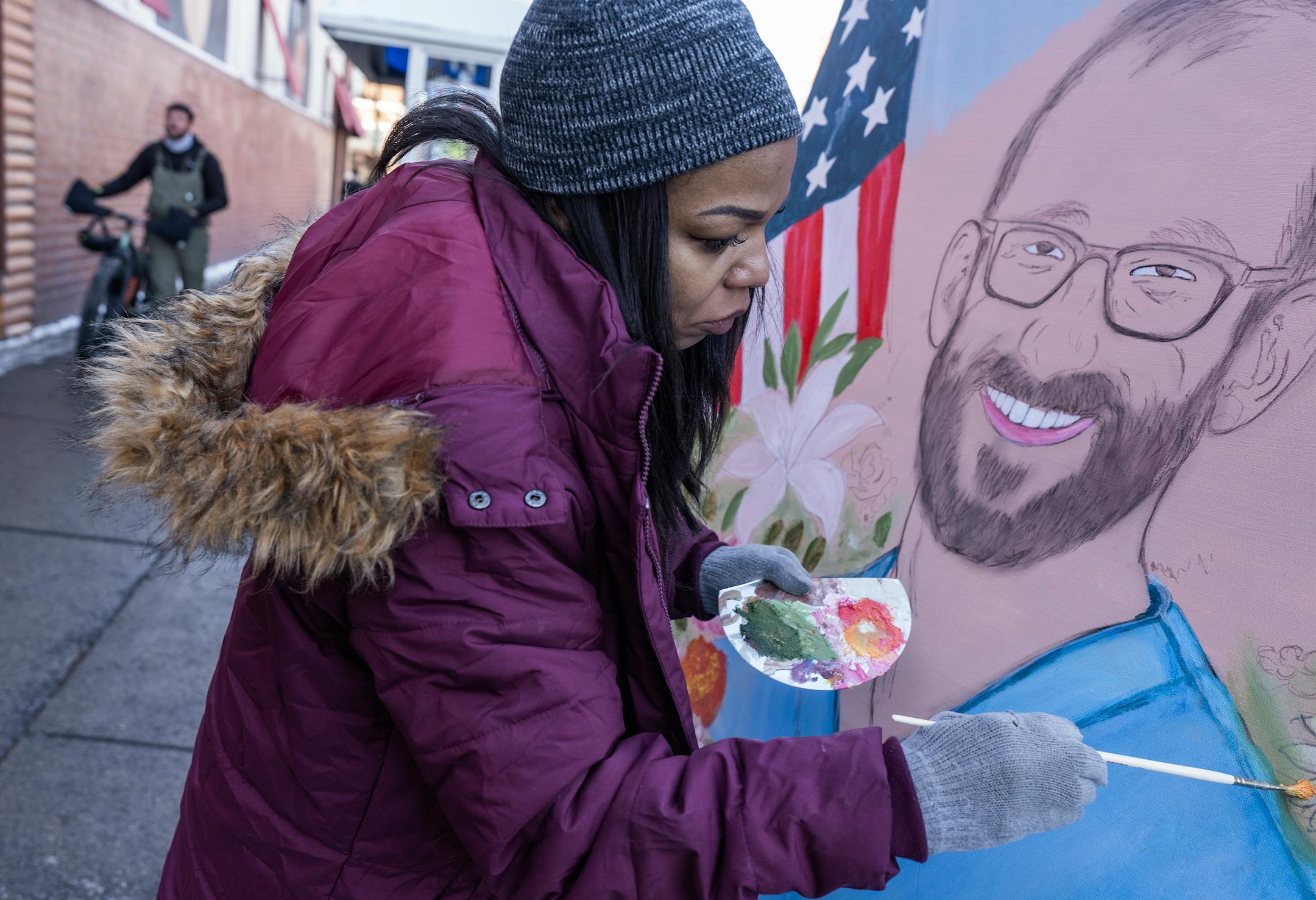
Artist Noval Noir stood outside in single-digit temperatures at Alex Pretti’s memorial site, painting his portrait. She dabbed pink paint onto her semi-frozen brush. A thin layer of ice formed in her paint water.
Noir is no stranger to painting at memorials. She painted Renee Good’s portrait three weeks ago.
“Art has always been therapy to me, and this is how I’m going to continue to bring this to communities to keep showing light — because we see enough darkness,” Noir said.
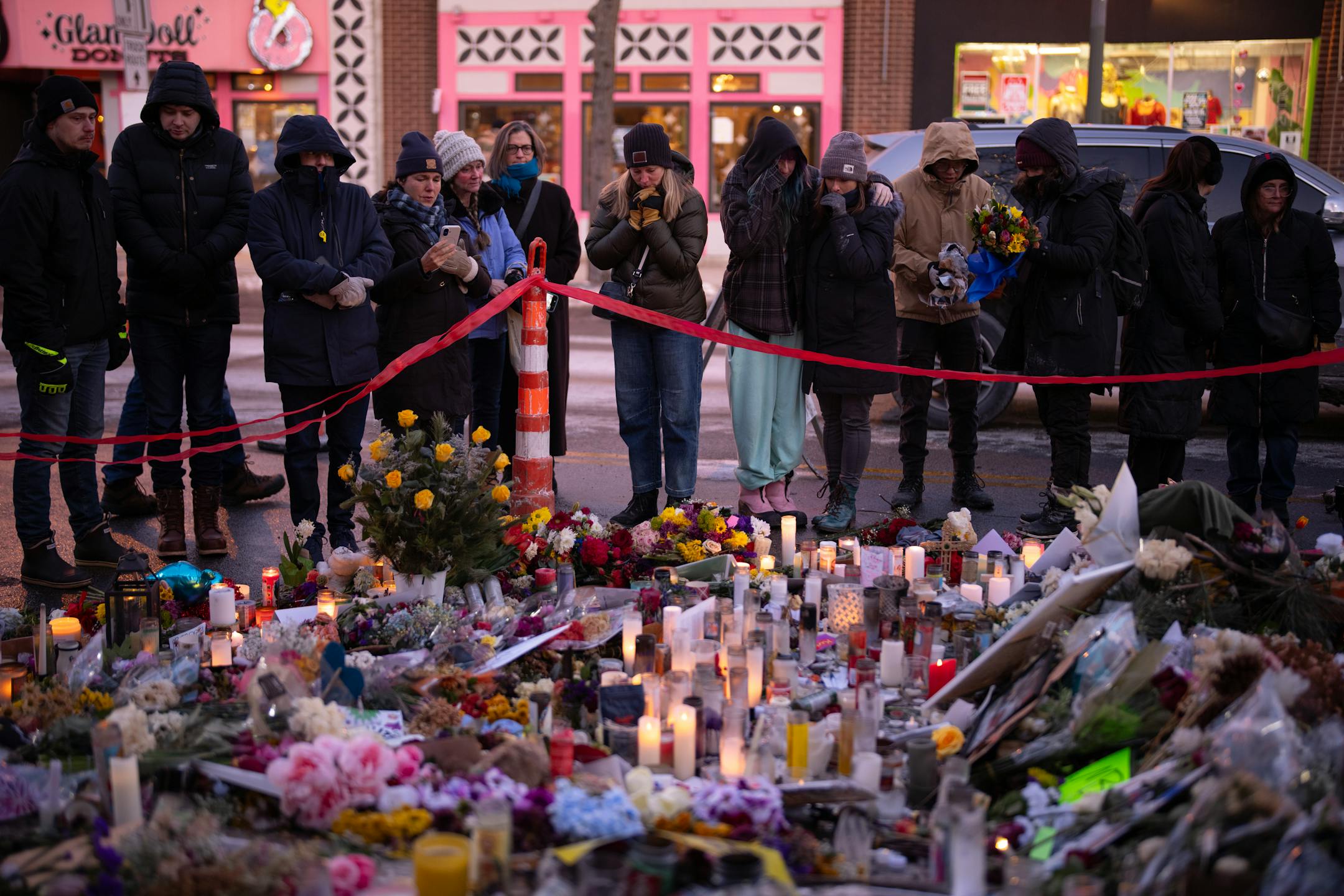
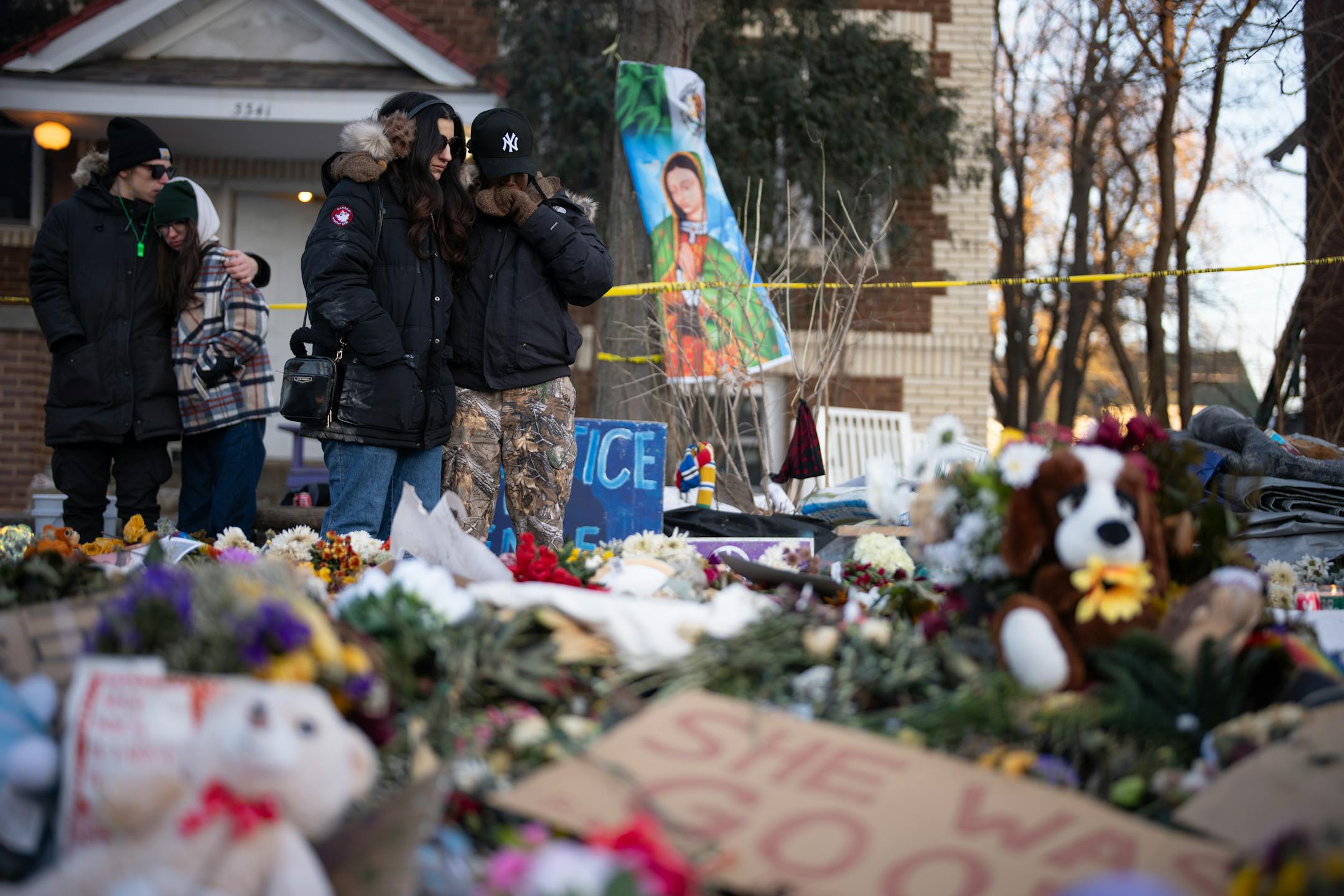
As Minnesotans grapple with the fatal shootings of Pretti and Good by federal agents in January, public outdoor memorials at the sites of their killings offer people a chance to honor them. Like George Floyd Square, these urban memorials become part of the landscape and people’s daily lives.

The killings change these urban locations. People gather at the sites day and night.
At Pretti’s memorial site at 26th Street and Nicollet Avenue, people spelled out “Long Live Alex Pretti” with pine cones in the snow. Fragrant incense and candles burned. Some handwritten signs thanked Pretti for his service as a nurse. People have placed mounds of bouquets at the site. Other signs denounced ICE and demanded justice.
The memorial sites and protests are connected, said Candi K. Cann, a Baylor University professor who specializes in death, dying and grief.
“It is now a space of public contention and political strife, so it takes on greater meaning,” Cann said. “And then you have this political protest that’s embedded into it, calling out unjust practices through memorialization.”