

By Troy Wolverton San Jose Mercury News
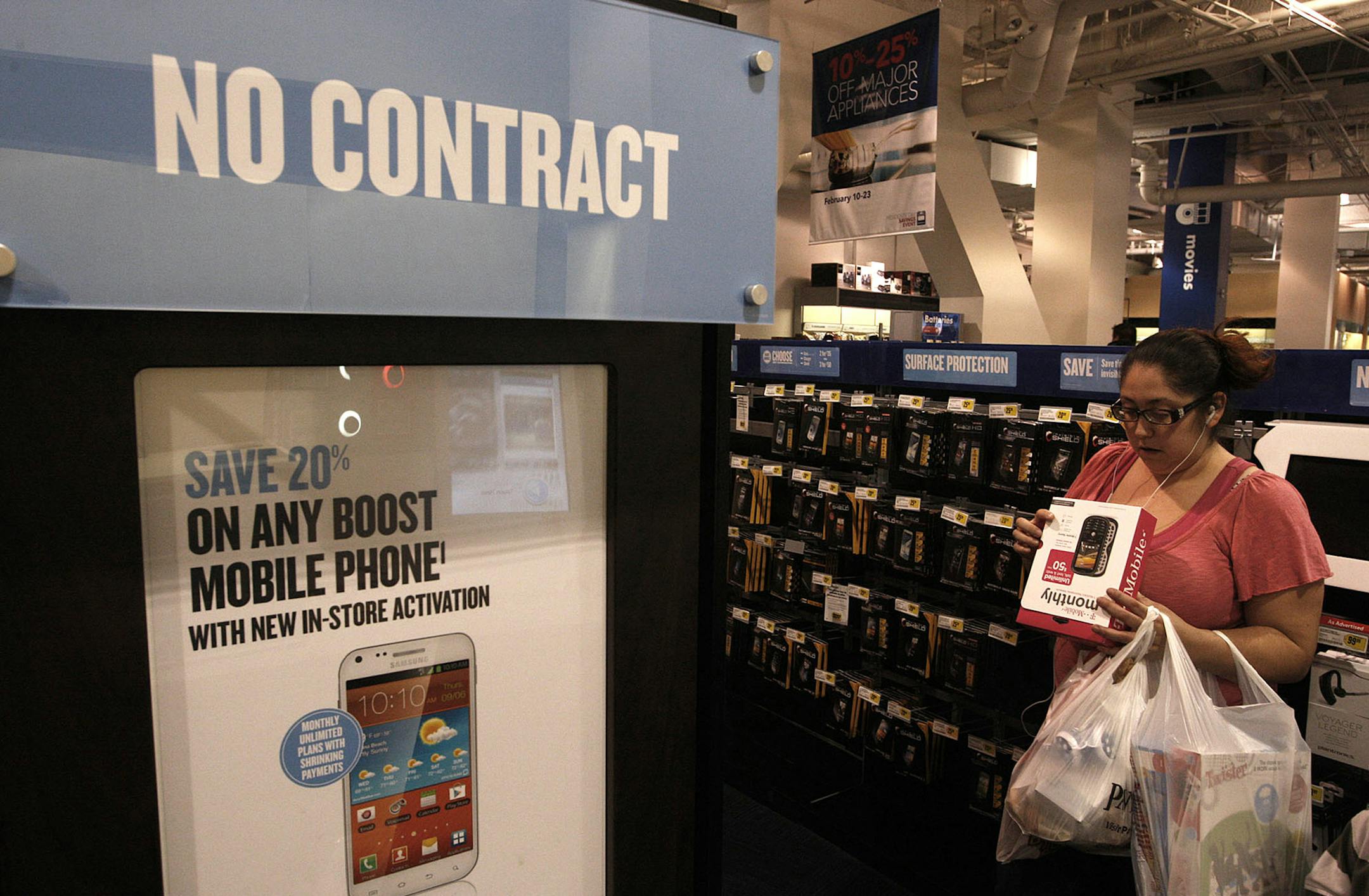
In a shift that could become a big threat to Apple Inc., U.S. consumers are increasingly signing up for a type of wireless plan popular around the world that's traditionally not been in favor here — prepaid accounts.
Prepaid plans typically allow consumers to purchase services in advance in bite-sized chunks — whether by the minute, the megabyte or the month — and allow them to cancel at any time. In contrast, the standard plans offered by the big carriers, such as AT&T and Verizon, generally require users to sign up for pricey two-year service agreements.
Although prepaid accounts still represent less than a quarter of all wireless service plans in the United States, they're gaining ground rapidly. Half of all new wireless accounts added between 2008 and last year were prepaid ones.
"It's a very dramatic change in how customers in the U.S. are buying wireless," said Sara Kaufman, an analyst who covers the wireless service market for Ovum, a research firm.
That shift is a worrisome one for Apple, whose iPhone provides the lion's share of the company's revenue. The vast majority of iPhones sold in the United States come with two-year contracts for standard plans with the big carriers, whose high-priced contracts subsidize the cost of the phones.
The company faces the prospect of losing market share — and eventually revenue — to cheaper phones on prepaid plans, or having to offer a lower-cost phone that could undermine sales of its higher-priced iPhones.
With prepaid service plans, consumers typically have to pay upfront the full cost of their phones — or connect a device they already own to the service. Because of that, inexpensive phones tend to sell best for prepaid providers.


