Vang: Don’t blame the entire trans community for one person’s violence

We’ve seen similar kinds of reactions before.

August 31, 2025 at 1:00PM
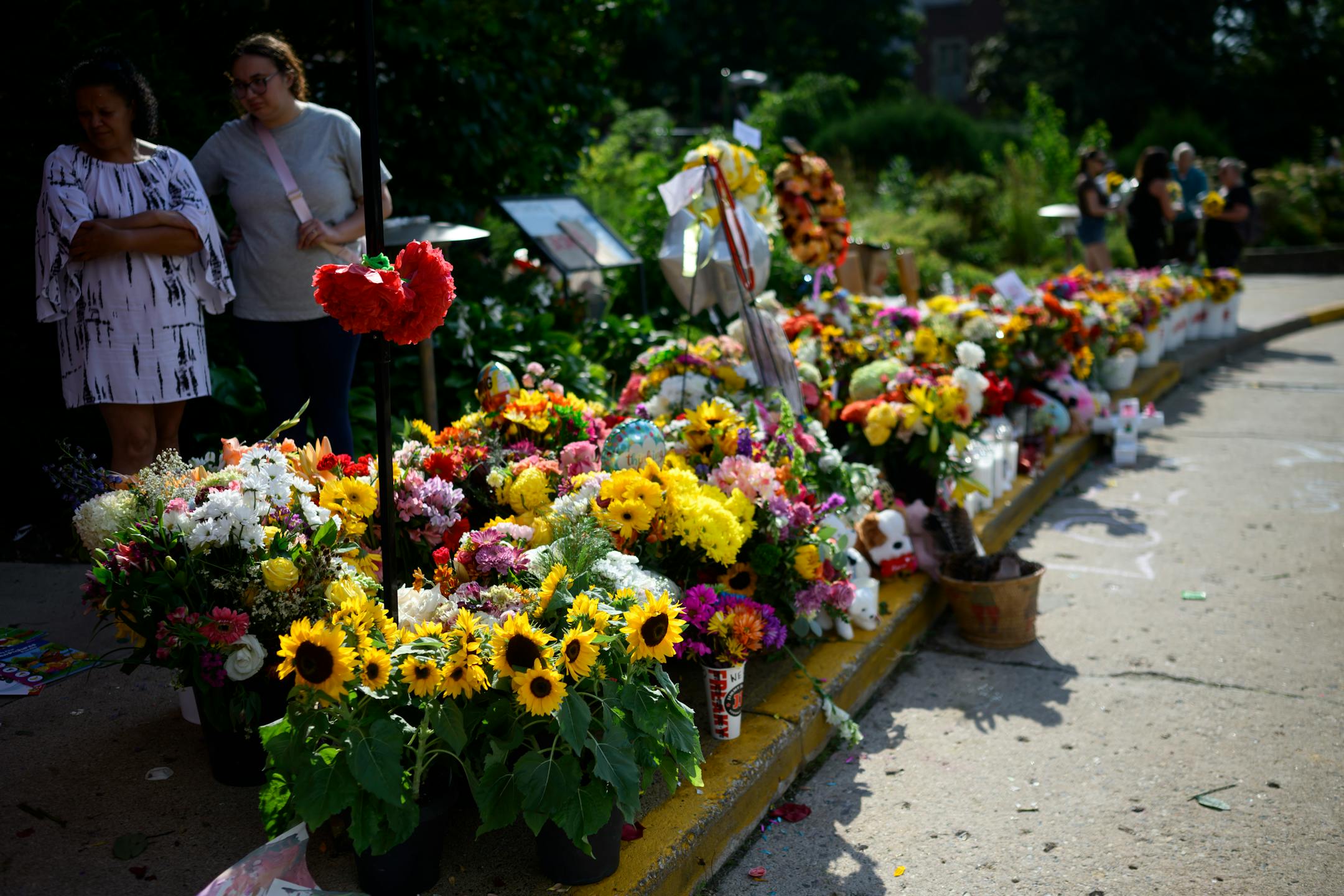
On Aug. 28, a memorial grows for students killed and injured in Wednesday’s mass shooting at Annunciation Catholic Church in Minneapolis. (Aaron Lavinsky/The Minnesota Star Tribune)

Opinion editor’s note: Strib Voices publishes a mix of guest commentaries online and in print each day. To contribute, click here.

•••

Before the victims’ names were released, before families had a chance to grieve, blame had already begun — not just toward the Annunciation Catholic School shooter, but toward an entire community. When news reports characterized Robin Westman as a transgender woman, the online conversation took a dark, unjust and yet predictable turn: People began holding all trans people responsible for her violence. We cannot, and must not, condemn an entire community for the actions of one individual.

“The community already to us feels unsafe,” said Renee Devereux, who identifies as trans and queer, after learning about the online hatred directed at the trans community. “And I am concerned about our safety. People shoot at us in our nightclubs.”

[Opinion editor’s note: Reporting has indicated that Westman, who previously used a male name, held a driver’s license with the given name Robin and a gender identification as female.]

This is a dangerous and familiar move in American history: taking the violence of one individual and weaponizing it against an entire community. We have seen it before. After 9/11, Muslims in America were targeted with suspicion and violence. The pattern is always the same — a community already marginalized is forced to carry the weight of someone else’s actions.

I spoke with the Ryan family from western Wisconsin: Jeff, Julie and their 19-year-old trans son, Ken, about how they are dealing with the hate directed at Ken and others like him.

“Most trans people are not violent,” Ken said. “The administration and people use buzz words to get people like me riled up and angry to prove their point. I try not to fall for it. I surround myself with people who support me.”

That’s the heart of it. Trans people — like every community — are diverse, human and not defined by the violence of one individual. To pretend otherwise is to distort reality and stoke fear.

This tragedy should be a moment for collective mourning and for asking hard questions — not a moment to scapegoat an already vulnerable community.

Depending on the database used, there were between eight and 146 incidents of gun violence at schools across the United States in 2025. The U.S. has more mass shootings than any other developed country. The common denominator is not race, religion or gender identity. It’s access to guns. It’s our lack of support for those suffering with mental health issues.

When we blame an entire community for one person’s actions, we not only miss the real problem, but we also fuel further harm. Trans people are already facing record levels of discrimination, violence and legislative attacks. Now, in the wake of this tragedy, they are being painted with the brush of violence they did not commit.

Jeff Ryan, an award-winning history teacher, remembers the wave of anti-Hmong rhetoric that followed after St. Paul resident Chai Vang shot eight people while trespassing on a hunting group in northern Wisconsin in November 2004. The tragedy quickly spread beyond one man’s actions — suspicion and anger were cast on every Hmong person. I remember it, too, not just in words but in the everyday hostility around us: bumper stickers that sneered “Save a Deer, Kill a Hmong” and “Save a Hunter, Shoot a Mung.” For our community, it was a reminder that we were always one incident away from being seen as outsiders, one person’s crime away from collective blame.

We can choose differently. We can refuse the easy lie that says an entire community is responsible for the violence of one person. We can focus our outrage where it belongs: on the weapons that make such violence possible, on the culture that normalizes them and on the policies that fail to keep us safe.

We may never know what led Robin Westman to carry out such violence, but we do know that tragedies like this often grow in the shadows of untreated pain and isolation, said Renee, who is a mental health practitioner in Minneapolis.

Imagine if mental health support were as normalized and accessible as going to the doctor for a broken arm — if people like Robin had safe, judgment-free places to turn before their despair hardened into violence.

This is one of the reasons Renee is dedicated to creating safe spaces for LGBTQ+ community members to connect.

According to Julie Ryan, this is the moment for love, compassion and change, because trans people deserve love and to feel safe.

“For those who hate trans people,” Julie said, “how can you have an opinion when you never met a trans person?”

It’s Robin Westman who is suspected of pulling the trigger. No one else. To blame all trans people is not only false — it is cruel.

Let’s not let grief turn into another excuse for hate. Let’s turn it into a demand for a safer, more compassionate America.

about the writer

about the writer

Ka Vang

Contributing Columnist

Ka Vang is a contributing columnist for the Minnesota Star Tribune. She focuses on historically marginalized communities.

See Moreicon

More from Contributing Columnists

See More
card image
Jeff Wheeler/The Minnesota Star Tribune

The loss of more than a billion dollars that’s occurred on the governor’s watch makes him unfit for further service to the state.

card image