
Anderson: With Walz not running for re-election, hunters and anglers hope the next governor ‘gets’ the outdoors

Possible Klobuchar candidacy is seen as a positive by many Minnesota conservationists.

Columnist Icon
The Minnesota Star Tribune
January 9, 2026 at 7:51PM
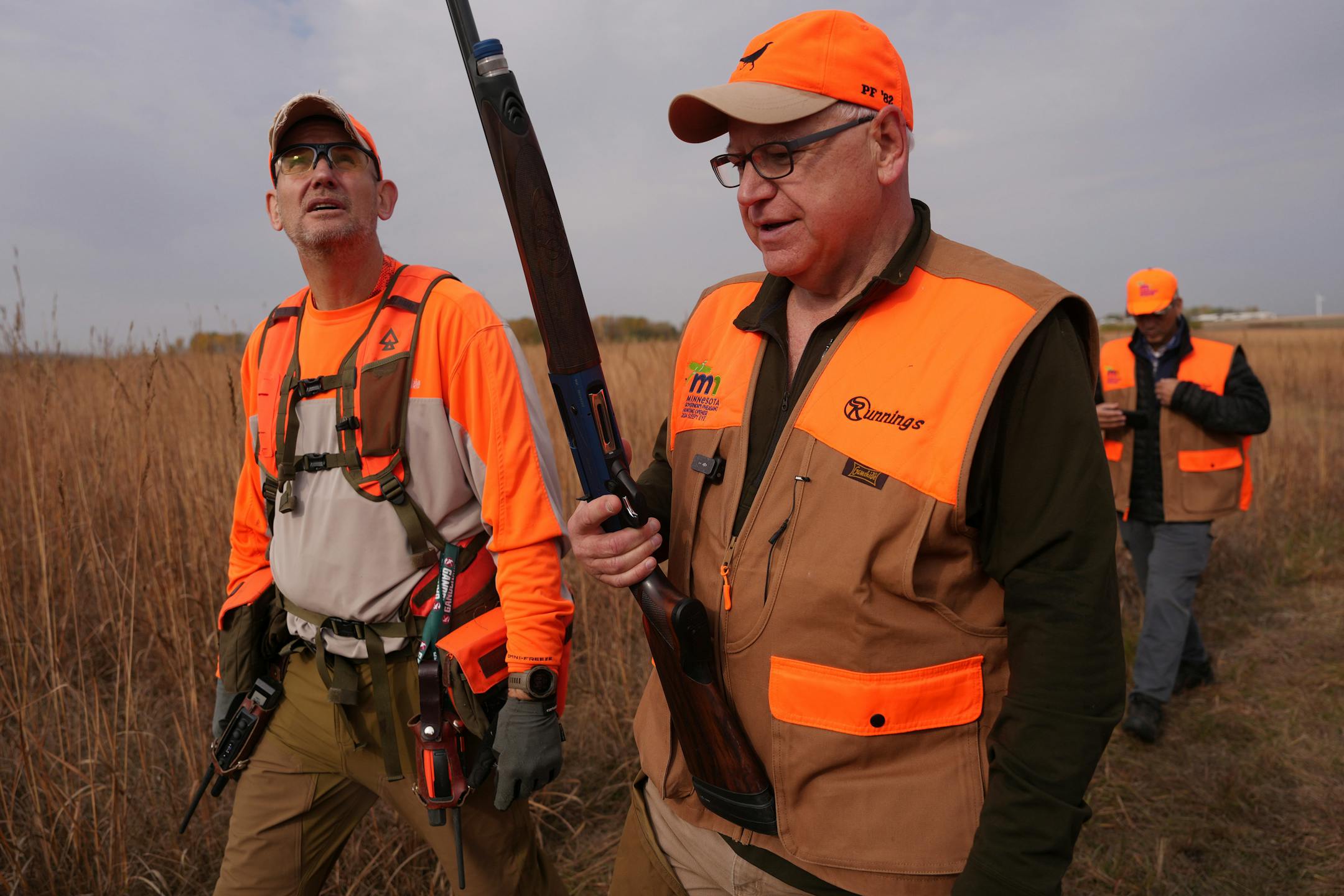
Minnesota Gov. Tim Walz, shown here at the Governor's Pheasant Hunting Opener on Oct. 12, 2024, near Sleepy Eye, says he won't seek reelection. (Anthony Soufflé)

Tim Walz has a lot on his plate right now.

Pointing out that many Minnesota hunters, anglers and other conservationists consider it good news that he won’t seek re-election seems like piling on.

But there it is.

When he was elected governor in 2018, Walz seemed as if he might follow in the conservation footsteps of his predecessor, Mark Dayton.

Dayton, who as a kid spent a lot of time outdoors, sometimes up north with his family on Lake Vermilion and sometimes bird hunting, was widely regarded by hunters and anglers as a politician who “got it.”

And he followed through.

In 2014, Dayton convened the first-ever Minnesota Pheasant Summit, and in 2016 he successfully advocated for passage of a stream buffer law, the state’s first.

Farmers aren’t prohibited from washing chemicals and topsoil from their land into ditches, streams and rivers. But the buffer law requires them to plant grasses or similar cover alongside waterways passing through their property to minimize the impact of downstream waste on public resources.

The buffer law was among the reasons Dayton was given standing ovations at annual Department of Natural Resources Roundtables, attended by 300 or so of the agency’s stakeholders.

Would Walz be similarly received?

When he was sworn in as Minnesota’s 41st governor, it seemed so.

Originally from a small town in Nebraska, Walz from 2007-2019 represented a largely rural Minnesota district in Congress. Plus, he hunted, shot trap and otherwise spent time outdoors.

One red flag was raised when leaders of a major conservation group in his congressional district said he had never contacted them or visited their headquarters in the dozen or so years he was in Washington.

But maybe that was an oversight.

Garry Leaf saw promise, too.

Leaf was an important player in developing consensus among hunters and anglers to support the 2008 Clean Water, Land and Legacy Amendment.

“When Walz was first running for governor, I attended a debate where he was asked whether he supported the idea of a citizens commission to guide Minnesota conservation, including the setting of Department of Natural Resources policies and the hiring and firing of its commissioner,” Leaf said. “Walz said he liked the idea. So I was encouraged.”

About 40 states have similar commissions, with Missouri’s being the gold standard.

That state’s four citizen Conservation Commission members appoint the director of the Missouri Department of Conservation, approve its fish and wildlife regulations and direct its strategy and budget.

Minnesota’s DNR commissioner is instead appointed by the governor, with the agency’s policies, purse strings and actions — or non-actions — set by the governor and the Legislature.

But mostly by the governor.

This setup is why the success of Minnesota land and water stewardship is hit-and-miss, depending on the interest or disinterest in conservation by the governor.

Each year, Minnesota hunters, anglers, boaters, paddlers and campers contribute some $13.5 billion to the state economy. And voters as recently as November set a turnout record when they re-dedicated proceeds from the state’s lottery to conservation.

Yet for many Minnesota governors and legislators, citizens’ outdoor interests fall far behind those of social services, agriculture, health, public safety, and other priorities.

That’s what happened too often with Walz. Yes, after taking office he emphasized clean energy and climate initiatives, and when the state had a $17 billion surplus a couple of years back, he supported nearly $100 million for fish hatcheries, fishing piers and boat landings.

But he never really seemed to connect with many hunters and anglers — as protests at his most recent Governor’s Fishing Openers attest. Importantly, he also never pushed for establishment of a citizens conservation commission.

Other Minnesota governors, both Republicans and DFLers, have left significant marks on the outdoors.

Elmer L. Andersen, a Republican who was elected governor in 1960, established several state parks and was a driving force, in and out of office, in the establishment of Voyageurs National Park.

Rudy Perpich, a DFLer, in 1983 gave the keynote address at the inaugural Pheasants Forever banquet, signed the state’s pheasant stamp bill and in 1986 promoted and signed the Reinvest in Minnesota bill, funded with $16 million.

Republican Arne Carlson announced during his governorship a plan to make the Minnesota River “swimmable and fishable” in 10 years. Still today, Carlson is one of the state’s leading advocates for clean water.

Republican Gov. Tim Pawlenty’s political support was critical in placing the Clean Water, Land and Legacy Amendment on the 2008 Minnesota ballot.

The hope now is that the next governor “gets it” about the importance to Minnesotans of the outdoors.

Many Minnesota conservationists were encouraged this week when Democrat U.S. Sen. Amy Klobuchar indicated she might return to Minnesota from Washington to run for governor.

Klobuchar grew up taking long bike rides with her dad, Jim, the late Minneapolis Star columnist. She’s appeared at many hunting and fishing banquets, and as far back as 2016 played a critical role in acquiring federal funding to restore iconic Marsh Lake in western Minnesota.

Klobuchar won’t please everyone, considering she’s advocated for delisting the gray wolf (as divisive a topic as Minnesota has) and increasing biofuel production (farmers love it; many conservationists are against it).

Whether she’d support a citizens commission to set the state’s land, water, fish, wildlife and other conservation priorities is unknown.

If she runs, I’ll ask her.

about the writer

about the writer

Dennis Anderson

Columnist

Outdoors columnist Dennis Anderson joined the Star Tribune in 1993 after serving in the same position at the St. Paul Pioneer Press for 13 years. His column topics vary widely, and include canoeing, fishing, hunting, adventure travel and conservation of the environment.

See Moreicon