


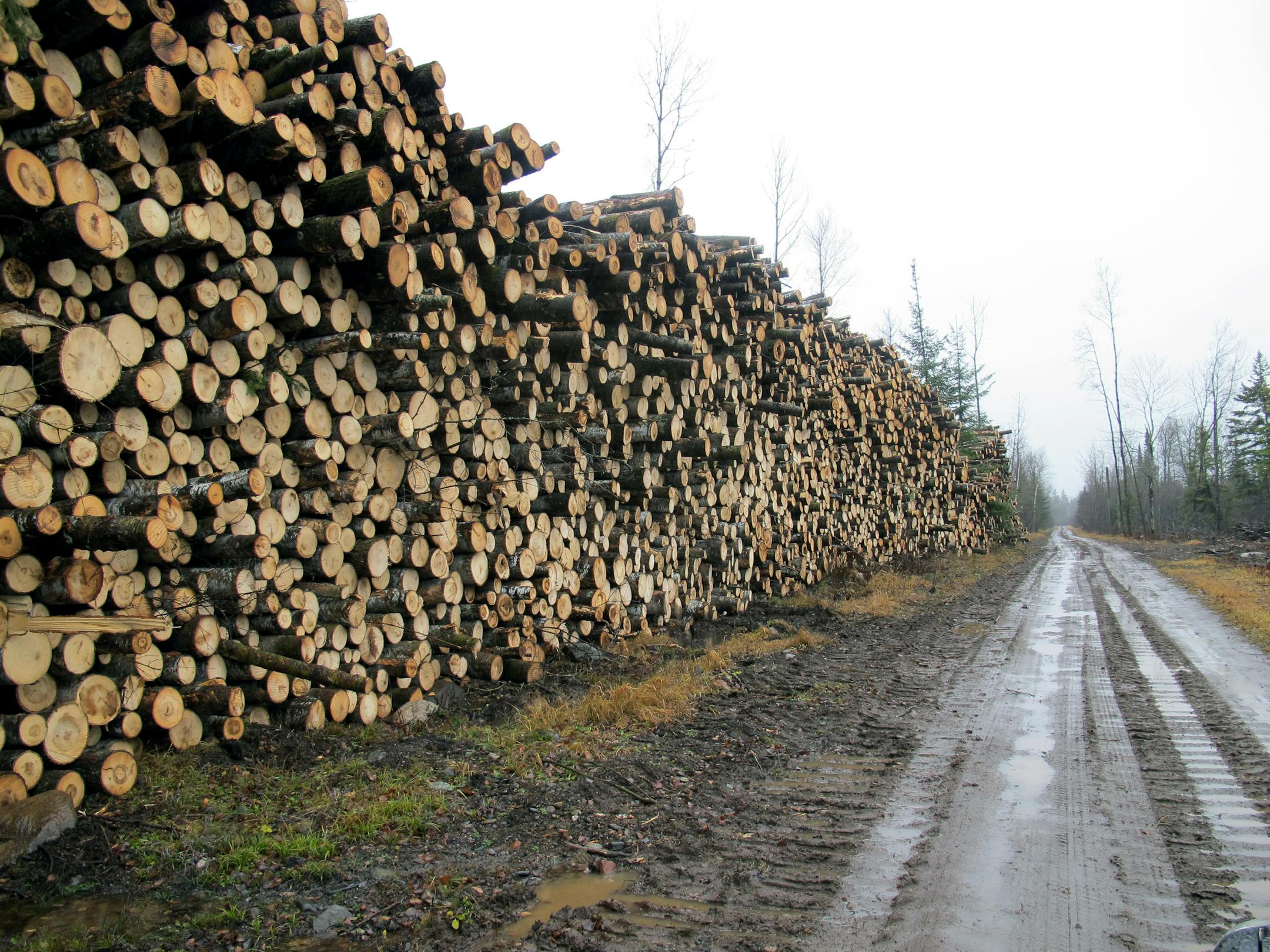
Minnesota Forest Industries executive vice president Rick Horton gave me a strong counterpoint to the views expressed in my Oct. 31 column, which highlighted the charge by some retired Department of Natural Resources experts that the agency is managing the state’s wildlife management areas “to satisfy the logging industry.”
Headquartered in Duluth, Minnesota Forest Industries represents the state’s approximately 69,000 Minnesotans who cut timber and manufacture lumber, siding and other wood and paper products. Horton has a master’s degree in wildlife ecology and previously held posts with the Ruffed Grouse Society and the National Wild Turkey Federation. The interview has been edited for length and clarity.
Q: What was the forest products industry’s opinion of the recent Legislative Auditor’s Report, which focused on logging on state wildlife management areas?
A: The report said the DNR hadn’t done an adequate job of documenting the wildlife benefits of forest management, specifically logging, that was done on WMAs. The report didn’t say everything the DNR was doing on WMAs was wrong, but that whatever wildlife benefits that were occurring due to logging on WMAs weren’t documented.
Q: The report was a little harsher than that, wasn’t it? Twenty-eight DNR wildlife managers wrote to commissioner Sarah Strommen in 2019 complaining that logging on WMAs wasn’t being done primarily to benefit wildlife. The managers also argued they had lost at least some control of logging on WMAs. Essentially, the auditor validated those concerns.
A: Historically, WMA managers had sole decision-making authority over logging on WMAs. That changed somewhat, but not entirely, under the 2018 Sustainable Timber Harvest Analysis (STHA), which developed the plan under which Minnesota timber would be harvested in the years 2019-2028. An outcome of that plan was that computer models of some WMA logging sites in some cases replaced or diminished wildlife managers’ input.
Q: According to federal requirements, logging on WMAs must be done primarily to benefit wildlife, because most WMAs are purchased in part or entirely with federal funds derived from hunting license sales. In an unprecedented action, the U.S. Fish and Wildlife Service withheld $21 million from the DNR to force compliance on the WMA logging issue.
A: True. But everything you do in a forest, including nothing, benefits some wildlife and not others. So some wildlife species benefitted from logging that was done on WMAs under the STHA. Ultimately, however, the Fish and Wildlife Service, representing the federal government, and the DNR agreed on a framework about documentation and other protocols for logging on WMAs that will keep the DNR in compliance with federal regulations.


![Attendees of Frostbike made their way through the convention Saturday at the Quality Bike Products campus in Minneapolis. ] (AARON LAVINSKY/STAR TRIBUNE) aaron.lavinsky@startribune.com Frostbike 2016 was held at the Quality Bike Products Campus on Saturday, Feb. 27, 2016 in Bloomington, Minn.](https://arc.stimg.co/startribunemedia/NH2BSHB74ND2V6GF2G2HI5X4MM.jpg?&w=252&ar=3:2&fit=crop)