
Anderson: Are insecticides toxic to pheasants and the places they live? DNR hopes to find out

Researchers will ask hunters this weekend to donate bagged roosters.

Columnist Icon
The Minnesota Star Tribune
October 9, 2025 at 4:00PM
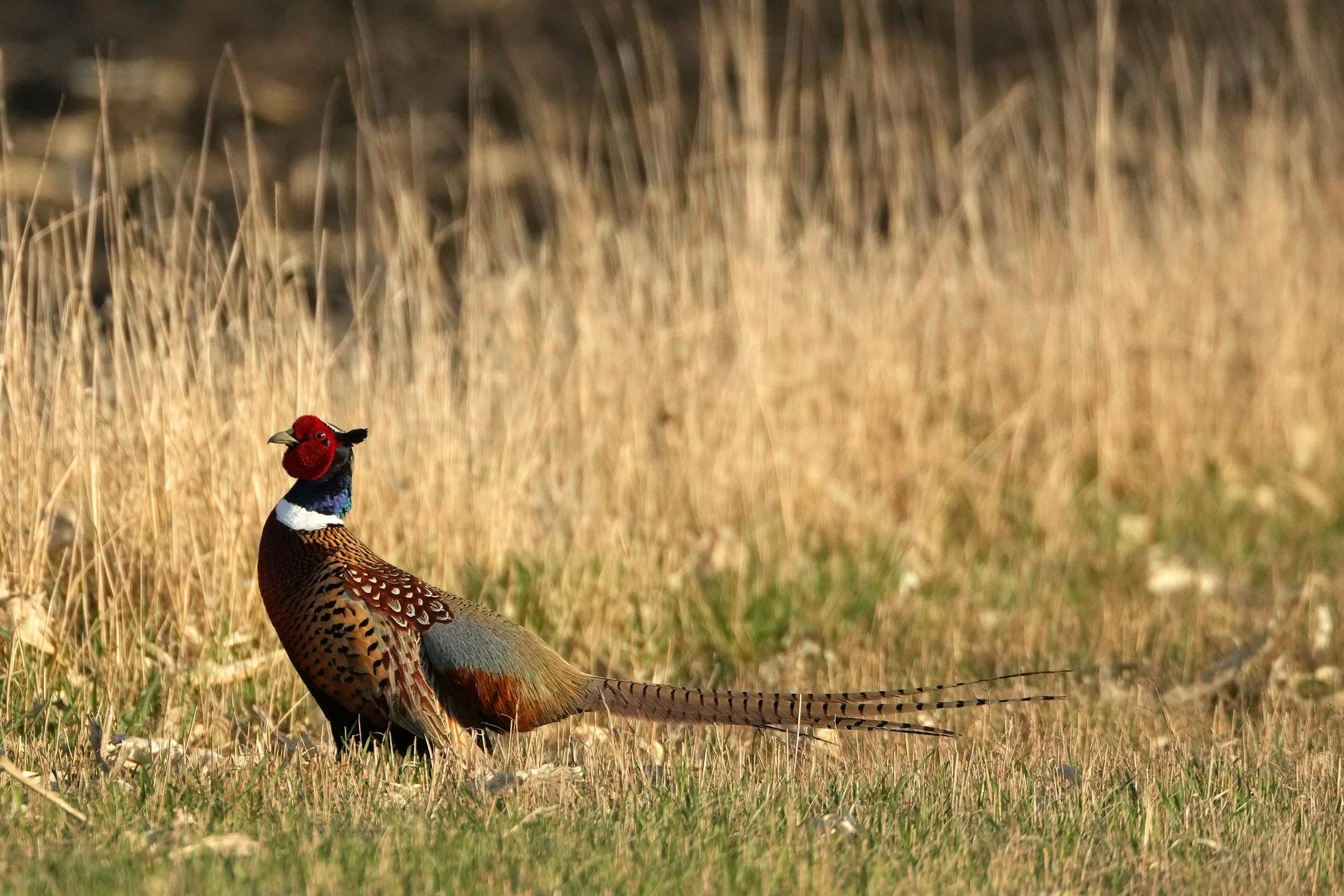
A ring-necked pheasant rooster struts along the roadside in April at the Salt Lake Wildlife Management Area near Marietta, Minn. The Department of Natural will study the effects of a common insecticide on the birds and their habitat. (Anthony Soufflé/The Minnesota Star Tribune)

When the Minnesota pheasant season opens Saturday, some hunters will be tested not only for their skills afield, but for their generosity.

If they’re fortunate enough to bag a rooster or two, in some parts of the state’s pheasant range they’ll be asked to forfeit their hard-earned bounty.

The sacrifices will be for a good cause. The Department of Natural Resources (DNR) is attempting to determine whether a group of insecticides known as neonicotinoids are hurting pheasants and the places they live.

To study the possible effects of the chemicals on pheasants, DNR researchers will be on site at a handful of state wildlife management areas this weekend asking successful hunters to contribute a total of five roosters at each location.

Now in its second year, the study is headed by upland game bird researcher Steven Woodley out of the DNR’s Madelia office.

Woodley discusses the study in the interview that follows. The interview has been edited for length and clarity.

Q: What are “neonics?’’

A: Neonics is short for neonicotinoids, which refer to a class of insecticides applied primarily as coatings to soybean and corn seeds, among other seeds. They’re widely used by farmers in Minnesota and throughout the U.S. A primary concern of research done so far on neonics has been their effect on bees and other pollinators.

Q: How do neonics work?

A: Generally, they bind and disrupt insects’ brain receptors, causing them to over-stimulate and ultimately die if they consume a plant growing from a coated seed. Mammals and birds don’t have the same receptors. But there’s mounting evidence that birds are affected by neonics, possibly affecting migrators, but also possibly affecting non-migrators such as pheasants.

Q: Has any completed research shown negative effects of neonics on pheasants?

A: A thesis out of South Dakota State University that was unpublished tested captive pheasants that were fed neonic-treated corn seeds. The study estimated about 77 ingested coated seeds a day would be lethal to pheasants. The study also showed that some pheasants that ingested just 15 seeds a day demonstrated occasional lethargy.

Q: Do pheasants typically eat as many as 77 seeds a day?

A: In our study we’ve found wild pheasants with more than 100 agricultural seeds in their crops.

Q: When are pheasants most exposed to treated seeds?

A: During spring planting. But also around silos and so forth, where seeds are spilled.

Q: Are songbirds similarly exposed, and do they typically consume these seeds?

A: Yes, songbirds that primarily consume seeds are similarly exposed.

Q: Is all of the insecticide taken up by the target plant, or does some end up in the soil and, possibly, nearby water?

A: Only about 5% of the chemical is taken up by the target plant. Much of the rest gets into the soil.

Q: Do treated seeds taste different to birds than untreated seeds?

A: In the South Dakota State University study, given a choice between treated and untreated seeds, pheasants preferred untreated seeds.

Q: Are neonics banned in Europe?

A: Generally, yes. And some states in the U.S. restrict their use.

Q: Are there alternative insecticides that don’t have the potential risks that neonics do?

A: I don’t have a good answer for that. Certainly there’s potential for worse insecticides.

Q: Who is funding the DNR’s study?

A: The Legislature made the appropriation. A primary concern was the possible ingestion of neonic-coated seeds by pheasants. But neonics can last in soil for a long time, and being water soluble it’s possible they can leach into state Wildlife Management Areas (WMAs) that adjoin corn or soybean fields. So our three-year study — we’re in year two — is intended to check out not only the possible effects of neonics on pheasants, but their habitats.

Q: How is the study designed?

A: We’ve chosen six different WMAs each year, three larger and three smaller. Each adjoins soybean or corn fields. The intent is to see whether the larger complexes offer more protection to soil and wildlife from possible contamination than smaller complexes. Each year, before and after seeding, and also in July and October, we are collecting forbs, arthropods and soil from the margins and interior areas of these WMAs to check for possible contamination.

Q: You’re also testing pheasants directly, right?

A: Yes. In spring, prior to planting, by permit we’re collecting up to five roosters from each WMA. After dissecting them we send a breast, liver and crop contents from each bird to a federal lab. Then this weekend, on the opener, as we did last year on the opener, DNR staff will be at the six WMAs asking hunters to contribute roosters to the study. They don’t have to, of course, but last year we found hunters very willing to help. These birds also will be dissected and sent to the same lab.

Q: At what WMAs will DNR staff collect birds this weekend?

A: The six WMAs are in the southern part of the pheasant range. The farthest north is northeast of Marshall. The rest are from that point south to the Iowa border.

Q: Any results yet?

A: Findings are only preliminary, not enough to talk about. I will share one positive result we’ve had, however. Of the 23 pheasants we’ve collected, we’ve also tested them for avian bird flu, and they’ve all come back negative.

about the writer

about the writer

Dennis Anderson

Columnist

Outdoors columnist Dennis Anderson joined the Star Tribune in 1993 after serving in the same position at the St. Paul Pioneer Press for 13 years. His column topics vary widely, and include canoeing, fishing, hunting, adventure travel and conservation of the environment.

See Moreicon

More from Outdoors

See More
card image
Courtesy Rick Sandri

A citizens group is testing wells as North Star Manganese tries to develop a mine. More than half the sites tested high enough that the water cannot be used in infant formula.