
Anderson: A trigger once pulled can never be unpulled — a lesson some hunters learn the hard way

Some hunters drink or otherwise cause their own problems. Others are unprepared for dizzying effects of “buck fever.”

Columnist Icon
The Minnesota Star Tribune
December 13, 2025 at 12:00PM
The utitlity of a hunting shack depends on the quality of deer habitat that surrounds it, and the placement of stands. Here a high stand overlooks a crossing between one stand of woods and another.
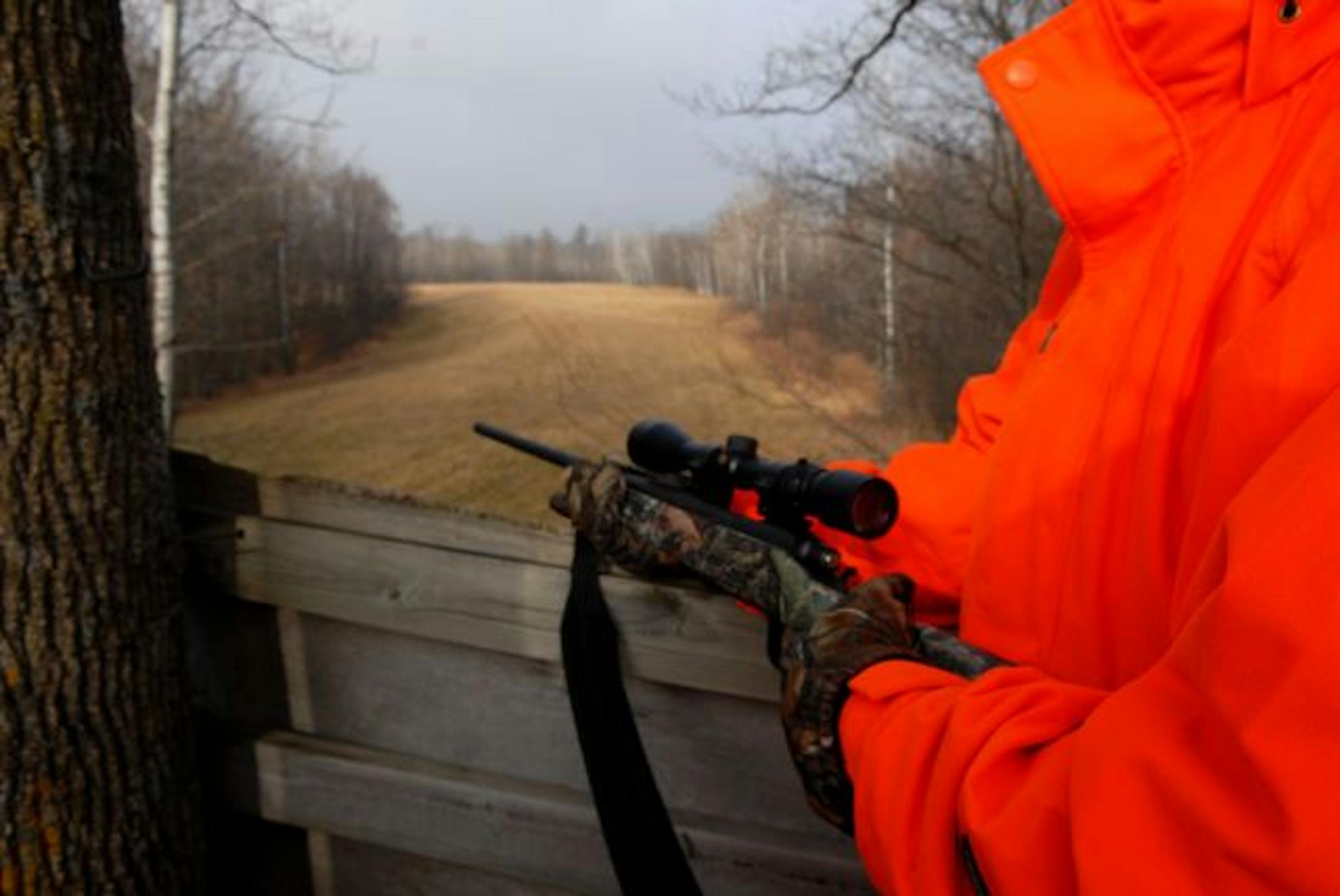
"Buck fever" can cause hunters to make a sometimes fatal mistake. (Dennis Anderson/The Minnesota Star Tribune)

The problem with pulling a trigger is that you can’t unpull it — a lesson some hunters learn the hard way.

Excited to raise your shotgun in the direction of what you think is a snow goose, only to find out the bird you killed is a protected trumpeter swan?

Too late, once you’ve pulled the trigger.

Think that late-afternoon movement in the brush is the monster whitetail buck you’ve been seeing on your trail camera — only to find out it was your hunting buddy?

Too late, once you’ve pulled the trigger.

At issue most recently is the Duluth hunter who Department of Natural Resources conservation officers say shot a bull moose on opening morning of Minnesota’s firearms deer season, thinking it was a whitetail buck.

This was near Melrude, in St. Louis County.

For the record, adult bull moose stand about 6 feet at the shoulder and weigh between 1,200 and 1,600 pounds.

By contrast, most buck whitetails are small fries, standing just 3 feet at the shoulder and weighing less than 200 pounds.

The Duluth hunter told conservation officers his stand faces east and in the morning sun, with the area’s heavy tree cover, he mistook the bull’s partially obscured antlers for a buck’s, and fired twice.

The moose stumbled about 110 yards before falling.

Hunting in Minnesota is safer than ever, thanks to hunter education and the advent of blaze orange clothing.

But neither classroom instruction nor high-vis duds can fix stupid.

One definition of stupid is drinking while hunting — and according to the DNR, the miscreant Duluth hunter’s blood alcohol concentration was .10.

The legal limit for driving in Minnesota is .08.

For hunting, it should be .00.

Being unprepared for the many surprises that all too commonly await hunters in the field is another definition of stupid.

In some parts of Wisconsin, elk — which are protected — intermix with deer. Yet in five consecutive recent years those much larger animals were gunned down by hunters who mistook them for whitetails.

Recall as well, not that many years ago, the New York nimrod who was toting a rifle in Montana when he waylaid a llama, believing it was an elk.

Proud as punch, he tagged and field-dressed the furry critter before being informed later, in town, of his error.

But perhaps the biggest surprise that awaits hunters — and the cause of many of their mistakes — is “buck fever,” which can dizzy and confuse the mind and body.

Produced neither by Jack Daniel’s nor Jim Beam, buck fever is the byproduct of an altogether natural home brew — adrenaline.

Prompted by the sudden appearance of a deer, ducks or other game animals, buck fever is a physiological phenomenon known to scientists as well as hunters.

Symptoms include a fast heartbeat, watery eyes, lightheadedness and trembling hands.

Hunters unprepared for the brief but fiery malady can make mistakes they otherwise wouldn’t.

Most modern hunters, after all, lead day-to-day lives that are routine, if not dull. Commuting to a cubicle isn’t exactly a barrel of laughs, and the chance to get away from the drudgery for a weekend and walk for pheasants or sit for deer can be a real high.

Add to this, at times, the adrenaline rush that courses through a hunter’s veins when a target animal is sighted, and missteps are possible, if not likely.

Such high-energy pulses have served people well over time, triggering fight or flight responses that have helped them to survive.

But hunters unfamiliar with buck fever who are stricken during the few days of a year they have a gun in their hands can make mistakes they regret forever.

Buck fever perhaps explains the death in 2006 of a 14-year-old boy who was killed in Aitkin County by a companion who mistook the young hunter for a deer.

Buck fever perhaps also explains why in 2020 a Beltrami County hunter was killed by another hunter who shot him at 200 yards, mistaking him for a deer.

Both hunters faced involuntary manslaughter charges, the penalty in Minnesota for mistakenly shooting another hunter.

But the pain that follows a trigger that never should have been pulled is soothed neither by a courtroom conviction nor by a prison sentence.

If it’s a moose that is mistakenly shot, that’s one thing.

If it’s your husband who’s killed, that’s another.

A Minnesota woman I know was 30 years old in 1989, with a daughter, then 8, and a son, 4, when her dad, mom and brother rang her doorbell on a Sunday night.

The three had been crying.

Her husband had been up north deer hunting, and she feared the worst.

“Just tell me,” she said. “Is he dead?”

Her 31-year-old husband, as it turned out, had been killed by a hunter who mistook him for a deer. He was riding his ATV back to camp at the time.

The woman has since remarried. She has a good life, and she’s happy.

But the admonition she issued to hunters after her husband’s death rings true still today.

“You better think before you shoot. A shot you take might be just one moment in time for you. But for me, a shot changed my life forever. And not just my life, but the lives of my kids, my parents and family, [my husband’s] parents and family, everyone who was in that hunting party, everyone [he] knew.

“One shot and everything changes just like that. You never get over it.”

about the writer

about the writer

Dennis Anderson

Columnist

Outdoors columnist Dennis Anderson joined the Star Tribune in 1993 after serving in the same position at the St. Paul Pioneer Press for 13 years. His column topics vary widely, and include canoeing, fishing, hunting, adventure travel and conservation of the environment.

See Moreicon

More from Outdoors

See More
The utitlity of a hunting shack depends on the quality of deer habitat that surrounds it, and the placement of stands. Here a high stand overlooks a crossing between one stand of woods and another.
Dennis Anderson/The Minnesota Star Tribune

Some hunters drink or otherwise cause their own problems. Others are unprepared for dizzying effects of “buck fever.”

card image
card image