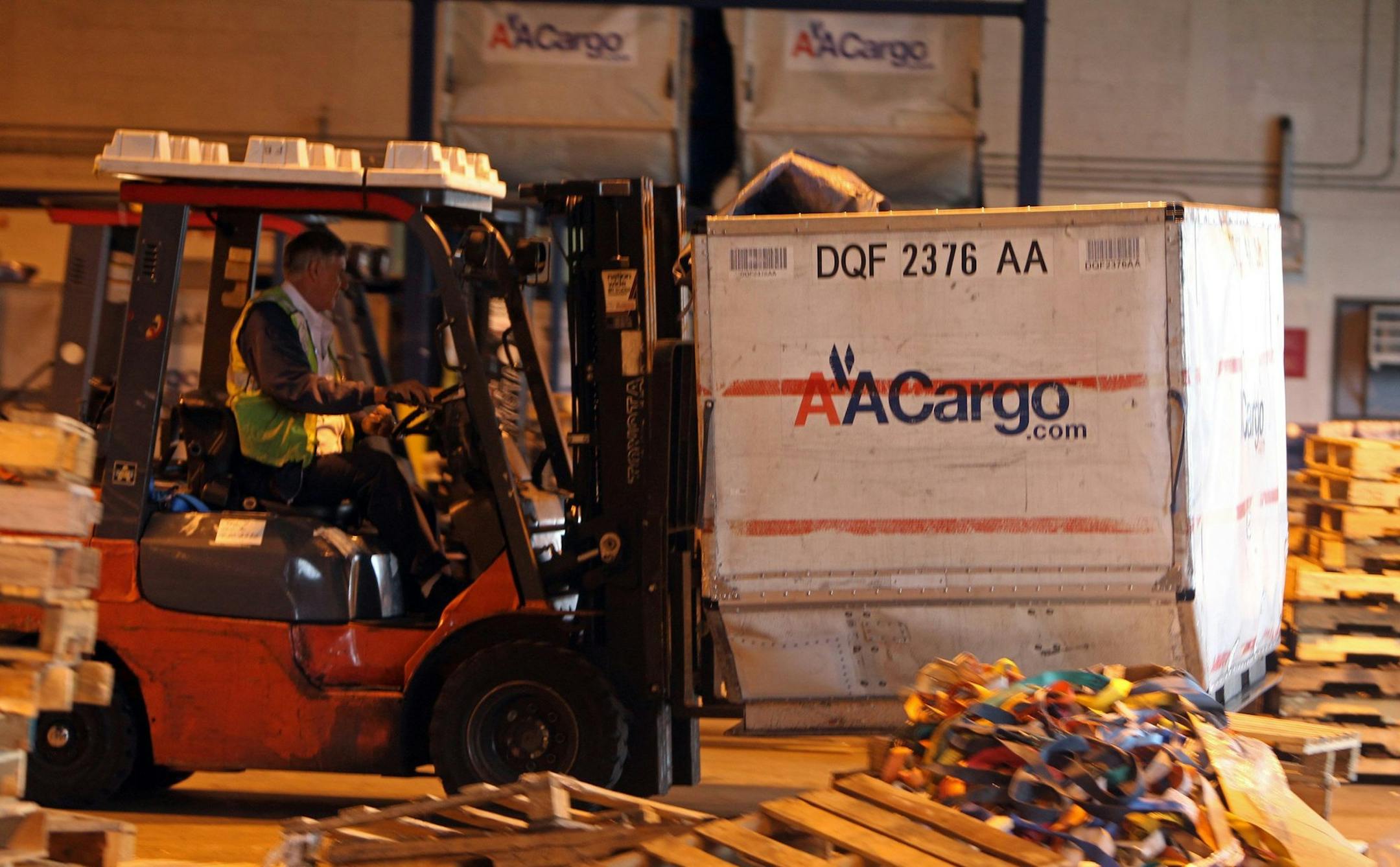
As American Airlines passengers settle into their flights, they're probably not thinking about what's under their seats in the belly of the plane.
Luggage, they might venture. But on any given flight, far more than suitcases is likely to be traveling with them.
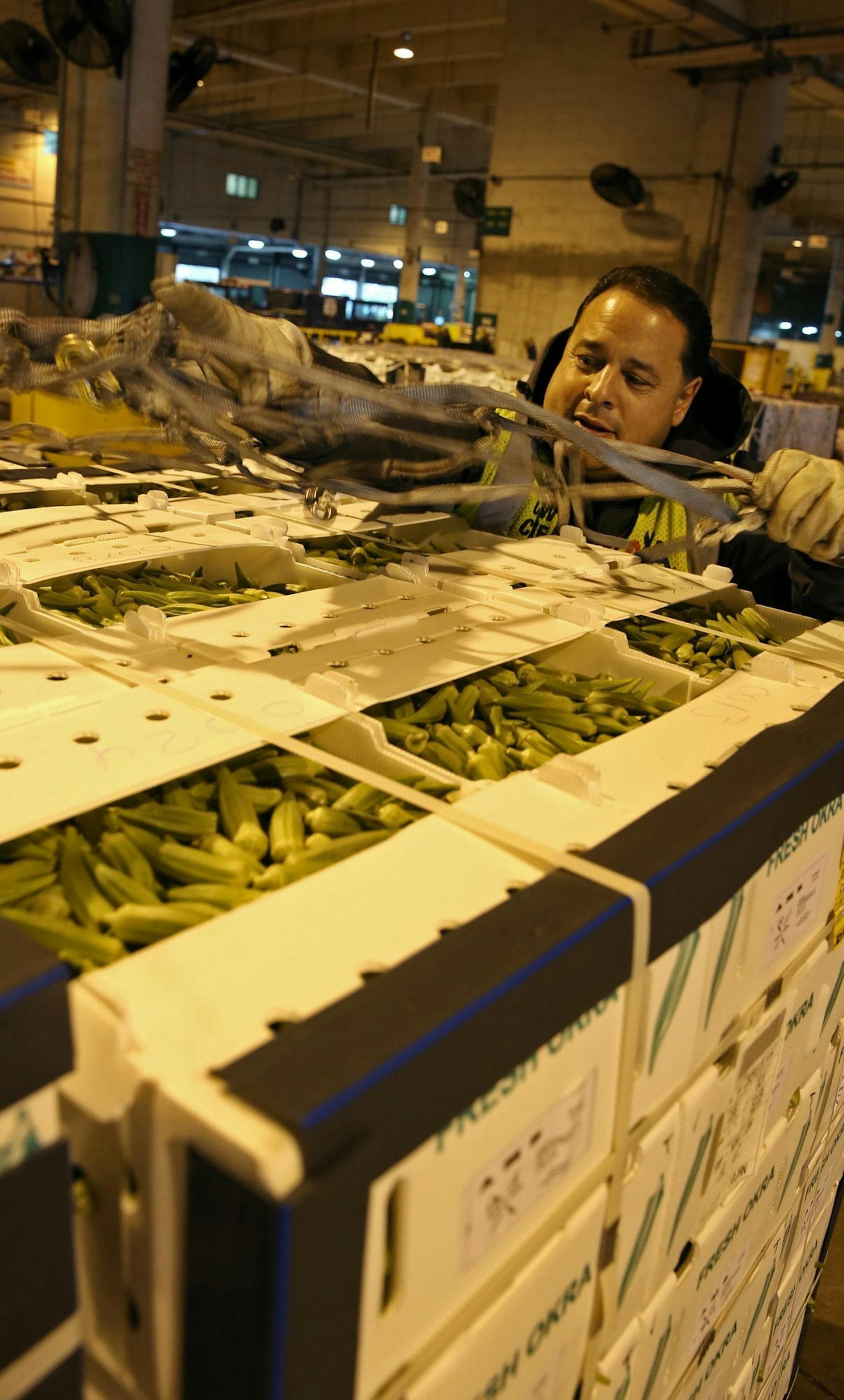
Along with the aircraft parts, cellphones, computers and computer chips, medical equipment and medicines — the backbone of trade in South Florida — there is some decidedly more exotic and unusual cargo shipped through Miami International Airport (MIA).
Think live Florida lobsters destined for China, monkeys, blueberries from Chile, gold artifacts, stacks of currency, tissue and blood samples, tropical fish in super-oxygenated water. American has even transported lions, cheetahs and baby sharks in its passenger planes.
Cargo carriers such as Tampa Air Cargo, LAN Cargo, DHL Express and FedEx fly even bigger animals, including manatees, race horses and polo ponies. Hyenas, jaguars, a variety of fish and fowl, Gila monsters and goats also have traveled on all-cargo flights.
And remember that film "Snakes on a Plane"? King cobras — albeit well-secured king cobras — also have been high fliers.
While most live animals are moved around the country by truck or rail, zoos and aquariums, owners of race and show horses and exotic pet dealers often choose air cargo to minimize travel time and reduce the stress on animals — despite the higher cost.
For animals traveling internationally, air cargo is typically the best alternative. And Miami is the second-busiest U.S. airport, after Los Angeles, for transporting live wild animals, according to Sandy Cleva of the U.S. Fish and Wildlife Service's Office of Law Enforcement at MIA.