
Allegations of rink espionage at center of lawsuit between Minnesota youth hockey organizations

Play Hockey USA alleges that a former employee in charge of Minnesota operations stole trade secrets before joining a different youth hockey organization run by a former Gophers men’s hockey player.

The Minnesota Star Tribune
September 11, 2025 at 6:00PM
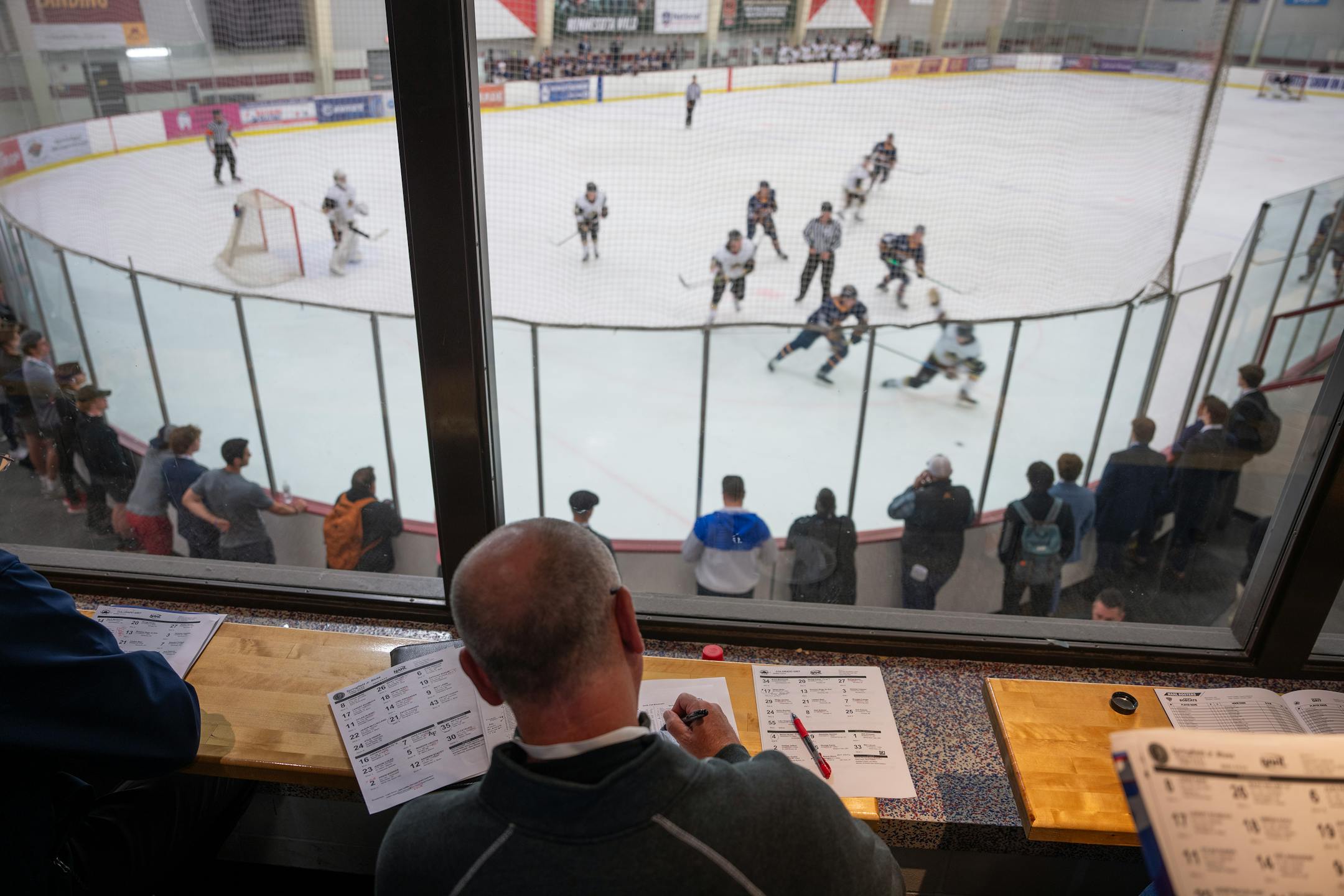
Scouts watch games and take notes during the North American Hockey League (NAHL) Showcase at the Super Rink in Blaine, Minn., on Wednesday, Sept. 13, 2023. The NAHL Showcase attracts over 9,000 people in overall attendance, including more than 330 professional, college and junior scouts.
The Super Rink in Blaine, shown here in 2023, is a highly sought after facility for youth hockey tournaments. (Shari L. Gross/The Minnesota Star Tribune)

A lawsuit in Hennepin County District Court over allegations of breach of contract, theft of trade secrets and civil conspiracy is roiling one of the most scrutinized industries in Minnesota: youth hockey.

Play Hockey USA alleges that Eric Knutsen, while employed as director of events in Minnesota, plotted to start a rival youth hockey club with another former employee and shared privileged corporate information with Justin Johnson, a former Gophers goalie who runs Northland Hockey, where Knutsen is now employed.

At the center of the litigation is whether sharing vendor information, tournament schedules and undermining contracts for ice rinks violates Minnesota’s Uniform Trade Secrets Act and whether coordinating to leave one hockey club for another can be a civil conspiracy.

The youth sports market has become increasingly powerful with changes to how amateur and college athletes can be paid and recruited in the era of name, image, likeness (NIL) rules. The estimated annual revenue for American youth sports hit $40 billion this year, a number that dwarfs any professional sports league in the world.

A recent Aspen Institute study showed that families spent $1,016 on average for their child’s primary sport in 2024, and the organization has previously shown that ice hockey is the most expensive youth sport.

It is attracting powerful corporate entities.

Play Hockey was co-founded by venture capitalist David Blatt, who also founded the Canadian private equity group Greyrock Capital. The youth hockey organization’s U.S. headquarters are in Minneapolis, and it also operates in Canada and Europe. For the 2025-2026 season, it has 16 events scheduled in Minnesota, including the 30th annual Minnesota Meltdown taking place at 13 ice rinks across the Twin Cities.

Northland Hockey runs 24 club teams in Minnesota and also has teams in Montana, North Dakota, South Dakota, Wisconsin and Wyoming. For the 2026 season, the club is running 19 tournaments in Minnesota and the Dakotas.
Fees to play in tournaments in Minnesota can approach $2,000 per team.

Tony Zosel runs Youth Hockey Hub and is an expert on the sport in Minnesota. He was not surprised that two youth hockey organizations have ended up in court.

“The only thing that was a surprise was the groups involved. That’s the only one,” Zosel said with a laugh. “It’s such a passionate sport. The amount of times I hear, ‘We should sue them! We should sue these people!’”

He said there’s intense pressure to draw the top teams to tournaments or the top players to events that highlight individual skills. That includes the 600 or so elite boys and girls hockey players in Minnesota every year. The tournaments are starting to spread around the country, with some families choosing to skip a Minnesota tournament to go play hockey in places as far-flung as Austin, Texas.

Zosel’s passion for youth hockey is evident, but he said 2025 has felt like a year of radical change for the sport, adding extra weight to a business that is already a mammoth undertaking. He has run his club for 16 seasons.

“In the amount of time it took to get this thing off the ground, I feel like I could have devised a plan to rob Fort Knox,” Zosel said. “There’s so much time and so many details.”

Those details are at the heart of Play Hockey’s lawsuit.

Contracts, connections

In his role with Play Hockey, Knutsen was responsible for building relationships in Minnesota to secure contracts for future tournaments and events.

The company alleges in its lawsuit that Knutsen was a “senior leader” and it had recently agreed to pay him $100,000 in company equity. He had access to the company’s network of vendors and customers, which included: lists of all ice rink locations, possible future tournament dates and the contractors who help put on those events. He also knew Play Hockey’s cost and pricing structure.

After Knutsen submitted a letter of resignation in August 2024, Play Hockey began investigating him. Play Hockey alleges in the suit that Knutsen and another former staff member, Timothy Hawkinson, began planning to start a rival youth hockey organization at least eight months before Knutsen resigned. They also had several meetings with Johnson about their plans.

Knutsen and Hawkinson eventually abandoned starting their own company — Play Hockey alleges that’s because the two men knew they were going to be sued — and Knutsen joined Northland Hockey.

Play Hockey alleges that for the bulk of 2024, Knutsen “intentionally failed to secure” multi-year vendor contracts for the company. During that time, Knutsen and Hawkinson worked to secure personal contracts at Fogerty Ice Arena in Blaine, Brooklyn Park Ice Arena, the Plymouth Ice Center, the New Hope Ice Arena and the Maple Grove Ice Arena.

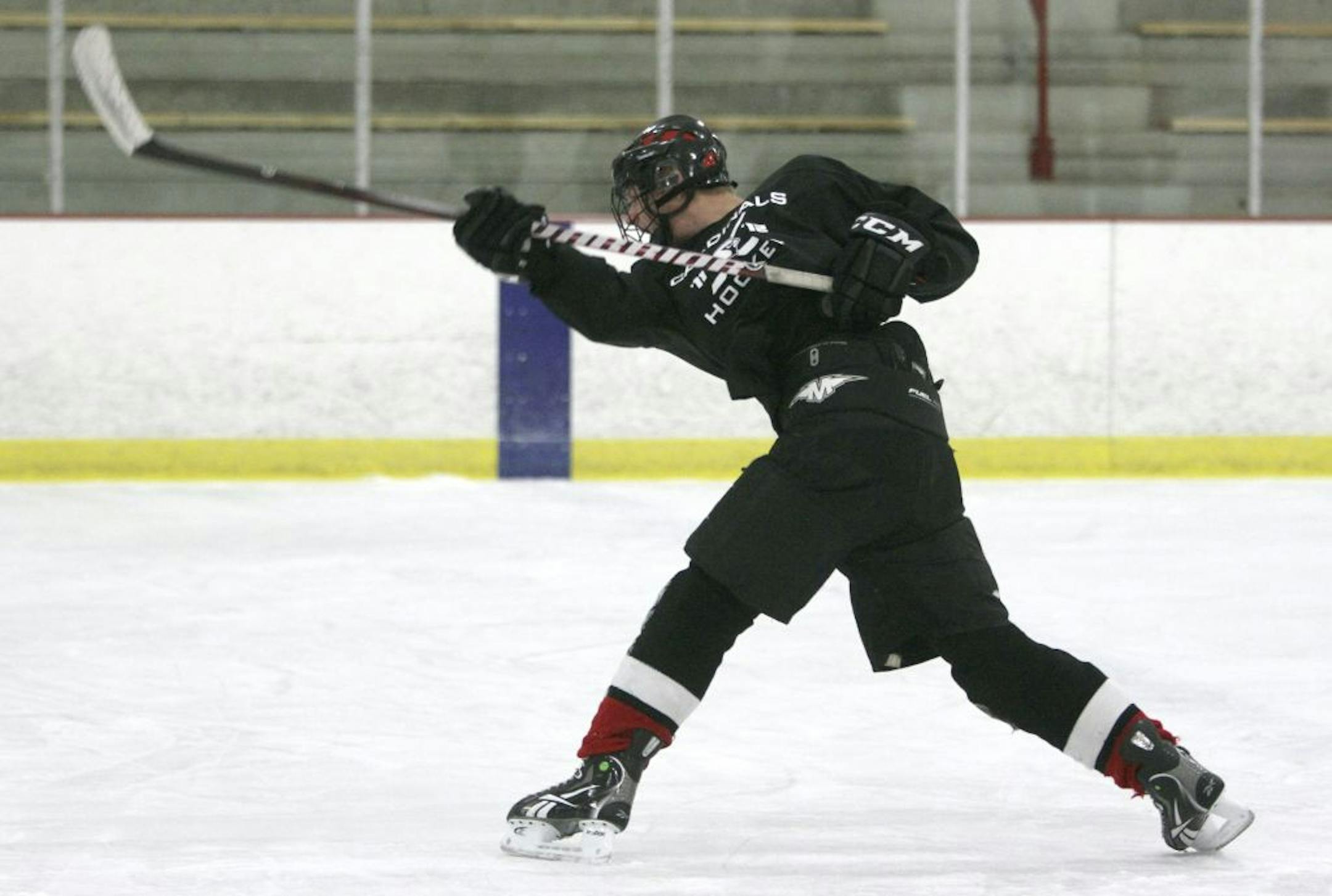
Logan Shore, a junior defenseman for Coon Rapids high school, worked on his slap shot during practice at Schwan Super Rink in Blaine , Min., Wednesday, December 7, 2011.
A Coon Rapids high school player practices his slap shot at Schwan Super Rink in Blaine in 2011. (Kyndell Harkness/The Minnesota Star Tribune)

In February 2024, Knutsen was negotiating a contract for Play Hockey to use the Super Rink in Blaine for 2025. Play Hockey alleges a manager at the rink — which was “the most important ice source” for the club — notified Knutsen that the rink wanted to sign a long-term contract with Play Hockey. Knutsen never signed the deal.

During 2024, Play Hockey’s tournaments in Minnesota “significantly decreased in size and profitability.”

On Sept. 1, 2024, 10 days before Knutsen resigned, Hawkinson allegedly sent him a text message: “Unlink your phone from both work computers. Delete all texts with us past two months just in case.”

Play Hockey’s lawsuit alleges breach of contract, violating the trade secrets act, and civil conspiracy. It is seeking unspecified damages for loss of profits and for Northland Hockey to stop using any information gained from Play Hockey.

In a statement, Play Hockey said its mission is to “provide exceptional youth hockey experiences for kids and families across North America. That mission depends on our employees acting with integrity and professionalism at all times.”

‘Nothing secret’

In a motion to dismiss the lawsuit, lawyers for Northland Hockey and Johnson argued that Play Hockey is using Minnesota’s trade secret law against Knutsen as a “post-employment non-compete agreement against an employee who never signed one.”

They argue that the lawsuit is nothing more than speculation and “a desire to chill mobility in a competitive industry.” Even if the allegations are true, they argue, Northland simply hired a former employee of Play Hockey and the two organizations compete in the same marketplace.

“It is competition,” the lawyers wrote.

While Play Hockey has alleged that Knutsen took secret information, Northland argues that all of the information was publicly available.

“There is nothing secret about the identity of ice rinks and their contact information, the location and dates of youth hockey tournaments, contact information for referees, rink coordinators, and timekeepers, and general business practices in the hockey tournament industry,” the motion to dismiss reads.

“Play Hockey’s claim as to the categories of information that constitute its trade secrets are so broad and general as to render all employees like Knutsen unemployable in their industry,” Northland’s lawyers wrote.

And while Northland doesn’t deny that Johnson met with Knutsen and Hawkinson, they note that Play Hockey doesn’t identify any instances where Northland “acquired or used any allegedly confidential information, let alone that it did so by improper means.”

The state Trade Secrets Act says that to run afoul of the law, information must be taken via “theft, bribery, misrepresentation, breach or inducement of a breach of a duty to maintain secrecy, or espionage through electronic or other means.”

Play Hockey has produced a confidentiality agreement signed by Knutsen, but Northland says the agreement only refers to information “which is not publicly known” and doesn’t identify what information would have been secret.

Stinson, the law firm representing Northland Hockey and Johnson, said in a statement that “We have moved to dismiss this lawsuit, and that motion is currently pending before the court. We firmly believe that the claims have no legal basis.”

about the writer

about the writer

Jeff Day

Reporter

Jeff Day is a Hennepin County courts reporter. He previously worked as a sports reporter and editor.

See Moreicon

More from Twin Cities

See More
card image
Alex Kormann/The Minnesota Star Tribune

The city of Minneapolis struggled for five years after George Floyd’s death to find consensus on a permanent redesign of 38th and Chicago.

card image
card image