Annunciation ‘woke up’ Minnesota churches on security. Faith groups across the nation are following suit.

Houses of worship in Illinois, Missouri and other states have turned to Minnesota for advice as they prepare for a surge in holiday visitors.

The Minnesota Star Tribune
November 30, 2025 at 1:06PM
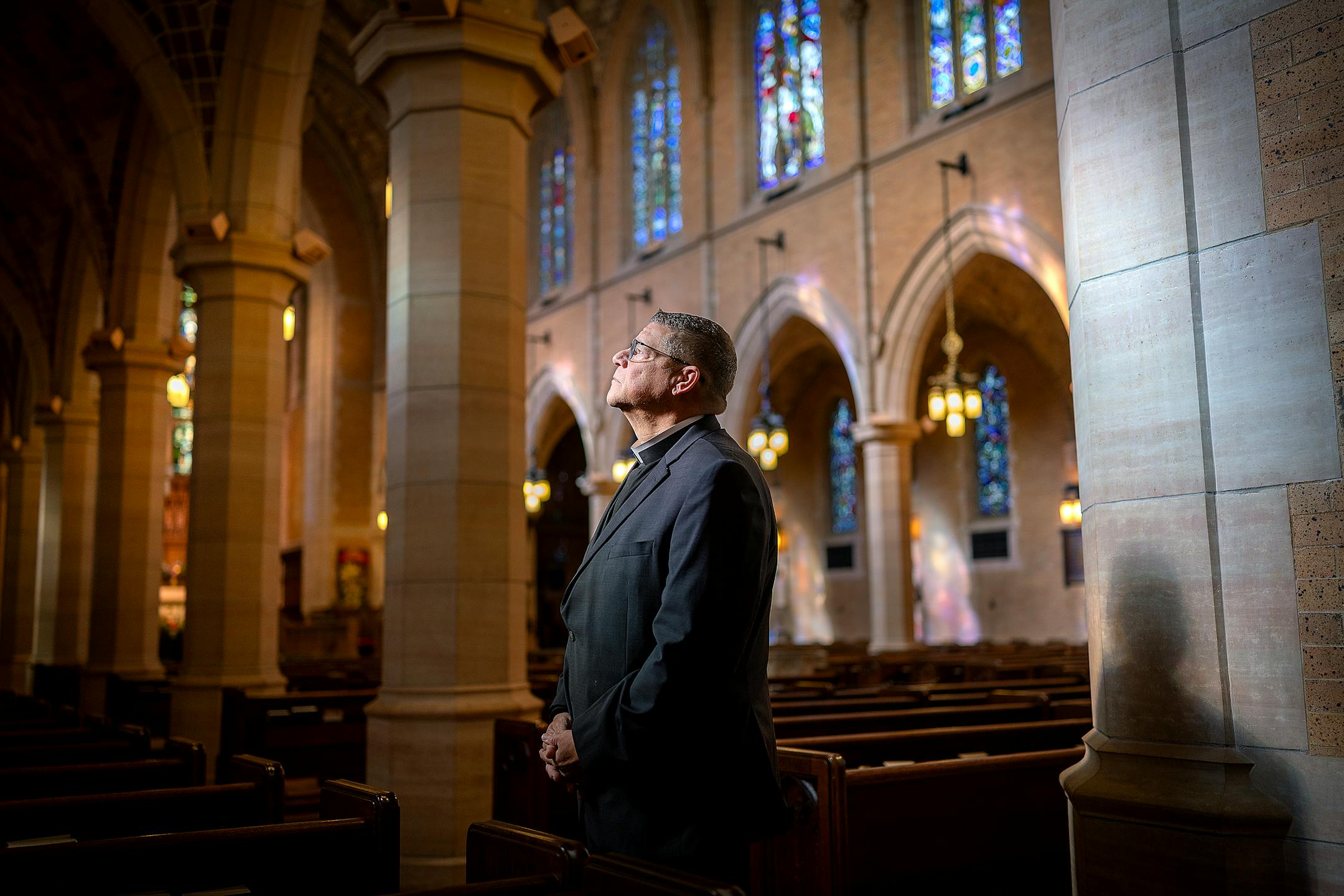
St. Mark's Episcopal Cathedral Pastor Tim Kingsley talks about security in churches inside the church in Minneapolis on Oct. 10. (Elizabeth Flores/The Minnesota Star Tribune)

On a chilly morning at St. Mark’s Episcopal Cathedral in Minneapolis, Provost Tim Kingsley watched warm sunlight shine through a stained glass window that read “Blessed are the Peacemakers.”

But for many in the pews, the sense of peace is shattered.

The mass shooting at Annunciation Catholic School this fall, which happened during Mass inside the church, killed two children and wounded 28 others. It sent ripples of fear through houses of worship across the state and country.

“You can see it in the faces. You can feel it in the people as they grieve,” Kingsley said. “To be afraid of your safety in a place where you’re supposed to feel most safe is heart-wrenching.”

Security consultants say the shooting was a “wake-up call” that stirred places of worship in Minnesota to lock doors, add guards, restrict hours and plan for the worst. Faith leaders across the nation are following suit and even seeking guidance from Minnesota peers on how to secure schools and churches in states like Iowa, Missouri and New Jersey.

As many churches and temples prepare for a surge in holiday visitors, Minnesota could set a new standard for balancing safety and the welcoming atmosphere of sanctuaries that have historically opened their doors open to all.
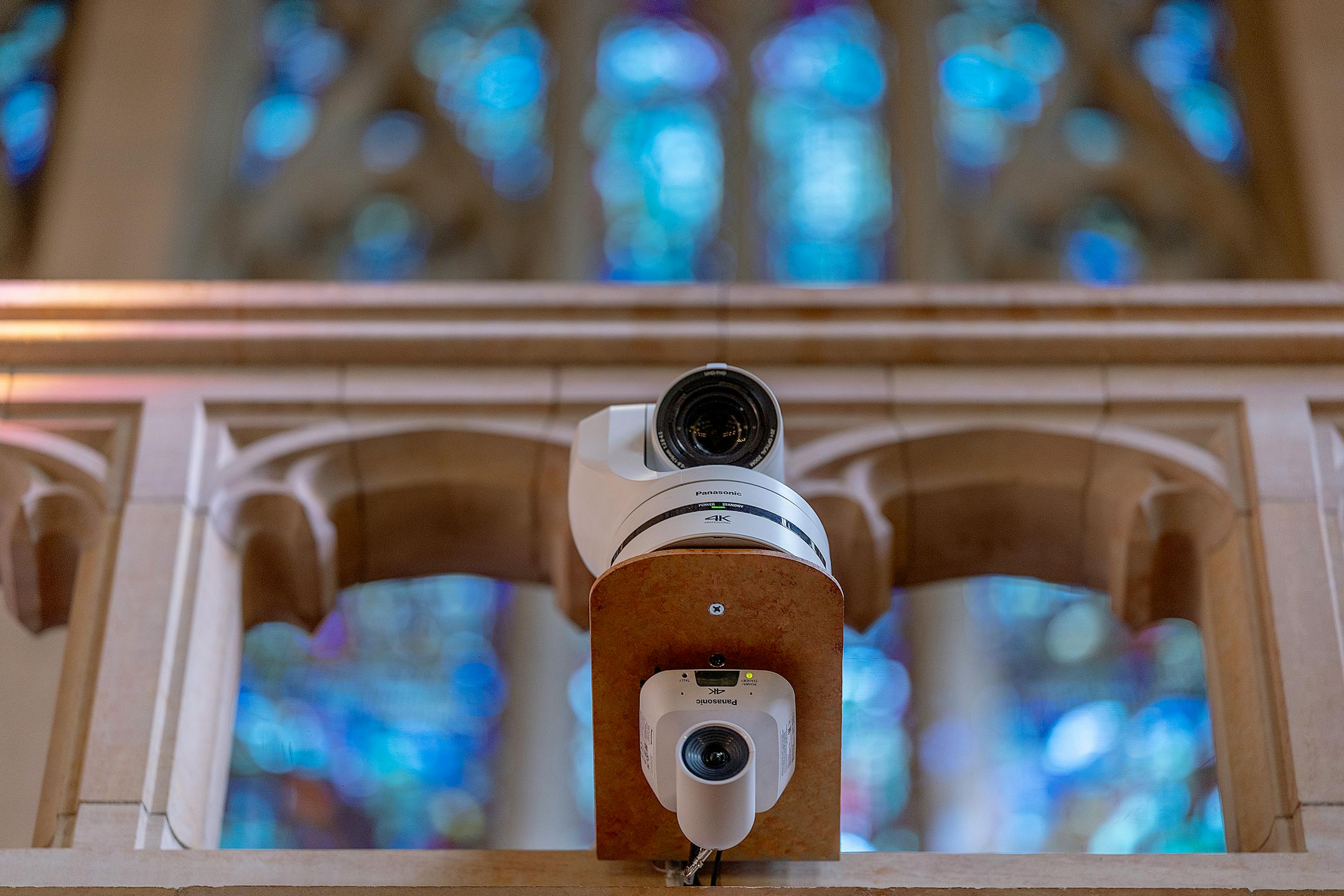
A security camera inside St. Mark's Episcopal Cathedral is used for services and security. (Elizabeth Flores/The Minnesota Star Tribune)

‘Now it’s our turn’

St. Mark’s, like many others that prided itself on a culture of being open and inviting, has transformed into a locked and camera-monitored cathedral. Congregants are wary when people enter. Stained glass windows have become grim reminders of the shooting.

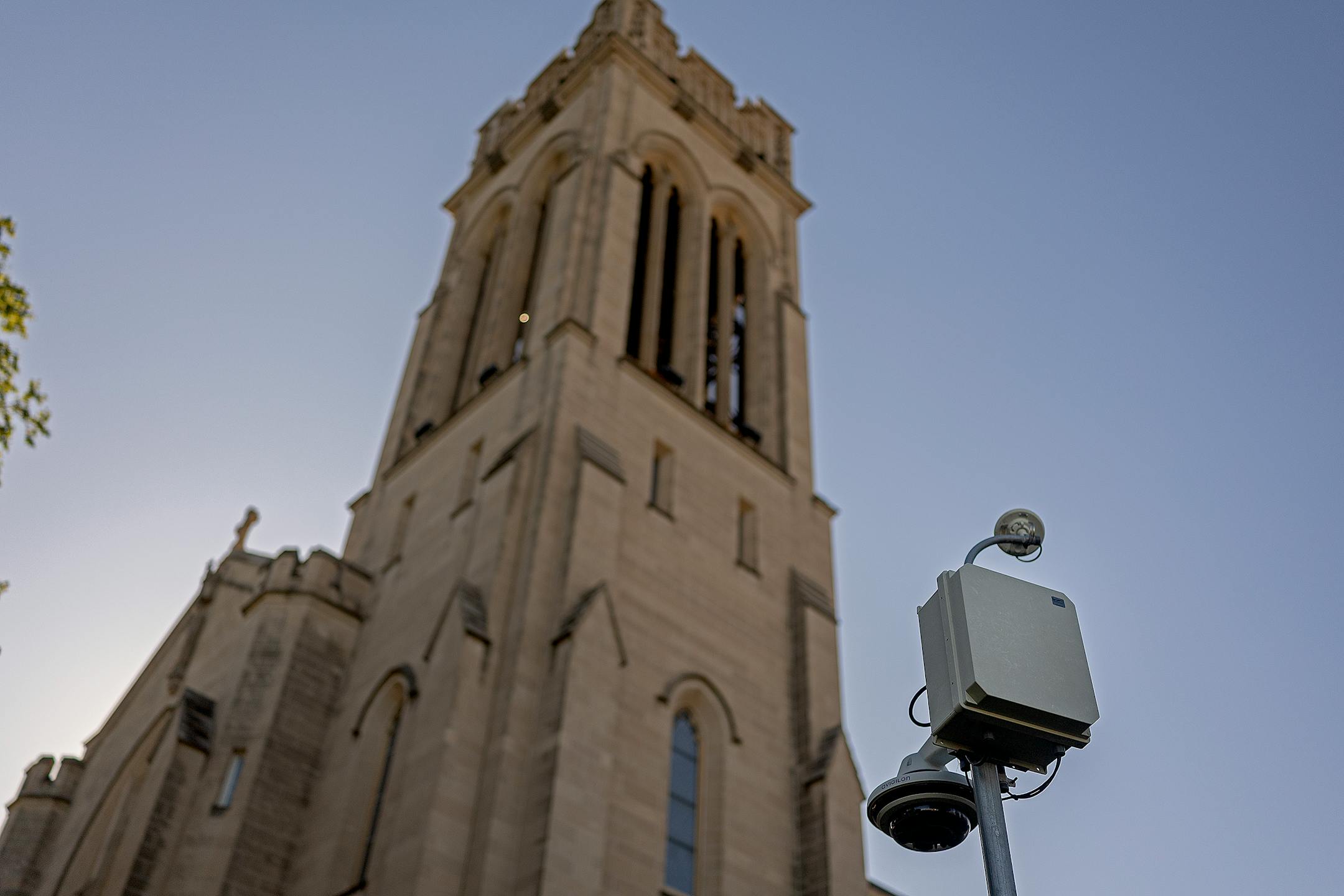
Trained staff welcome visitors through one door, and keycards grant access to monitored entrances. Security cameras track movements in the vestibule and outside. A threat assessment team with a doctor, social worker and a campus administrator monitor the congregation for warning signs. At times, the group sparks tense conversations about how to keep dangerous people out while creating safe spaces for worshippers.
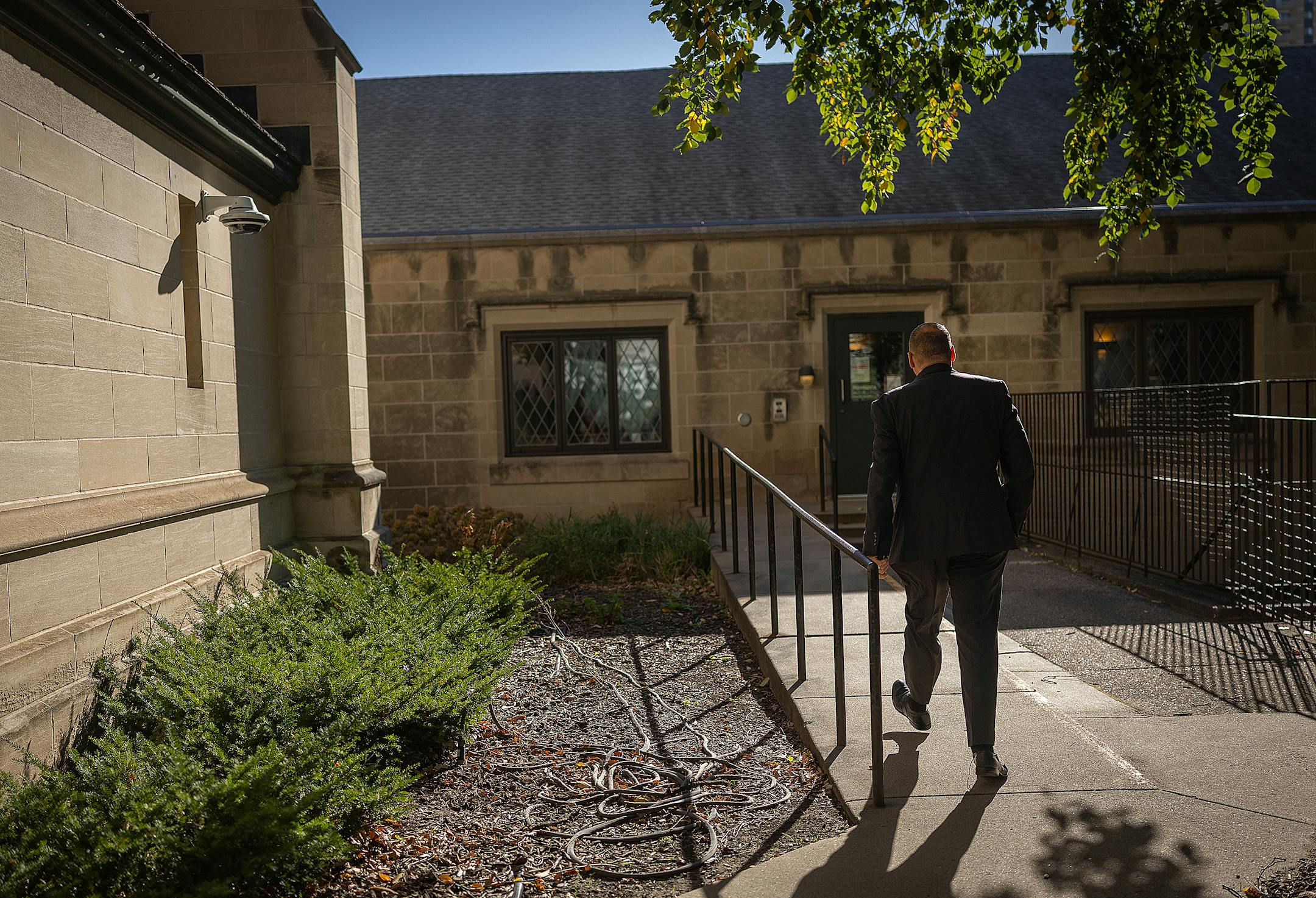
“You can’t control when people have needs,” said the Rev. Christopher Collins, vice president for mission at the University of St. Thomas. “When they want to go pray somewhere, you want to be as open as possible to make that available. But it’s a balancing act now to be smart about it and to keep people safe as well.”

St. Mark's Episcopal Cathedral used consultants to help it assess its security, but not all churches can go that route. (Elizabeth Flores/The Minnesota Star Tribune)

To help figure out security, some area Catholics have turned to the Security Managers Information Group (SMIG), a committee of volunteers from parishes partnered with the Archdiocese of St. Paul and Minneapolis who discuss how to improve safety for houses of worship.

Randy Gray, a founding SMIG member and security director for the archdiocese, said the group launched last January with 60 members, aiming to improve communication about security for the region’s 186 parishes and 89 Catholic schools.

Dozens more churches joined SMIG after the Annunciation shooting, and Gray said officials from churches in Milwaukee, St. Louis and New Jersey have also turned to the group for advice. SMIG held its first conference in Oakdale this October, where more than 200 representatives gathered to trade information about security cameras, facial recognition software and low-cost options to make houses of worship safer. SMIG hopes to repeat the conference next year.

“It’s been a big shift for us in the sense that now it’s our turn to try and help other dioceses and other parishes to try to act accordingly after a mass incident,” Gray said.

Gray said the archdiocese did not have a crisis team for mass shootings before the Annunciation tragedy. That led Gray and other staff to make some mistakes during and after the shooting as they figured out staffing, roles and schedules for the crisis team. But Gray said archdiocese staff hope houses of worship learn from their experience that “even the smallest plan is better than no plan.”

“For us to also, as a diocese, feel comfortable saying ‘This is what we did wrong’ is really important, because that’s how you grow,” Gray said.

A security camera outside St. Mark's Episcopal in Minneapolis. (Elizabeth Flores/The Minnesota Star Tribune)

‘There is evil in this world.’

Data from the Bureau of Criminal Apprehension shows that violent incidents at houses of worship have decreased in recent years, though faith leaders say many crimes go unreported.

The Jewish Community Relations Council of Minnesota and the Dakotas (JCRC) says that Jews in Minnesota have weathered violence against synagogues for decades, especially during the 20th century, when Minneapolis was described as “the capital of antisemitism in the United States.” As a result, the JCRC has experience building security plans for houses of worship, but staff in recent months have been busier than ever, said Ethan Roberts, the JCRC’s deputy executive director.

“We have to work in the world that we have, which means that people will expect to see a lot of security,” Roberts said about plans for Hanukkah and upcoming holidays. “There is evil in this world ... institutions just need to do what they can.”

Despite all the planning, there’s only so much religious institutions can do to prevent violence, says Jaylani Hussein, who leads the Minnesota chapter of the Council on American-Islamic Relations (CAIR). Hussein said many mosques that CAIR monitors have been attacked, vandalized and burned. One such mosque in south Minneapolis recently suffered a fire and a threatening break-in over the span of a week.

Some of those incidents caused hundreds of thousands of dollars in damages, but Hussein said community members believe authorities devote more resources to cases involving synagogues and churches.

“Yes, maybe [security improved] for Annunciation, maybe for Catholic churches, maybe for synagogues,” Hussein said. “For mosques, it’s completely the opposite. Completely abandoned.”

CAIR is training some worshippers on how to monitor mosques, respond to shootings and provide life-saving assistance to help secure their sanctuaries themselves.

Trying to keep the peace

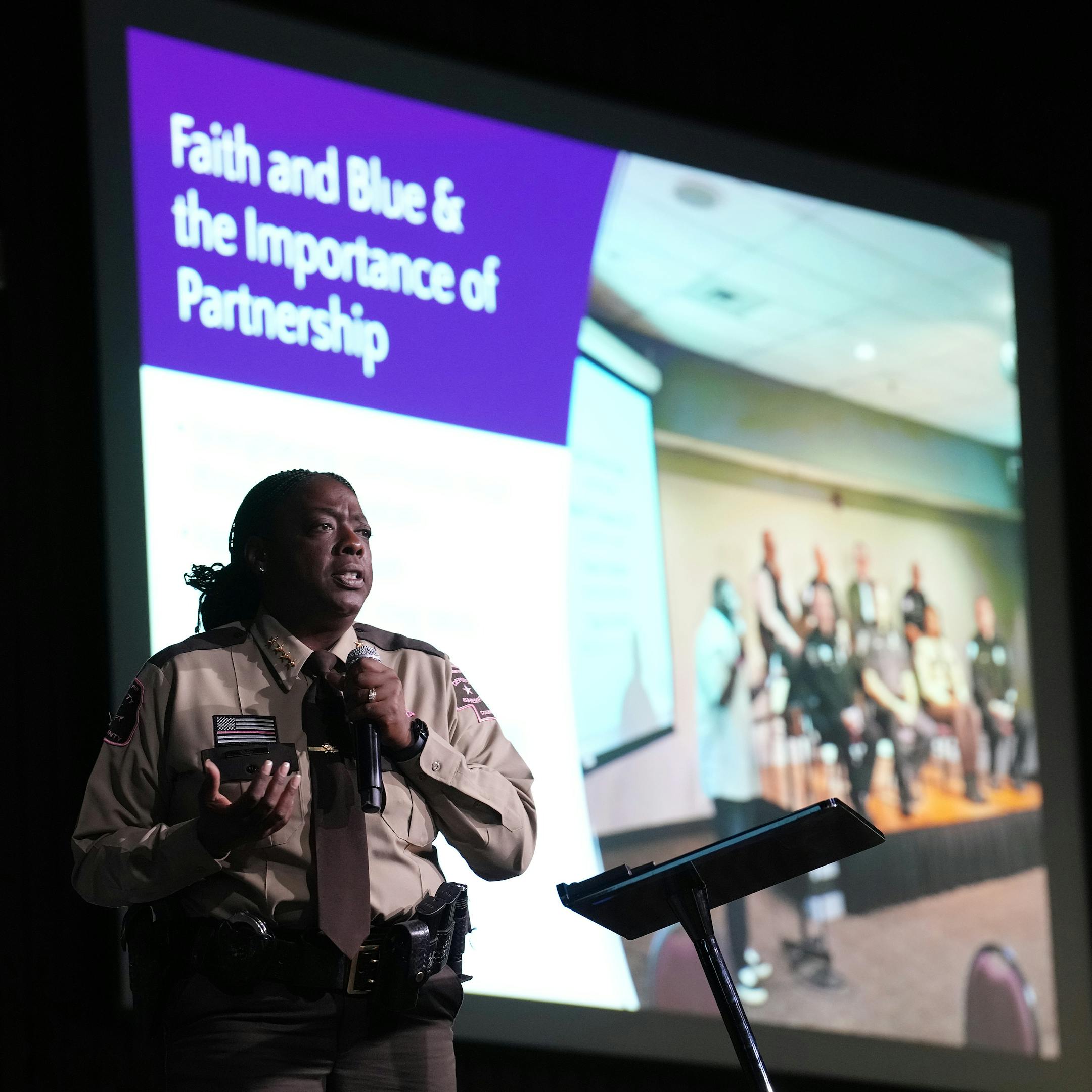
Hennepin County Sheriff Dawanna Witt speaks at a security summit in October for houses of worship, held at Westwood Community Church. (Anthony Soufflé/The Minnesota Star Tribune)

St. Mark’s used consultants to help it assess its security, but not all churches can go that route. Many rural and small houses of worship can’t afford security upgrades that can balloon to $100,000. Consultants say the demand for security has outpaced the supply of professionals, which can also increase the cost.

Former St. Paul police officer Eric Skog, who recently started as deputy director of ministerial standards and safe environment for the Archdiocese of St. Paul and Minneapolis, said many small churches could save lives by creating crisis plans with trusted congregants or through low-cost security assessments, adding that many of Minnesota’s Muslim and Jewish communities have developed models of such plans.

“I think Christian churches were removed and slower [to plan], but over the last few years, there’s been so many attacks in different ways,” Skog said. “It’s not just the Jewish community, it’s not just the Muslim community. Sadly, religious institutions of all faiths become a target at times for certain people [with] certain ideologies.”

That motivated around 200 church staffers to wake early and attend a security conference in Minneapolis last month, trading advice about cameras, grants and threat assessments.

Kingswood Security Consulting CEO Simon Osamoh arranged the event, sharing his experience securing the Mall of America, the Basilica of St. Mary and houses of worship across 16 states. Osamoh said the Annunciation shooting revealed that many attacks are planned, so religious institutions are training to find red flags that could determine whether a displeased congregant might resort to violence in five to 10 years.

Hennepin County Sheriff Dawanna Witt, who spoke at the conference, said more houses of worship have called for the county’s guidance since Annunciation, prompting the Sheriff’s Office to hire two staffers with experience doing threat assessments for the Department of Homeland Security.

“You’re always thinking, ‘How can I prevent this from happening again?’” Witt said. “No community is immune to this. So what are we doing collectively with our partnerships to make sure that we are making our community extremely safe from these type of disasters?”

St. Mark’s Kingsley sat in the crowd hoping that the training will not be needed. Kingsley, like his beloved “Blessed are the Peacemakers” stained glass window, believes people of all faiths were put on Earth to promote peace.

“We’re all trying to do the same thing, and that’s come to a place where we are broken and fill the gaps with something that’s a lot stronger than who we are,” Kingsley said. “And if we pay attention to that, maybe we can walk toward some place of peace.”

about the writer

about the writer

Kyeland Jackson

General Assignment Reporter

Kyeland Jackson is a general assignment reporter for the Star Tribune.

See Moreicon

More from News & Politics

See More
card image
Jerry Holt/The Minnesota Star Tribune

Flights have been delayed and Interstate 35 closed to the south in Iowa as forecasters expect up to 10 inches in the east and hazardous travel statewide.

unlandscaped noise walls in Golden Valley. handout
card image