
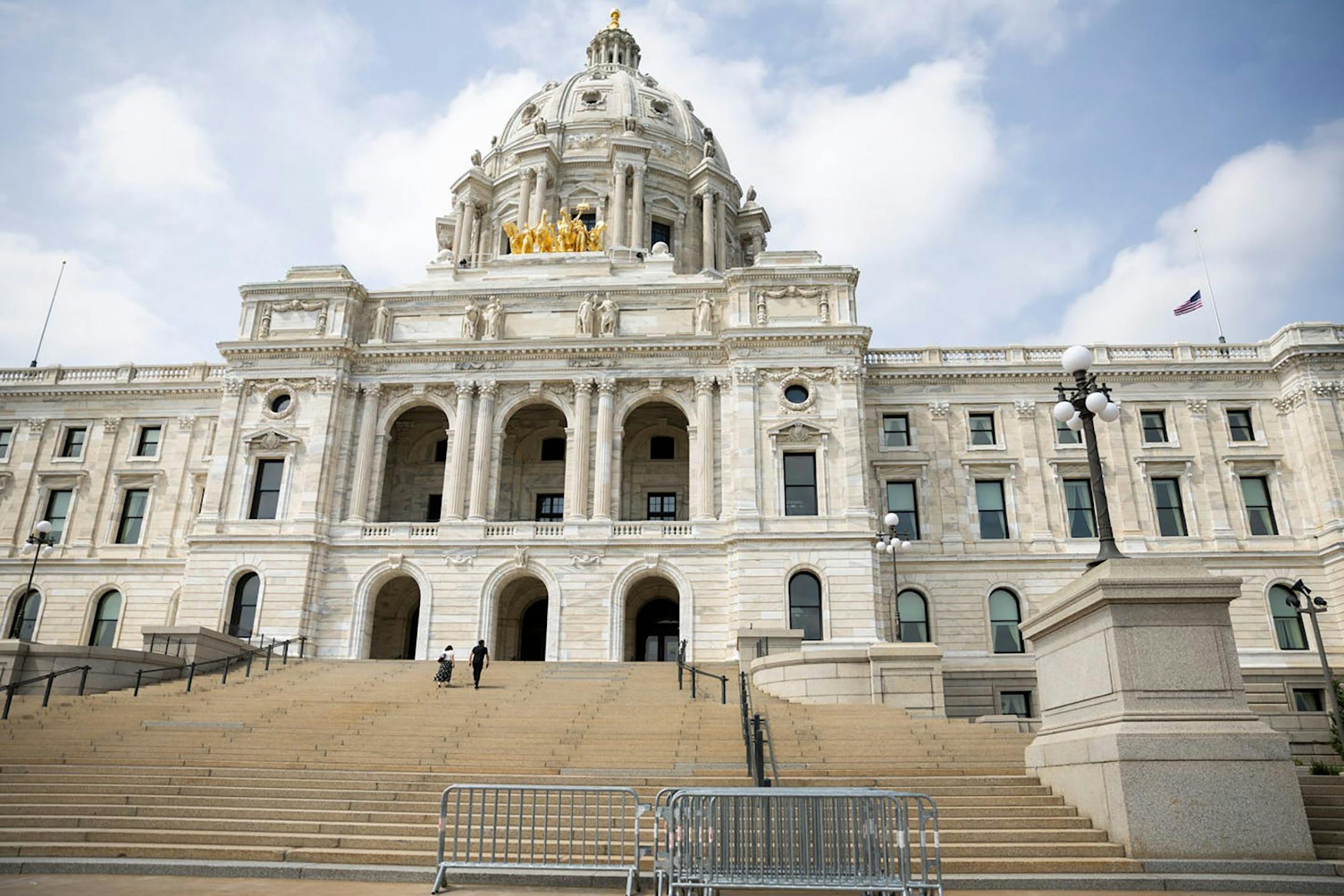
Advisory committee recommends adding weapons screening at Minnesota State Capitol

Minnesota’s Capitol is one of a few in the country that doesn’t screen for weapons.

The Minnesota Star Tribune
January 13, 2026 at 11:28PM
An advisory committee endorsed the installation of weapons screening at the Minnesota State Capitol. Still, it will be up to the Legislature and Gov. Tim Walz to fund a screening system. (Rebecca Villagracia/The Minnesota Star Tribune)

An advisory committee voted on Jan. 13 to endorse the installation of weapon screening systems at the Minnesota State Capitol and surrounding buildings.

The Advisory Committee on Capitol Security, which includes four legislators, Supreme Court Chief Justice Natalie Hudson and Lt. Gov. Peggy Flanagan, has been wrestling for months over how to make the Capitol complex safer after the killing of House DFL Leader Melissa Hortman and her husband at their home last June.

Whether to screen for weapons and ban guns at the Capitol has emerged as a flash point in the committee’s discussions. State officials have already made some changes since the shooting, including closing some public entrances at the Capitol building.

The three Democrats on the panel and Hudson voted to endorse weapons screening, while the two Republican legislators voted in opposition.

“Minnesotans deserve to be able to engage in civil debate, petition their governments and even [holding] rallies at the Capitol without worrying that they could face violence,” Flanagan said before the vote.

The vote is merely advisory. It will be up to the Legislature and Gov. Tim Walz to fund a weapons screening system, the cost of which is unclear.

The committee also recommended a slate of other changes and that the Legislature fund $41 million in other security-related projects. Legislators and other state officials will soon determine which changes and projects need legislative approval and which can be done through administrative action, Flanagan said.

The committee’s vote came a week after the Axtell Group, a consulting firm led by former St. Paul Police Chief Todd Axtell, told the committee that screening visitors for weapons and other dangerous items is the “number one thing” state officials could do to make the Capitol complex safer.

“Screening is the biggest bang for your buck,” Axtell told the committee at a Jan. 7 meeting.

The Minnesota State Patrol hired Axtell’s firm to analyze four buildings on the Capitol complex. Its report recommended several changes, including weapons screening, standardizing employee access points to secure parts of the campus, adding bollards to keep vehicles from entering more of the Capitol grounds, and improving other technologies like cameras and alarms.

The new report, like others before it, also noted that Minnesota is one of just a few states that does not screen visitors in any way. Most states prohibit guns in their capitols and use metal detectors or other screening tools to enforce the prohibitions, it said. The Minnesota Judicial Center currently is the only building on the Capitol complex that does not allow weapons and screens for them.

The report does not explicitly say guns should be banned from the Capitol, as Walz has suggested. Axtell told the panel that “whether you let certain dangerous items come in or not is ... another subject to decide.”

But Flanagan told reporters after the committee’s vote that a 400-page confidential version of the report is “very clear that both weapon screening needs to occur, and policies need to be introduced to prohibit weapons at the Capitol.”

The Republicans on the panel had questioned the worth of the report, pointing out that its authors did not analyze the entire complex and noting the analysis was done outside of the legislative session when the grounds are at their busiest.

Sen. Warren Limmer, R-Maple Grove, told the Minnesota Star Tribune in a recent interview that lawmakers shouldn’t “completely rely on technology to keep us safe. Because it won’t.”

Rep. Jim Nash, R-Waconia, explained his no vote by saying the “funding picture is beyond unclear.”

Rep. Kelly Moller, a Shoreview Democrat, said she hopes the costs will become clearer as legislators consider a bonding bill this coming session.

“The cost of not acting on that is too grave,” she said.

about the writer

about the writer

Nathaniel Minor

Reporter

Nathaniel Minor is a reporter for the Minnesota Star Tribune.

See Moreicon

More from News & Politics

See More
card image
With permission from GoFundMe

Harvey Gene Muklebust died at Rocking Horse Ranch Childcare last September. He was a few days away from his first birthday.

card image
card image