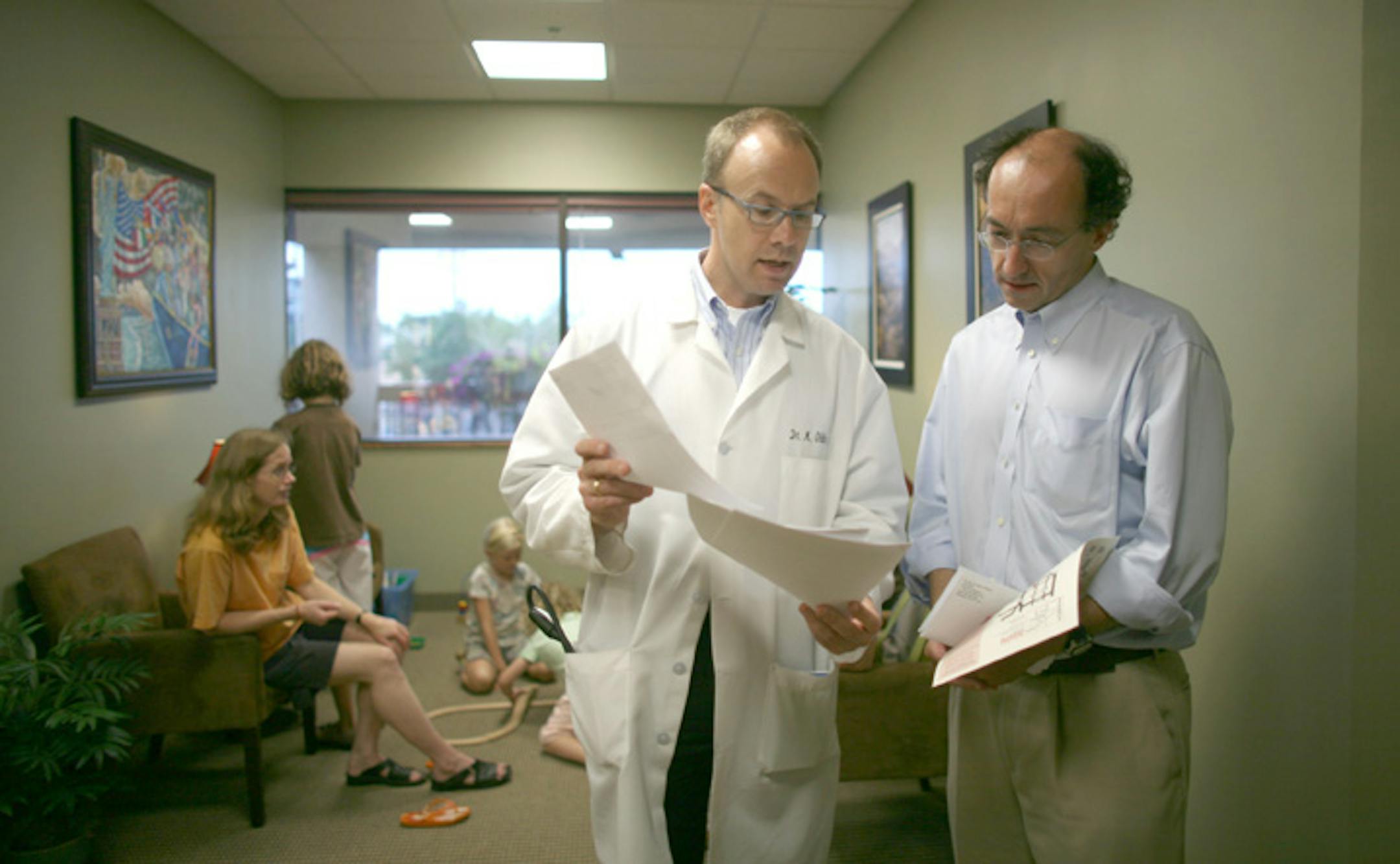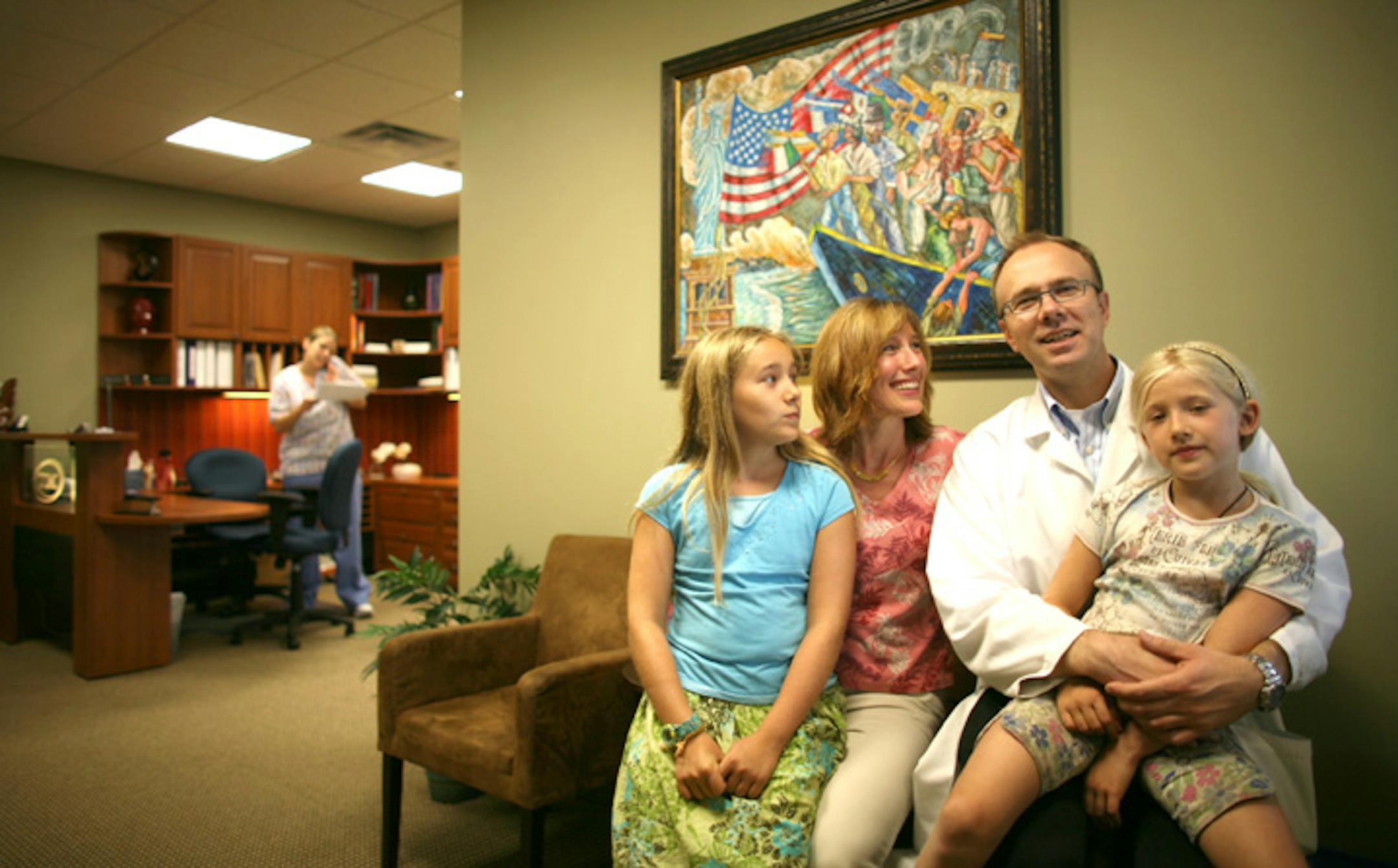
When Michael Oldenburg, a burned-out family doctor from Crystal, landed in Sweden for a sabbatical, he found "nirvana" -- doctors spent 30 minutes with each patient, took mandated coffee breaks and actually enjoyed their jobs.
When he returned, Oldenburg couldn't bear the thought of getting back on the treadmill. Last month, he and his wife opened what they called a "mom and pop" urgent care in Calhoun Village, installing kitchen cabinets from IKEA themselves and handing out fliers in the neighborhood.
He's among a sprinkling of Twin Cities doctors escaping the pressures of modern American medicine by striking out on their own. Some are offering "concierge care," where a limited number of patients pay a membership fee for 24-hour access to a physician. Even University of Minnesota Physicians is experimenting with a small clinic opening soon in Minneapolis' Warehouse District, where two doctors will make house calls on bicycles.
These experiments amount to tiny rebellions against increasingly large and impersonal health care systems and their emphasis on the bottom line. But they also speak to a hankering for something many doctors feel they've lost in the hurly-burly of seeing up to 30 patients a day -- the personal relationship between doctor and patient.
The same thing is happening around the country, said Dr. Pranav Kothari, co-founder of Renaissance Health consultancy in Cambridge, Mass.
Actual numbers are elusive and it's unclear how many will survive financially. "It is a trend, small but growing," Kothari said.
Forces favor group practices
In the 1990s, the spread of managed care sparked consolidation of medical and clinic groups that left the solo physician a dying breed. That's especially true in Minnesota.