

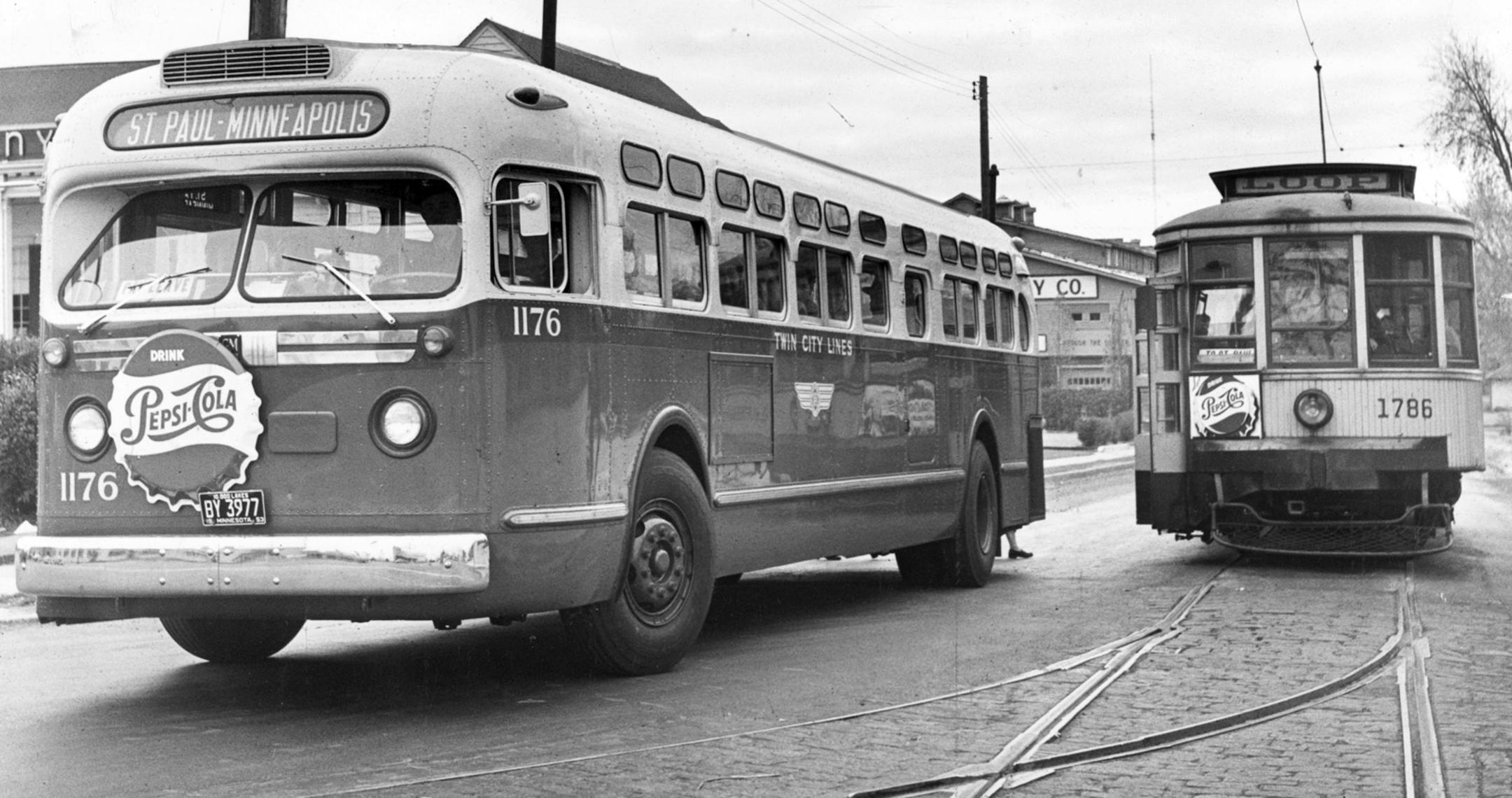
Katie Galioto's insightful article "Artist designs maps of 'lost' streetcar system" (Aug. 16) serves the Twin Cities well by highlighting artist Jake Berman's splendid maps from the past of our once-lauded and enviable, now lamentably gone streetcar system, said to have been one of the best in the United States, if not the world. My grandmother often regaled us with tales of taking the streetcar for six cents all the way down Lake Street to Lake Minnetonka. "You could go everywhere easy," she used to tell us.
A staunch believer in finding things on the cheap and always pragmatic, she was also quick to detail the profit-minded demise of the system; seemingly sold out from under St. Paulites and Minneapolitans by Charles Green, a primary shareholder afraid of infrastructure maintenance and lured by partnerships and promises of cheap and endless fossil-fuel-boosted profits. She was also quick to mention how the change in operations (moving to single-operator streetcars) created a huge surplus of workers and how the company head Horace Lowry "busted the union" in 1917 by refusing to negotiate with workers.
Twin City-dwellers have since been forced to baby-step into light rail and larger infrastructure maintenance and costs. The only streetcar I ever had the pleasure of riding went back and forth by Lake Harriet along Lakewood Cemetery. Fitting.
Now, with massive and endless seasons of road construction upon us, I envy the map from the past and wish I could travel throughout the Twin Cities without, at any time of daylight, finding myself a participant in the inevitable traffic jam.
Travis Jason Lusk, Minneapolis
GUNS
Laws wouldn't and didn't prevent weapons getting into wrong hands
Maurice Hill, a drug dealer who engaged the Philadelphia police in an hourslong shootout, had a violent past dating back to his 18th birthday and had been arrested multiple times for gun violations ("Six officers wounded in shootout," Aug. 15). Yet, with all this police knowledge about this perp, he was able to amass a collection of automatic and semi-automatic weapons and many rounds of ammunition. This enabled him to hold off an entire police department for much of an evening, so I ask you: What laws don't we already have on the books that could have prevented him from obtaining such an arsenal? The answer is: There are no such laws. The answer is, we have a Democratically run city (Philadelphia) that looks the other way whenever black crime matters and then denounces the National Rifle Association or the Trump administration for contributing to it.
So how does a guy like Hill get guns of this nature? Illegally.
Now, it is estimated that Americans own nearly 400,000,000 firearms and probably many of them are in the hands of people who properly shouldn't own them. I shudder to think how many people would love to emulate Maurice Hill's misadventure for their 15 minutes of notoriety. The sad point is, there are no laws to prevent what people are thinking and until they act on those thoughts, ironically there is only one law to prevent it: the law of self-defense. These are the times we live in and I don't see it ever getting better until the people get better.
Bob Huge, Edina
• • •
Seven-year-old Keyaris Samuels of Plymouth fatally shot himself doing what 7-year-olds are supposed to do — play ("No charges in handgun death of boy," Aug. 14). There was no way for him to know that the gun in a box of toys was real and that it was loaded. Plymouth Police Chief Mike Goldstein expressed anger and frustration that gun laws allow firearms to be transferred from owner to owner without record, making it impossible to know who was responsible for the gun.

