

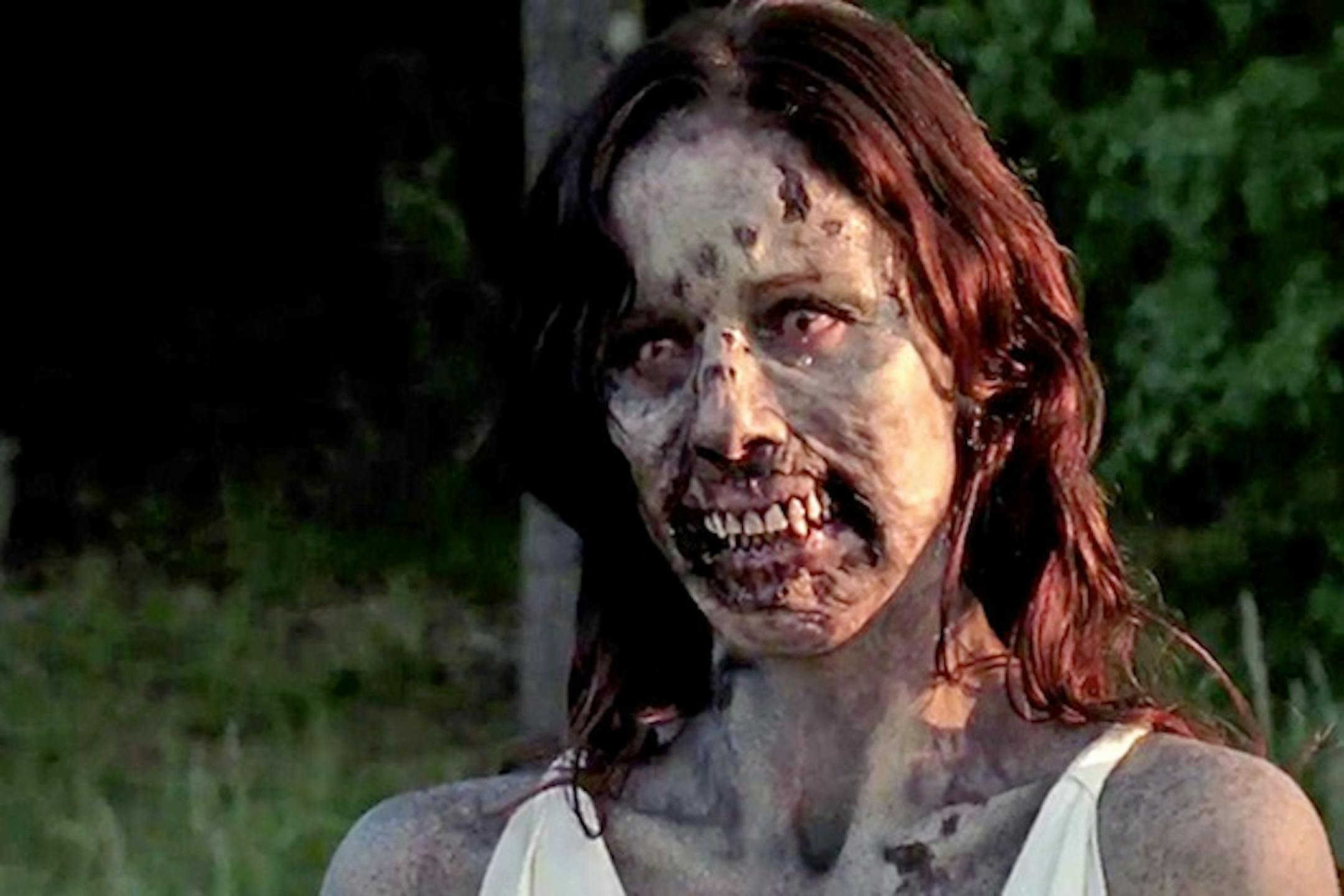
A search for "zombie fiction" on Amazon currently provides you with more than 25,000 options. Barely a week goes by without another onslaught from the living dead on our screens. We've just seen the return of one of the most successful of these, "The Walking Dead," starring Andrew Lincoln as small-town sheriff Rick Grimes. The show follows the adventures of Rick and fellow survivors as they kill lots of zombies and increasingly, other survivors, as they desperately seek safety.
Generational monsters
Since at least the late 19th century, each generation has created fictional enemies that reflect a broader unease with cultural or scientific developments. The "Yellow Peril" villains such as Fu Manchu were a response to the massive increase in Chinese migration to the U.S. and Europe from the 1870s, for example.
As the industrial revolution steamed ahead, speculative fiction of authors such as H. G. Wells began to consider where scientific innovation would take mankind. This trend reached its height in the Cold War during the 1950s and 1960s. Radiation-mutated monsters and invasions from space seen through the paranoid lens of communism all postulated the imminent demise of mankind.
By the 1970s, in films such as "The Parallax View" and "Three Days of the Condor," the enemy evolved into government institutions and powerful corporations. This reflected public disenchantment following years of increasing social conflict, Vietnam and the Watergate scandal.
In the 1980s and 1990s it was the threat of AIDS that was embodied in the monsters of the era, such as "bunny boiling" stalker Alex in "Fatal Attraction." Alex's obsessive pursuit of the man with whom she shared a one-night stand, Susanne Leonard argues, represented "the new cultural alignment between risk and sexual contact," a theme continued with Anne Rice's vampire Lestat in her series "The Vampire Chronicles."
Risk and anxiety
Zombies, the flesh-eating undead, have been mentioned in stories for more than 4,000 years. But the genre really developed with the work of H.G. Wells, Poe and particularly H.P. Lovecraft in the early 20th century. Yet these ponderous adversaries, descendants of Mary Shelley's Frankenstein, have little in common with the vast hordes that threaten mankind's existence in the modern versions.


