
Yuen: How to talk to your kids about the Annunciation shooting

Here are some tips for how to connect with children and teens in the wake of mass violence in our own community.

Columnist Icon
The Minnesota Star Tribune
August 28, 2025 at 10:00AM
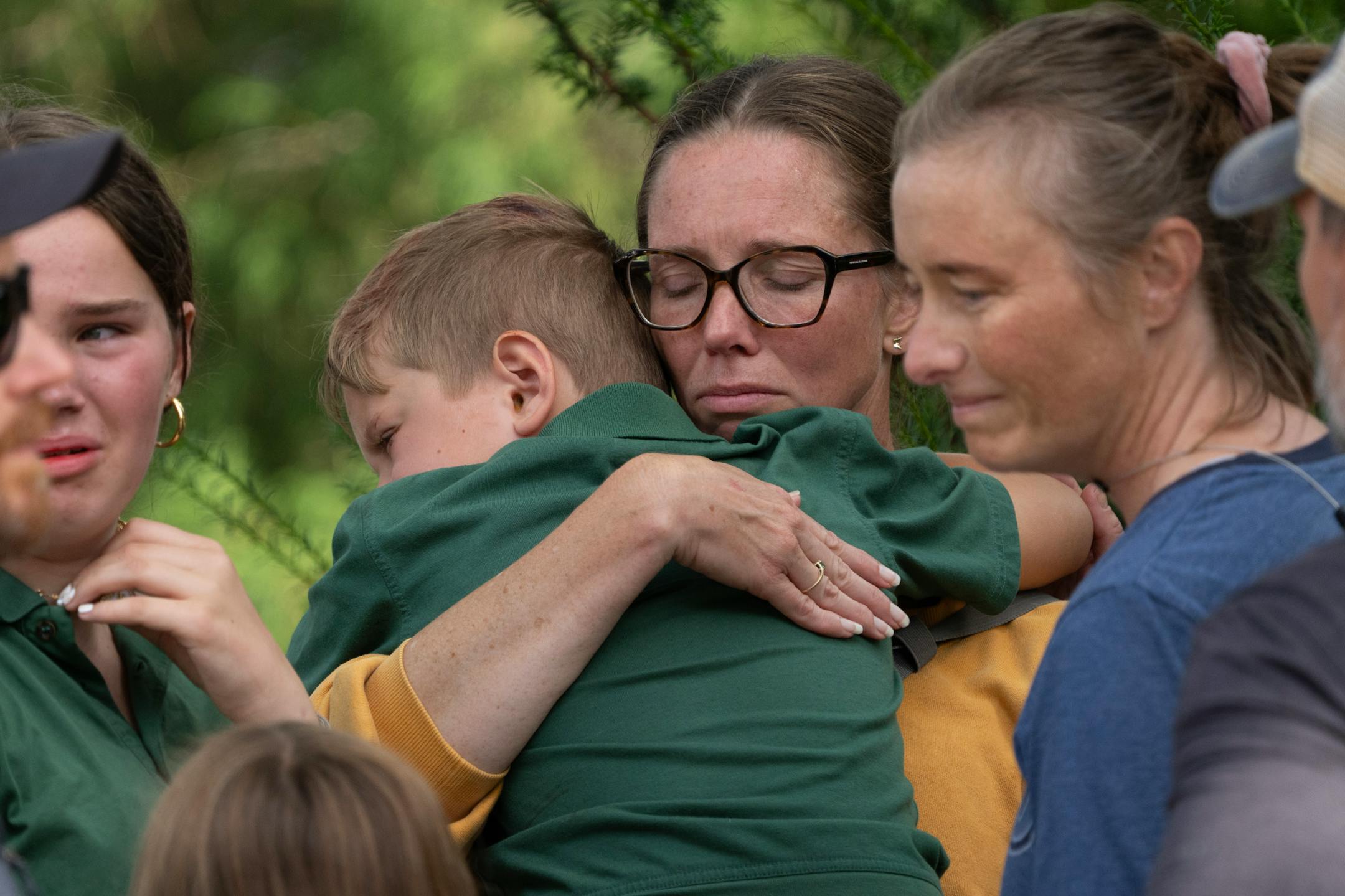
Parents, children and community members embrace outside Annunciation Catholic School on Wednesday. (Alex Kormann/The Minnesota Star Tribune)

Maybe you’ve already had the talk with your kids about mass shootings and what to do if a person with a gun enters their school.

This time it feels even worse. Too close. Too real.

The horrific shooting at Annunciation Catholic Church in Minneapolis that killed two students and injured 17 people is prompting parents in Minnesota to have more conversations — tough, awkward and painful — about the time and place in which we live. American school shootings have been part of our children’s reality for their entire existence. But Wednesday’s violence reminds us that no place is completely safe.

“This is our community,” said Matt Witham, who directs child and family services at Gillette Children’s. “Proximity absolutely matters.”

Your child’s sense of security might feel even more threatened. Your family may know someone harmed in the attack or have a connection to the school. A once-abstract concept is no longer hypothetical.

So, what do we say now to our kids, and how do we say it? Just as most Minnesota children and teens are returning to the classroom, here are some tips for how to connect with them in the wake of mass violence in our own community.

Stay truthful

One of the most agonizing parts as a parent is wanting to tell your kids that, without a doubt, they will be safe at school. But we can’t honestly make those guarantees.

If your curious child presses you, emphasize that the chances of a mass shooting at their school are small. Tell them that you will protect them when they are with you, said Jenny Britton, chief clinical officer at Washburn Center for Children. It could sound like this:

“I really wish I could just tell you that will never happen at your school. But what I can tell you is that you will always be safe with me,” Britton said. “I will do my best to show up for you every single time you need me.”

Rather than global safety, emphasize relational safety — connection and love — which is what children need above anything else, she said.

Find the right time to listen

Bedtime is a great window for kids to open up. So is listening to them in the car, when you and your kids don’t have to be face to face. Or take a walk with your kids; moving and talking at the same time will help them process their emotions. Find a calm time and place.

Lead with curiosity

Ask your children what they’ve heard about the incident. Chances are they already know something, either from other kids or social media or another source. It’s important for parents to correct any misinformation they may have absorbed.

For little kids

Tailor your approach to the age of the child. For children in early elementary school, keep it simple and spare the details, Britton said. You can say, “Something happened at a school this week, and some kids got hurt. It should have never happened.”

If your child lets on that they know a gun was involved, you can add on a layer of detail, Witham said. “You’re right: There was a shooter, and it was really scary.”

Channel Mr. Rogers

Fred Rogers told us to “look for the helpers.” Let that be your mantra. Point out the first responders who dashed to the emergency and tended to the victims. Kids need to know that the love and support you’ve shown them doesn’t stop at your doorstep. “It’s building that network that says there are other people, not just me, that care for you,” Witham said. That includes teachers and principals whose jobs are to keep kids safe.

For older kids

Tweens and teens likely are aware of what happened. Anticipate their emotional reactions and name them, Witham said. You might tell your kid: “You may be feeling worried. You may be feeling fearful. You may be wondering if it’s a good idea to go back to school.”

Older kids may need more time or opportunities to talk to their friends to sort out their response. End the conversation by asking if it’s OK to check in on them in a day or two.

Structure and routine

Meals at the table, bedtime rituals, playdates and even soccer practice can provide a sense of normalcy when so many other things feel out of our control. “Reestablishing that sense of safety and belonging connection with the caregiver is one of the very best things you can do,” Britton said.

Limit media

Consider turning off the radio or TV if you have younger children. Older kids might benefit from taking a break from social media. The 24/7 news cycle can stress adults as well, so parents, take media breaks as needed.

Give grace

Expect to see different behaviors when kids return to school, which can be a rough transition in any circumstance. Students may not sit still, roll their eyes or leave the classroom. They may complain of physical ailments like headaches or show heightened anxiety, such as not wanting to leave the home. Expect disruption and seek out resources from your school or community if your kid needs more support.

Embrace the imperfect

As much as we’d like a script to read to our kids about school shootings, we don’t have all the answers, and there’s nothing wrong with that.

“You being comfortable and knowing exactly what to say isn’t what your kids need you to do. What your kids need you to do is have the conversation,” Britton said. “You just have to say something.”

Other resources

Looking for additional help? Here are some guidelines from other groups on how to talk to children about community violence:

about the writer

about the writer

Laura Yuen

Columnist

Laura Yuen writes opinion and reported pieces exploring culture, communities, who we are, and how we live.

See Moreicon

More from Culture

See More
card image
Marco Borggreve/Minnesota Orchestra

The Minnesota Orchestra concert also includes works by Caroline Shaw and Joseph Haydn.

card image
card image