

Counterpoint
There's a big black dog who lives next door and wanders into my yard from time to time. His is name is Sammy. He barks like a pack-a-day smoker, leaves kielbasa-shaped piles on my lawn, challenges my Scotty, intimidates my children, and the only way I can get him to step off is if I get up from my work and charge him with the full force of my 6-foot-2-inch frame, pointing my finger and yelling. Even then, he usually waits to back down until his owner begins calling from the other side of the hedge. She sounds like a guest on "The Jerry Springer Show."
As you can imagine, Sammy's existence is impinging upon the order of my property, my financial well-being and pursuit of happiness. So, do I get to "take" Sammy? Am I allowed to "harvest" a demented Labrador retriever with a BMI of 42? Because I would gladly fill out the permit -- I'd write out a check to the agency in charge, bait him with some crullers, lay in wait by the rhubarb and whack him with a shovel. I could even string his carcass from a tree and send off a picture to the sports section of the local paper.
As everyone knows, fortunately, the answer is no, no and no. If I so much as throw a frying pan at Sammy, I will get my picture in the paper, but for entirely different reasons. As Michael Vick will tell you, we decided a long time ago that killing dogs was wrong, and for good reason. We feel for dogs. We decided that killing them is gross.
We did that for emotional reasons.
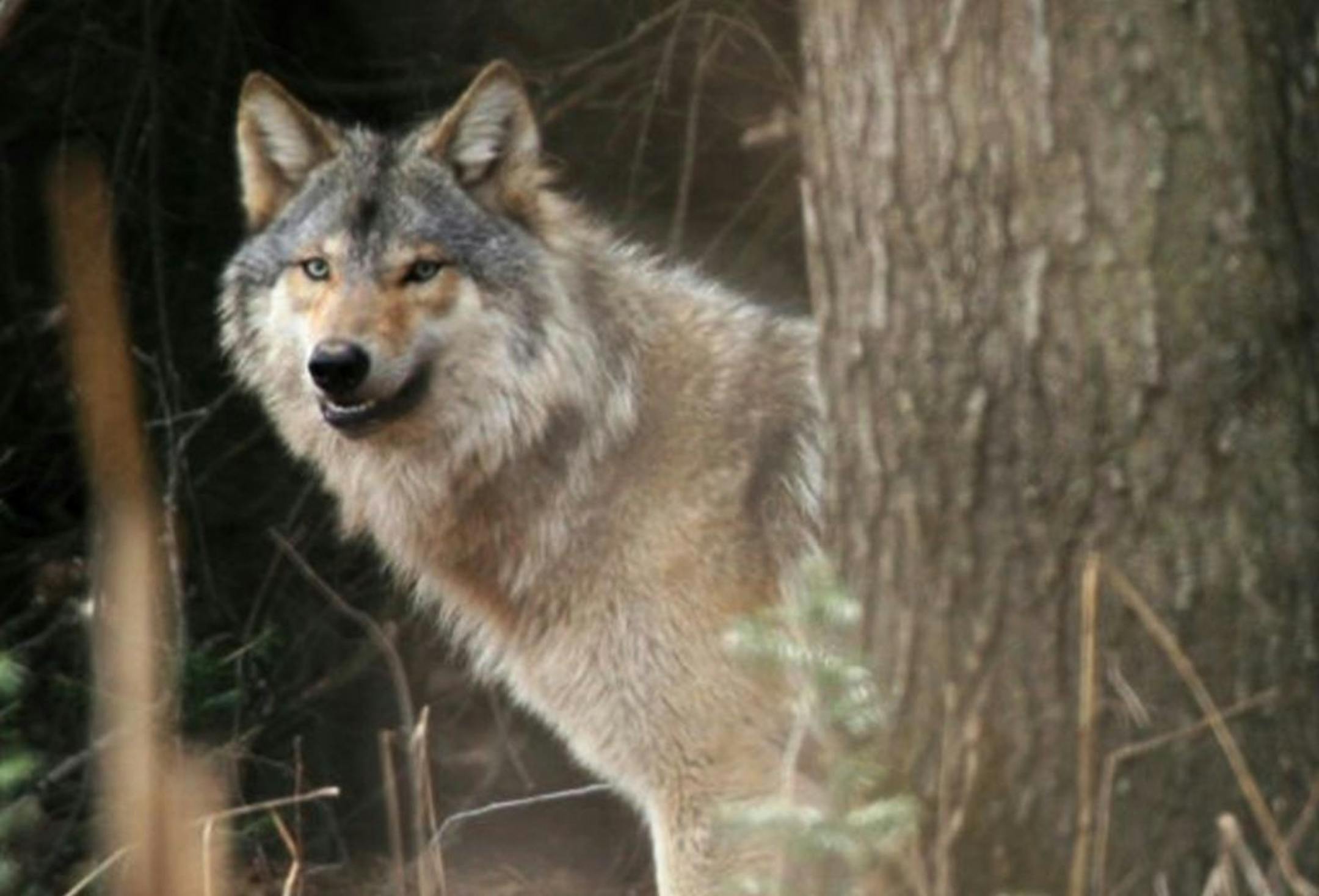
But as it turns out, while emotional reasoning is OK in the protection of dogs, cats and bald eagles, it is the amusing ways of the unsophisticated when it comes to wolves. That's the unpersuasive suggestion of a recent commentary ("Opposition to wolf hunt seems purely emotional," Nov. 16) by a wolf-appreciation center director named Peggy Callahan. (With friends like these.) Callahan is "well-versed in the emotional extremes that accompany any conversations about wolves," and is troubled that "science appears to have left the room" in the debate over wolf hunting. "Perhaps," she wrote, "I can bring it back to the table briefly."
Not being the director of a wolf-appreciation center outside of Forest Lake, I'm in no position to evaluate the various claims that followed:
The reassurance that no harm is to be had to a shy, complex and intelligent species by stringing up 13 percent of their number each winter. The defense of trapping as a tool of "professional biologists." The notion that hunt-induced threats to the species are "not supported by multiple studies." Although, if there is one thing you learn after years of writing about science, it's that there's no form of bluster more charming than the bland referencing of "multiple studies."


