

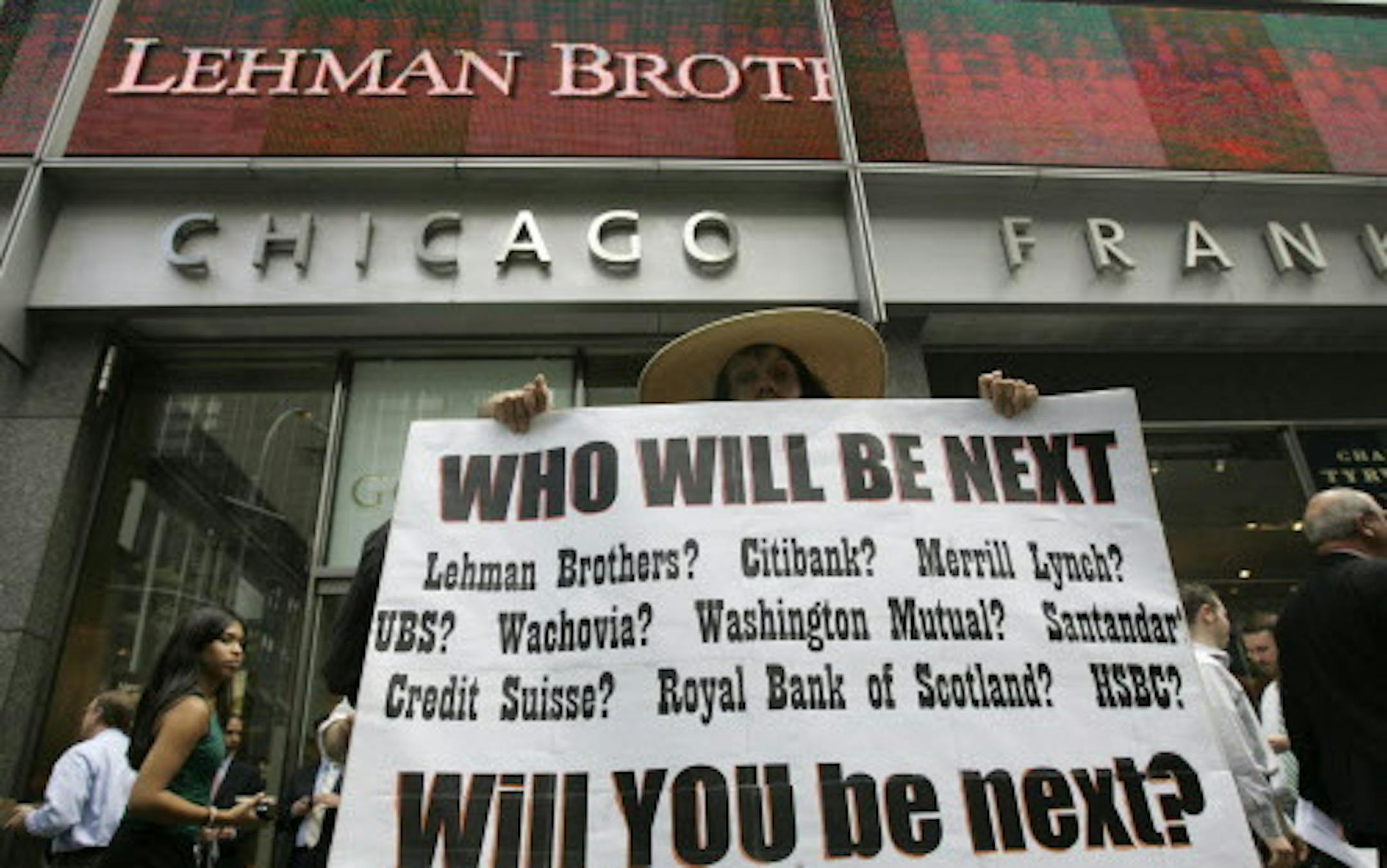
Seven years after the collapse of Lehman Brothers jolted the global economy, the world's biggest banks may need to raise as much as $1.2 trillion to meet new rules laid down by financial regulators.
After years of work, the Financial Stability Board, created by the Group of 20 nations in the aftermath of the crisis, published its plan for making sure giant lenders can be wound down and recapitalized in an orderly way, without taxpayer bailouts.
Under the rule for total loss-absorbing capacity, or TLAC, most systemically important banks must have liabilities and instruments "readily available for bail in" equivalent to at least 16 percent of risk-weighted assets in 2019, rising to 18 percent in 2022, the FSB said on Monday. A leverage ratio requirement will also be imposed, rising from 6 percent initially to 6.75 percent. The banks' shortfall under the 18 percent measure ranges from 457 billion euros to 1.1 trillion euros ($1.2 trillion), depending on the instruments considered, according to the FSB.
"TLAC is one of the last bricks in the wall of the post-crisis reform agenda," said Richard Barfield, a financial services risk and regulation director at PricewaterhouseCoopers. Many big banks "will now resume the debt issuance that has been put on hold while waiting for today's details," he said. The FSB's impact analysis shows that most of them "should be able to meet the requirements."
The push to make sure banks are no longer too big to fail is also advancing on a second front, as Wall Street expands a revision of financial contracts worth trillions of dollars. The changes are expected to allow certain securities and funding contracts to remain intact for as long as 48 hours after a bank fails, said three people with knowledge of the matter.
The extra time is intended to give a faltering bank's home government time to jump in and set up a healthy version of the doomed institution.
Bank of England Governor Mark Carney, who heads the FSB, said Monday that the TLAC rules make a major failure less likely because banks' creditors know they'll face losses in a collapse.
Previously, the "lenders, the unsecured creditors, to a bank were implicitly and ultimately explicitly relying on the state to back them up, and therefore didn't pay that much attention to what the institutions were actually doing," Carney told reporters in Basel on Monday. "Now they actually have skin in the game, so to speak, and they will exert greater pressure, consistent with their fiduciary duties, and that in and of itself will make failure less likely."


