Global business
Standard Chartered, a bank based in London that reaps most of its income from Asia, reported a pretax profit of $6.1 billion for 2013, which was 11 percent lower than in 2012 and its first drop in profit in 10 years.
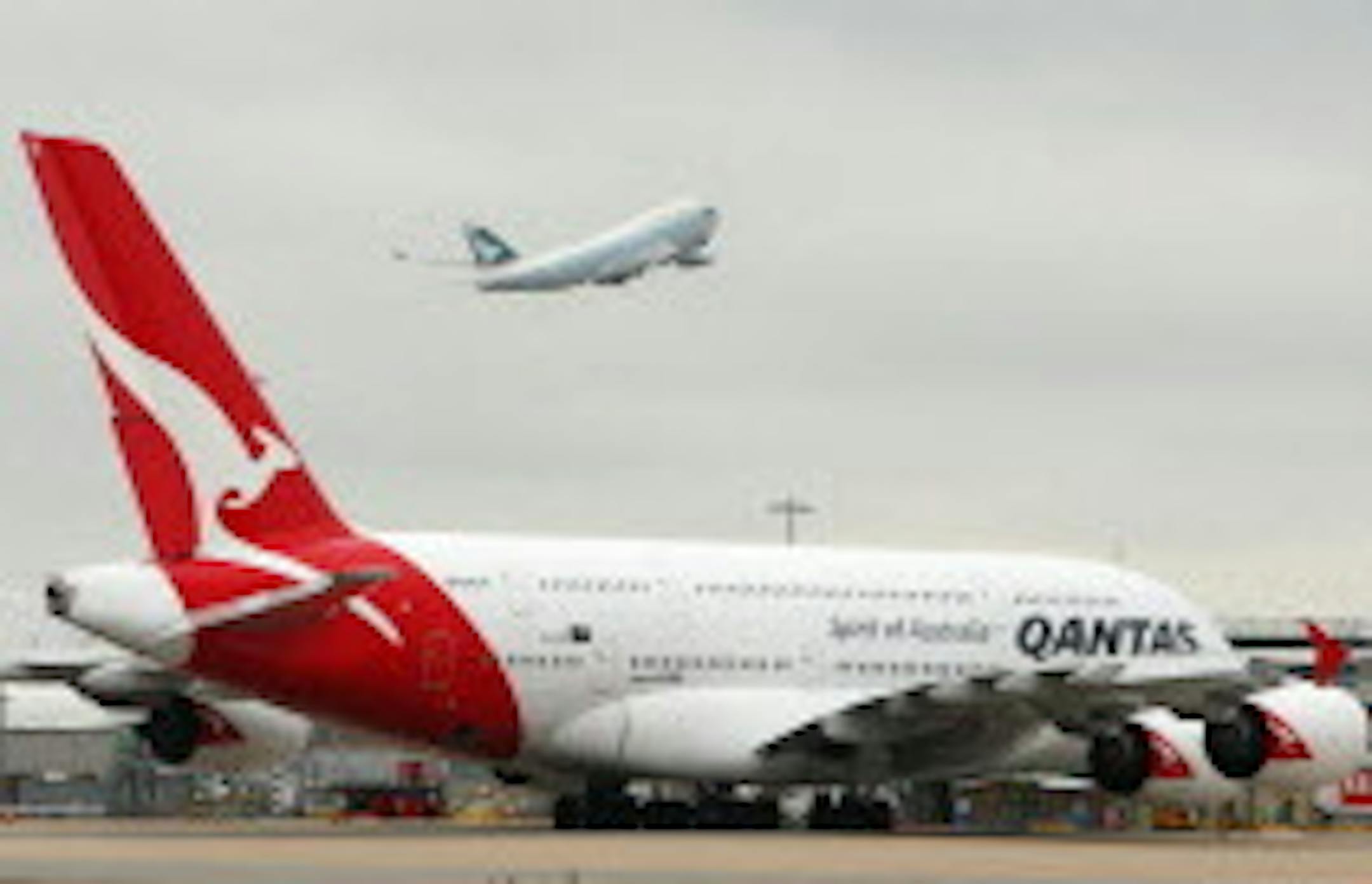
Australia's government announced that it wants to scrap rules that cap foreign ownership of Qantas, the country's biggest airline, at 49 percent. Tony Abbott, the prime minister, said the carrier will be freer to compete if it is "unshackled and un-propped up by government." Qantas recently reported an underlying loss of $224 million for the half year to December and announced 5,000 job cuts. It has struggled to compete on its international routes with the new crop of airlines from the Gulf states, and with Virgin Australia on its home turf.
The Bank of England suspended a member of staff amid an internal review into allegations that officials at the central bank condoned or were informed of manipulation in the foreign-exchange market. It said it had found no evidence so far that any of its employees colluded in rigging rates, but was suspending a staff member while it investigates whether "rigorous internal control processes" were followed. Separate investigations have led to more than 20 traders at several commercial banks being either sacked or suspended.
The Japanese government prepared to draw up plans to regulate Bitcoin and tax transactions involving it, following the collapse of the Tokyo-based Mt. Gox exchange and various hacking incidents.
A federal judge in Manhattan ruled that a penalty imposed against Chevron in Ecuador for polluting local villages had been "obtained by corrupt means." The decision gives Chevron ammunition in its long-running legal battle over allegations that Texaco, which it took over in 2001, caused the pollution. The American oil giant has been ordered by an Ecuadorean court to pay $9.5 billion. This week's ruling found that the order had been secured through bribery and coercion by the plaintiffs' lawyer in New York.
Vivendi, a French media conglomerate, received two bids for SFR, a telecoms operator, ahead of a deadline it had set for offers. The bids are from Bouygues, a blue-chip industrial group, and Altice, a cable-TV and mobile-telecoms company backed by Patrick Drahi, a French-Israeli telecoms entrepreneur. Any deal would be scrutinized by Europe's antitrust regulators, but also by the French government, which has made it clear it will not tolerate job cuts.
Cyprus came a step closer to receiving the next tranche of its $14 billion bailout from the E.U. and IMF, when the Cypriot parliament passed an amended bill that will privatize utility companies, with the unions given a larger say in the sale.
Britain's Labour Party weakened its institutional links to unions by, among other things, changing the way it selects its leader to a simple one-person-one-vote system. Ed Miliband, Labour's leader, risked the unions' ire by putting forward the proposals; he won the leadership in 2010 largely because of their support.