

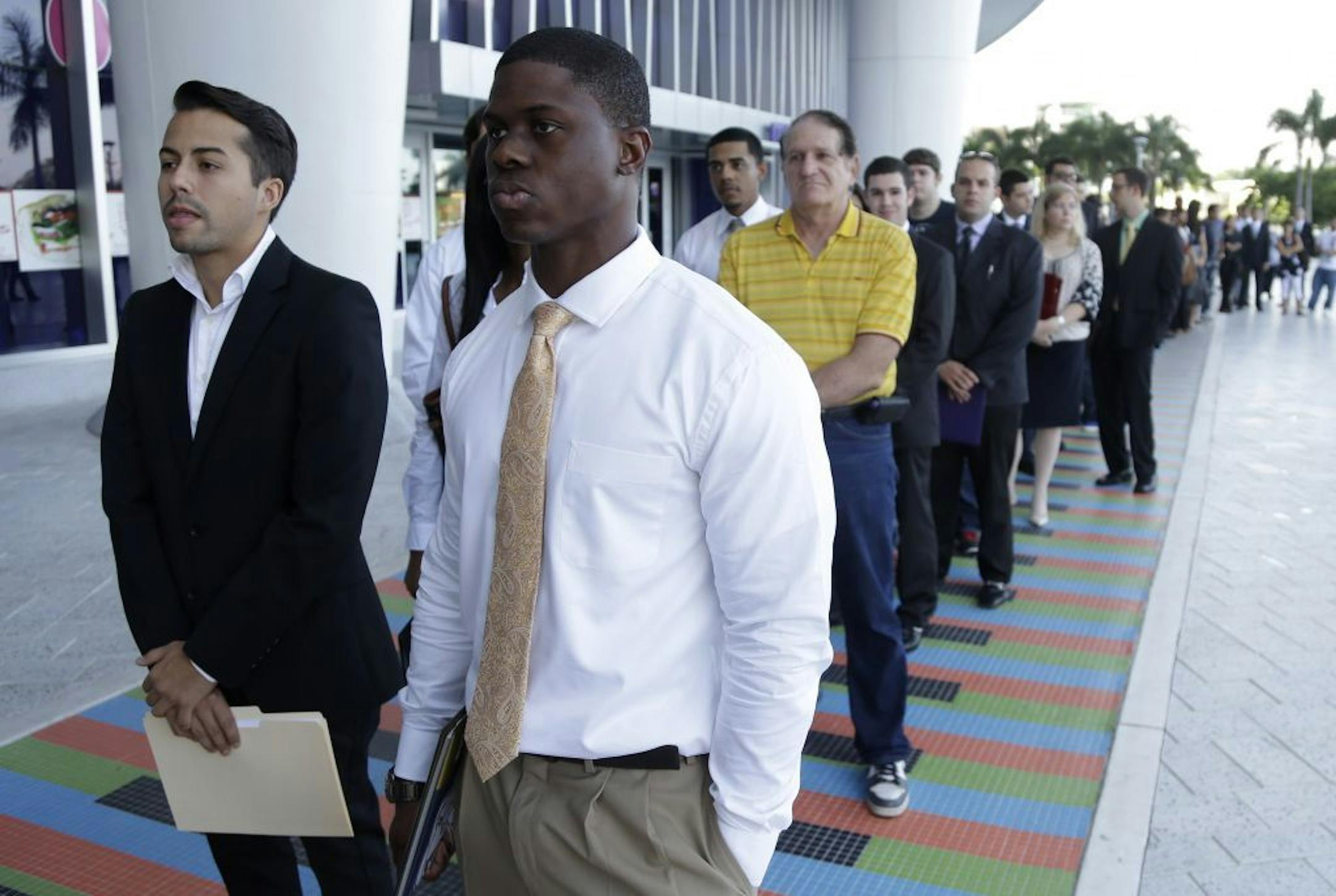
The labor-market recovery that Federal Reserve Chairwoman Janet Yellen seeks is proving incomplete as many U.S. workers languish in part-time jobs.
Forty-nine percent of people working less than 35 hours a week in 2012 and desiring full-time work were able to find such a position within a year, according to research by the Federal Reserve Bank of Atlanta. That's down from 61 percent in 2006.
In addition, the almost 3 million Americans unemployed for at least 27 weeks are more likely to accept part-time jobs than those out of work for shorter periods, according to a Chicago Fed paper. That means underemployment, a hallmark of the slow and uneven recovery from the recession, won't quickly dissipate.
"Slack is going to be gradually picked up, rather than just disappearing overnight and causing an upturn in wages," said Emanuella Enenajor, an economist at Bank of America Corp. in New York.
Once employed part-time for economic reasons, workers in goods-producing industries such as manufacturing have better odds of landing full-time work than service-producers, the Atlanta Fed found. Both have a lower chance of making that jump than they did before the 18-month recession that ended in June 2009, the deepest in the post-World War II era.
From 1998 to 2007, about one in five service employees involuntarily clocking part-time hours remained in that status after a year, according to the Atlanta Fed's research. Today, it's closer to one in three.
For goods-producing industries, the share of involuntary part-timers was about 22 percent as of July compared with 16 percent seven years earlier. Still, that's down from a peak of about 30 percent in December 2009.
"It doesn't seem to be something specific to a characteristic of the worker," said John Robertson, a senior economist at the Atlanta Fed. "We just don't have enough full- time jobs being created."



