

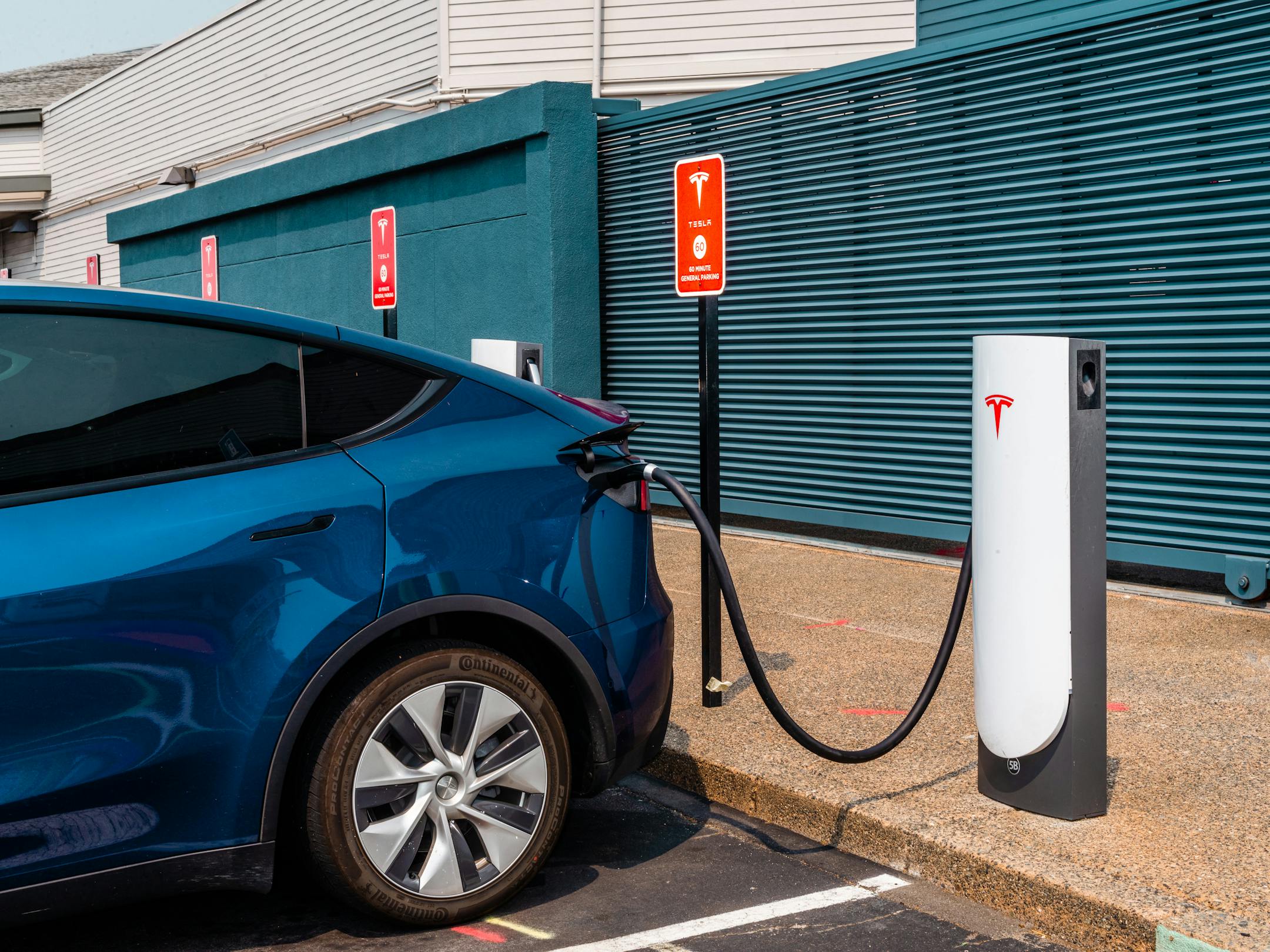
When President Joe Biden announced his multitrillion-dollar jobs plan in March, it included nearly $175 billion in spending to encourage Americans to buy electric vehicles.
The money would help ensure "that these vehicles are affordable for all families and manufactured by workers with good jobs," the White House wrote at the time.
Now, as Biden's plan wends its way through Congress, a liberal think tank has tried to flesh out the number of jobs to be gained or lost in the transition away from internal-combustion vehicles.
The report, released Wednesday by the Economic Policy Institute, concluded that it would take government subsidies focused on developing a domestic supply chain and increasing demand for U.S.-made vehicles to avoid job losses.
It found that without additional government investment, the industry could lose about 75,000 jobs by 2030, the year by which Biden wants half the new vehicles sold in the country to be electric.
By contrast, the report said, if government subsidies were targeted to increase the portion of electric vehicle components that are manufactured domestically, and to increase the market share of U.S.-made vehicles, the industry could add about 150,000 jobs by the end of the decade.
"That's the payoff — making the sector a center of good jobs again," said Josh Bivens, an economist who is one of the report's authors. "If we don't try to react proactively with good policy we'll see continued downward pressure on the number of good jobs."
Looming over the transition to electric vehicles is the fact that they have substantially fewer moving parts than gasoline-powered ones and require less labor to manufacture — about 30% less, according to figures from Ford Motor. The vehicle-manufacturing industry employs a little under 1 million people domestically, including suppliers.


