

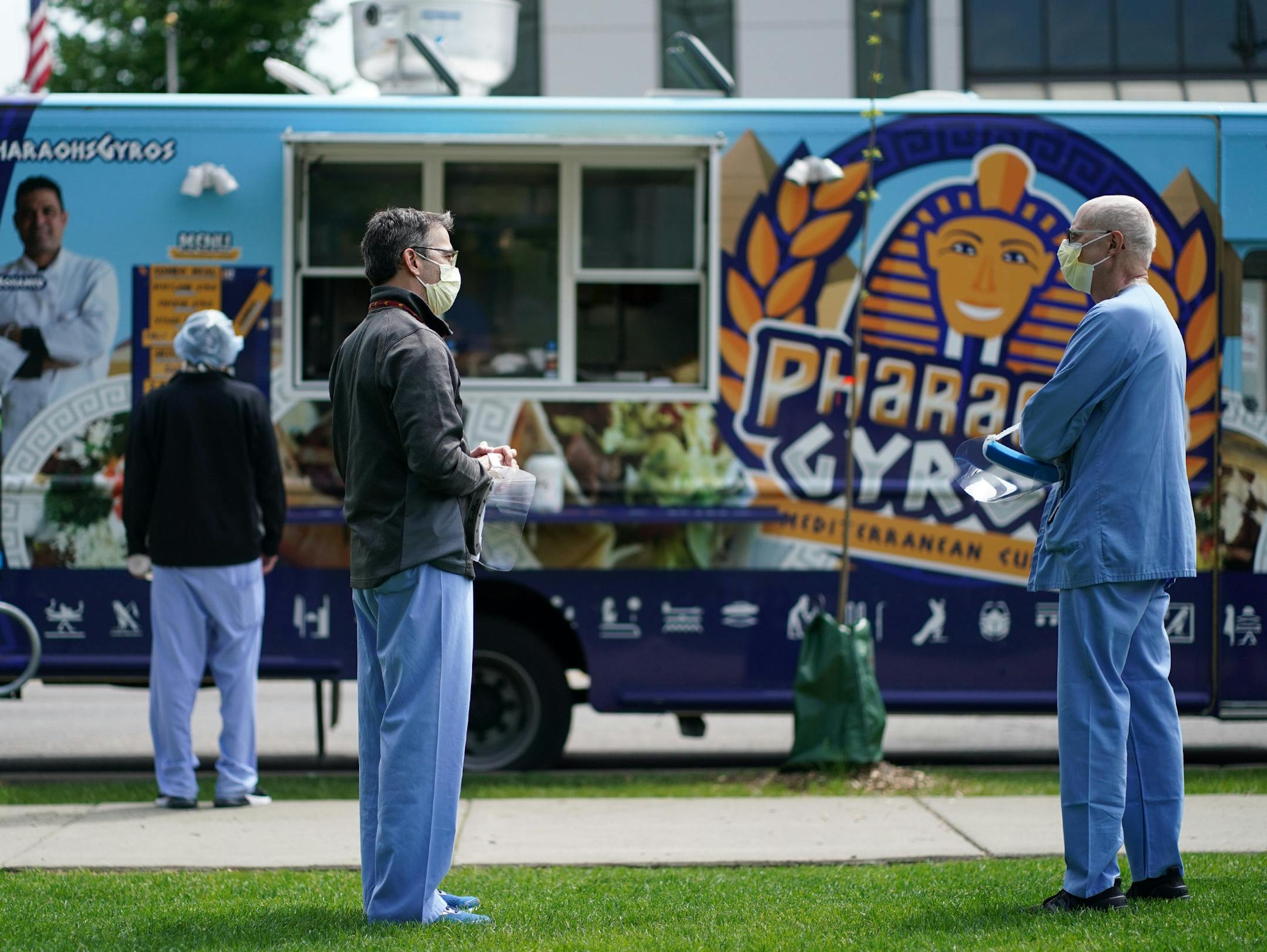
Landing a parking spot on 2nd Avenue S. in Minneapolis, the busiest stretch of the downtown business district, is usually a cutthroat endeavor for a food truck hoping to secure the most foot traffic on a warm spring day.
Thabt Mohamed would circle the area like a snail in his Pharaoh's Gyros food truck, hesitant to stray too far from the block when the clock struck 9 a.m. If he parked too early, he'd face a hefty fine. If he rolled up too late, he'd be forced to settle for space along less desirable curbs.
Now, any food truck can take its pick of parking spaces downtown. Mohamed still waits every morning for the right moment to snag a spot, only it's outside a different hot hub for food truck customers: a hospital.
With COVID-19 keeping most downtown Minneapolis workers at home, and festivals and large gatherings postponed or canceled, the 2020 food truck season is shaping up to be unlike any before.
The state's restrictions on brick and mortar restaurants haven't exactly touched food trucks — the original curbside pickup. Without seating or reason for guests to linger, they were already primed for social distance.
"If anybody is equipped for it, I'd say it's them," said Jess Jenkins, executive director of the Minnesota Food Truck Association.
But the ripple effects of the guidance to stay at home, paired with concerns by operators for themselves and their customers' safety, are being felt.
"It's hard," said Mohamed, who played professional soccer in Egypt before going into the food business in the Twin Cities. "Business is slow."


