

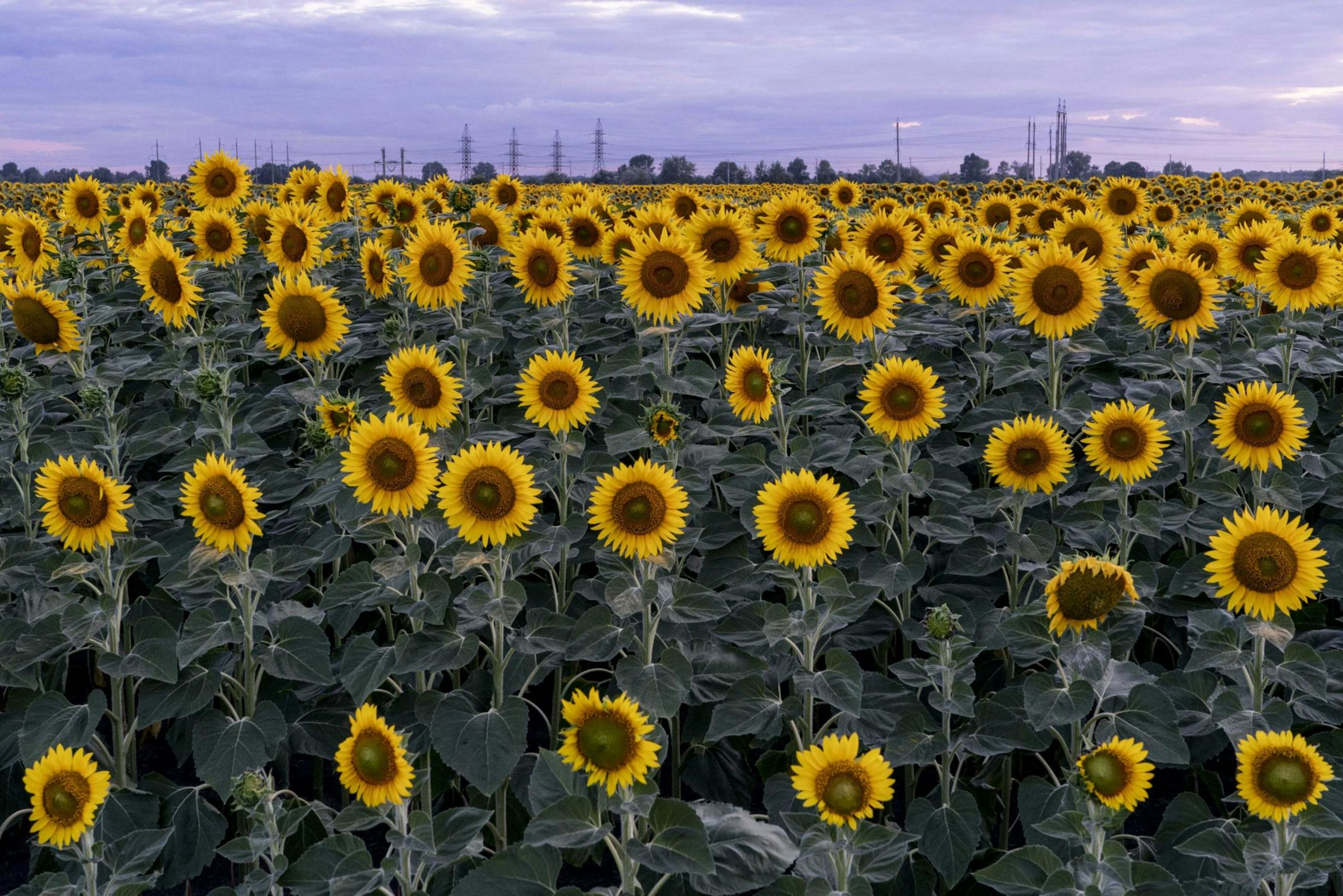
Sunflower seeds are used by more than just ballplayers in America's dugouts. They are a global commodity disrupted by the war in Ukraine, where the flower is so significant it's a national symbol.
On Monday at Cargill's West Fargo plant, sunflower oil, pressed from the seeds, was selling for $40 per hundredweight. A year ago January, bids of $20 drew headlines. It's the same story for confectionary sunflowers.
The reason? Russia's invasion of Ukraine. Those two nations alone produce about 60% of the the world's sunflower oil. Together with neighboring former Soviet states, such as Bulgaria and Romania, the Black Sea region produces more than 30 million tons of sunflowers — far and away the world's lion-share.
The hulled nut meat of sunflower seeds are often sprinkled on salads or tossed into trail mixes, while less-than-perfect seeds fill birdseed canisters. But it's in the big business of sunflower cooking oil — splashing around frying pans from home kitchens to fish n' chip shops across the world — where the price effects are most pronounced.
And just like other commodities, such as corn and soybeans, bids for sunflowers have shot higher since Putin's army crossed into Ukraine.
"They're all in demand right now," said John Swanson, who grows sunflowers annually on his Polk County land near Maple Lake.
Swanson, who serves as chair of the Minnesota Sunflower Council, says farmers often gravitate toward corn or soybeans for the higher price at market.
"Now," he said, "sunflowers are becoming pretty competitive."


