

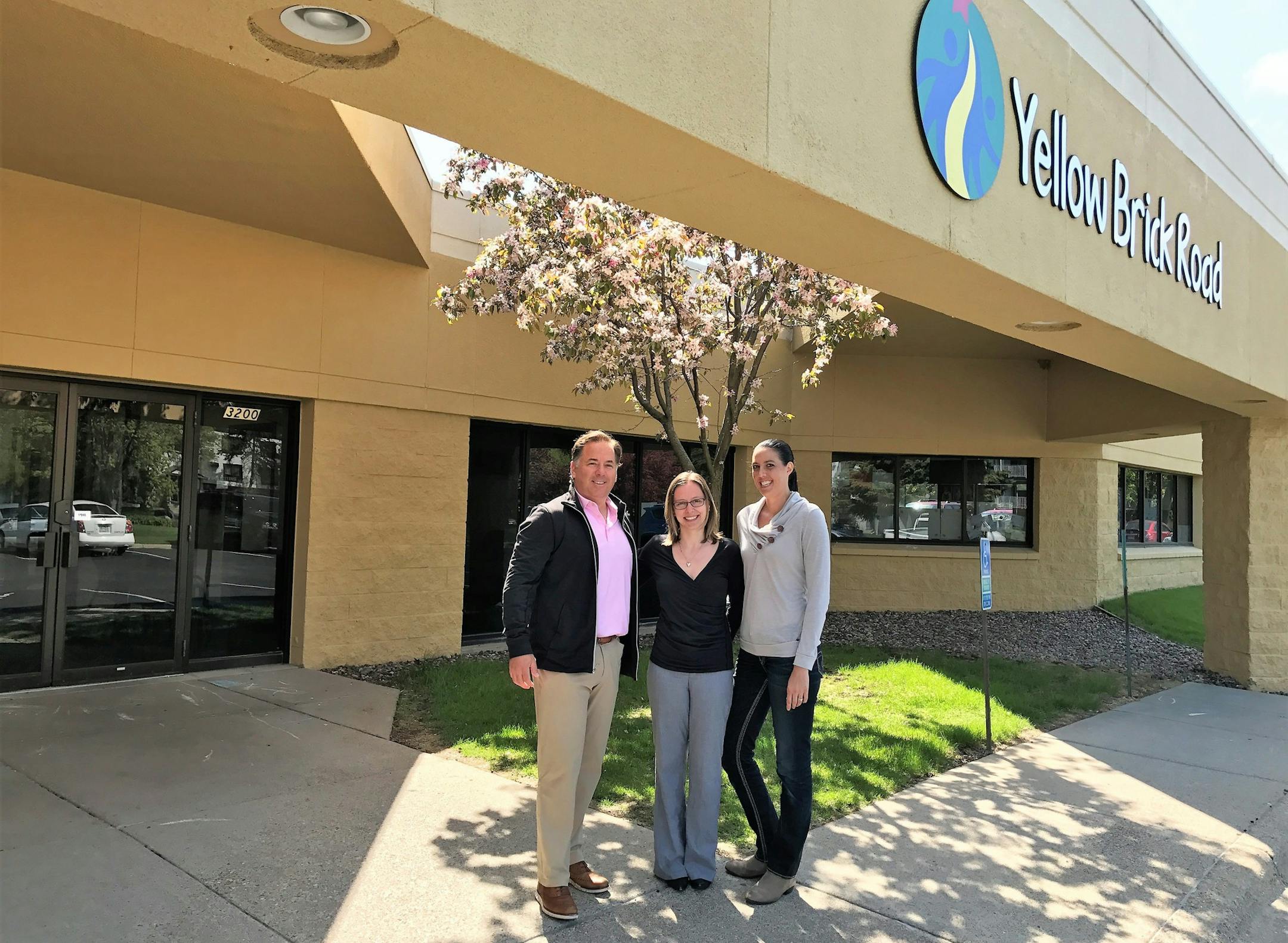
With traditional corporate tenants continuing to turn up their noses at functionally obsolete suburban office buildings, the owners of such properties are having to get creative in adapting them for other uses.
J. Lindsay, principal of the Minnetonka-based Lindsay Group, is among a handful of local developers and landlords who can look at a tired, 1980s-era structure and envision it working for an entirely different use that fits today's market.
After rehabbing buildings in St. Louis Park, Mankato and elsewhere, his latest example is a 31-year-old, single-story office building at 3200 Harbor Lane N. in Plymouth. For years it housed the local offices of United Rentals, which had 71 employees working in the 12,000-square-foot building.
The equipment rental company, however, shuttered the office in 2015 and left the building empty.
It fell into what has become a black hole in the commercial real estate market for "Class B & C" office buildings. The vacancy rate for such properties in the northwest metro stood at nearly 35 percent in early 2016 and remains at around 25 percent, according to statistics compiled by Cushman & Wakefield/Northmarq.
The reason is changing tastes among office users. Such 1980s-era office buildings were designed for individual cubicles to be tightly packed together, with little natural light and next to no open space. Those concepts are exactly the opposite of what is now in favor: open floor plans, common spaces and big windows.
Property owners, faced with few office takers and high operating expenses, are thinking outside the box and working with non-office tenants to re-imagine those buildings. Education users such as preschools and charter schools have become a dominant force in the tenant market in recent years. When Yellow Brick Road Early Childhood Development Center was looking to expand into new space, Lindsay said he could see a future for his 3200 Harbor Lane property.
"It was tired and dated inside, so we converted it, and it's been a great fit," he said. "They were at a church up the street with 65 kids and had a long waiting list, so we stepped up and partnered with them [on a 20-year lease]. Now they're at 135 students."



