

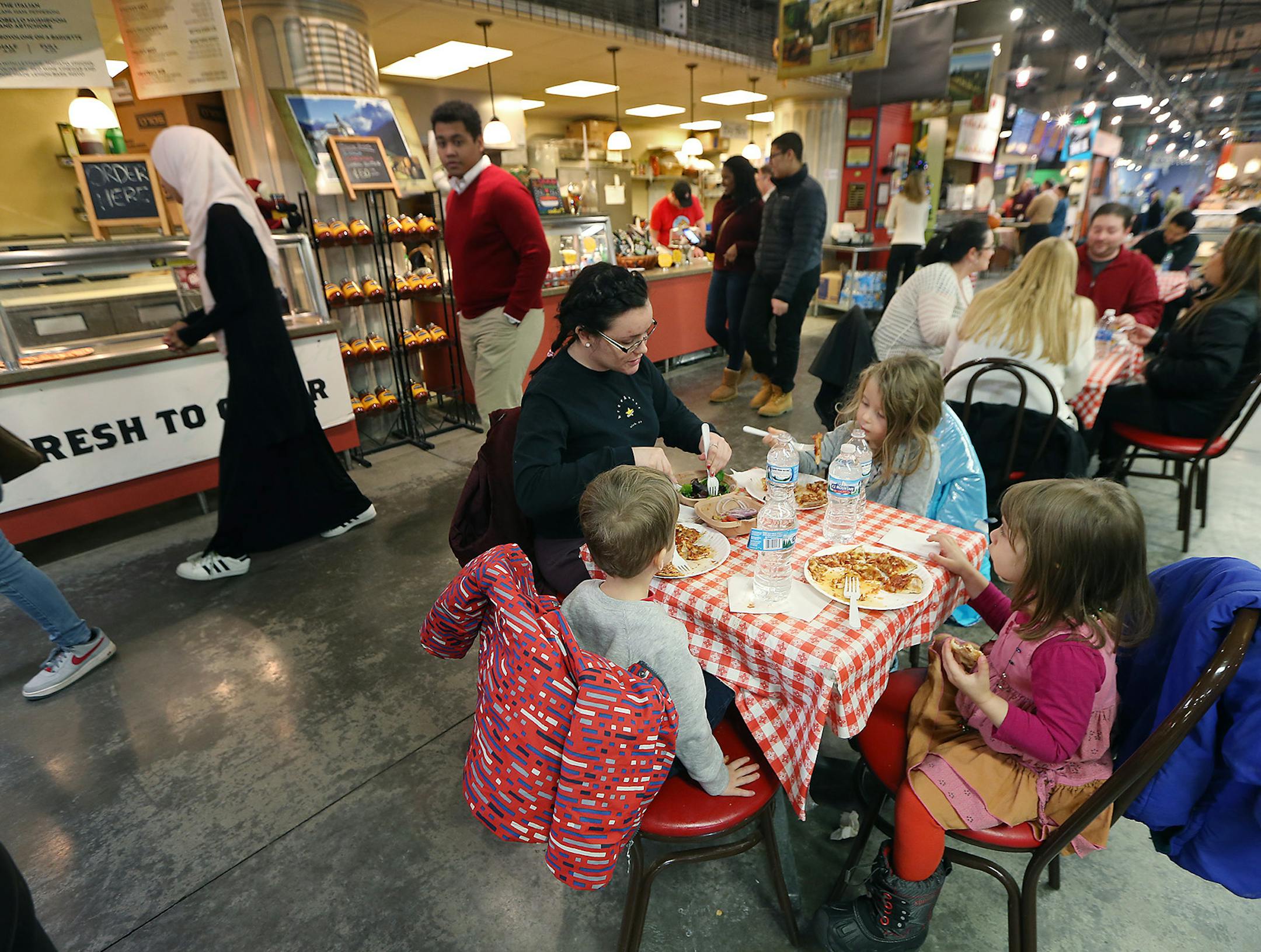
European-style "food halls" have become an American commercial real estate phenomenon, a trend now being felt in the Twin Cities.
The commercial real estate firm Cushman & Wakefield reported this month that food halls are by far one of hottest categories in all of retail real estate, with no less than 35 new projects totaling some 771,000 square feet of commercial space coming online across the country in 2016.
Spurred by the rise of the foodie culture and millennials seeking sustainable food sourcing, the phenomenon is picking up steam heading into the new year.
The brokerage said another 18 food hall projects totaling 654,000 square feet were under construction as of December (nine of which were slated for delivery before the end the year), with another 28 in the planning phases. If those are all completed as envisioned, it would add more than 908,000 square feet of food hall space to the U.S. market through 2019.
The report, "Food Halls of America," broadly defines modern food halls as indoor spaces, usually under the ownership of a single entity, featuring a mix of local, chef-driven restaurants and small food vendors selling fresh produce as well as artisanal items like gourmet meats and cheeses, mushrooms, caviar and chocolates. Their marketing focus is on quality and authentic offerings.
The first food hall was established in 1849 at Harrods Department Store in London, and they flourished across Europe in the century that followed. In the 1980s and '90s, Asia became the food hall focus. The current U.S. spurt began in New York in the last decade and has since accelerated wildly in the city — no less than eight projects are slated for completion there through the end of 2016 with more in the development pipeline.
The Cushman & Wakefield survey includes two Twin Cities properties — the Midtown Global Market in Minneapolis and the upcoming Keg & Case project at the former Schmidt Brewery in St. Paul.
The nonprofit Midtown market, which opened in 2006, is a precursor to the current explosion, focusing on a wide variety of ethnic foods and a philanthropic mission to "incubate" emerging minority entrepreneurs through business training and exposure to customers at the rehabbed former Sears department store on East Lake Street.


