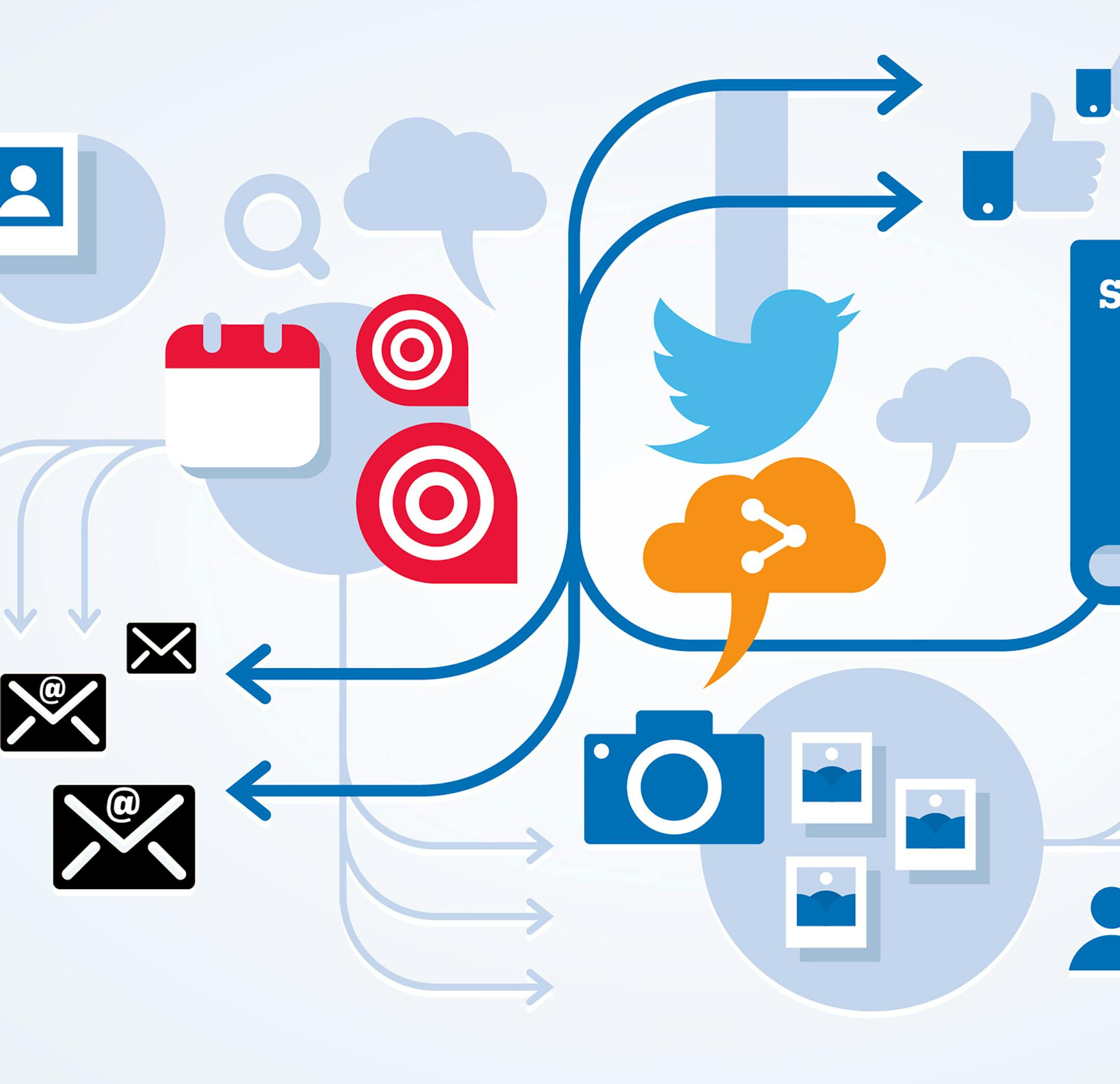
There are currently four information technology revolutions occurring simultaneously and interactively — social, mobile, analytics and cloud, or as Cognizant Consulting has named it, the "SMAC stack."
They're increasingly changing the nature of work and job roles. Analytics arguably is having the biggest impact.
This sort of disruptive change is nothing new. The Industrial Age and the Information Age both drove new organizational structures and jobs. Most of the business executive titles we consider standard today are not much more than 100 years old, and are a result of the cumulative impact of a series of technology and process innovations over the past 150 years:
Chief executive officer: The rise of publicly traded companies in the mid-19th century led to large companies being managed by a senior executive employee, rather than by the companies' owner.
Chief financial officer: 100 years ago, DuPont and General Motors responded to the growing complexity of giant industrial enterprises by pioneering management accounting, a set of financial tools that allowed managers to make strategic decisions about capital allocation. This elevated finance from a tactical discipline managed by a controller to a strategic one, overseen by a CFO.
Chief marketing officer: Companies used to make a product, and then try to sell it. Henry Ford captured the rigidity when in 1909 he wrote: "Any customer can have a car painted any color that he wants, so long as it is black."
In the decades since World War II, and the rise of mass consumer markets, the explosion of product variations and targeted consumer advertising on electronic media (radio, television and Internet) has led to marketing as a complex discipline that is the strategic backbone of most industries.
Chief information officer: Computers have been part of business for nearly 50 years. Some companies innovated with computing for decades. But as recently as 20 years ago, a company could be successful using IT for tactical, back-office purposes only — accounting, inventory and payroll. A tactical IT function was managed by a director of data processing. But an IT function tasked with adding strategic business value has driven the rise of the CIO.